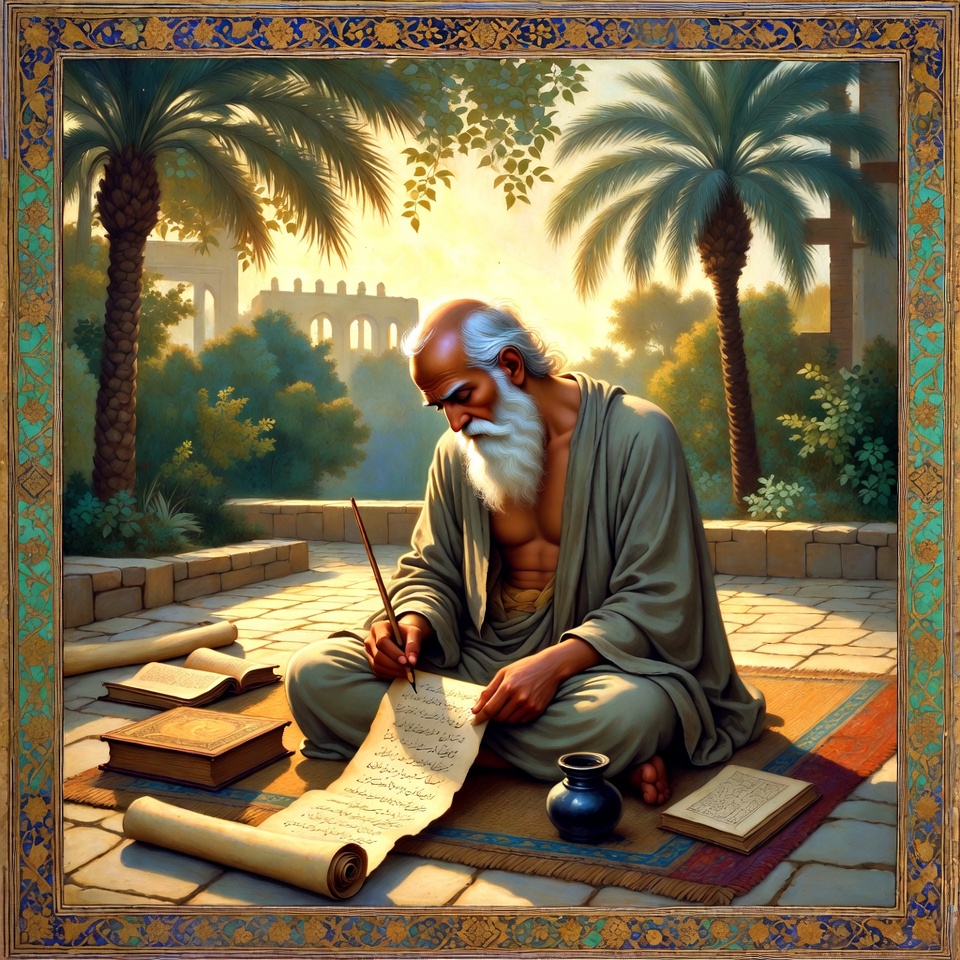
Picture a dusty garden in the Iranian town of Tus on March 8, 1010. A 71-year-old man with aching hands and a son already in the grave sets down his reed pen after three decades of nonstop work. He has just completed 50,000 rhyming couplets—longer than the Iliad and Odyssey combined, all by one guy, no co-writers, no ghostwriters, no caffeine-fueled all-nighters with Slack pings. The poem is the *Shahnameh*, the Book of Kings, and on this exact day Abu al-Qasim Ferdowsi Tusi wrote the final line. He was broke, mocked by courtiers, and about to get paid in what amounted to pocket change by the richest sultan on the planet. Yet that poem is still recited in teahouses from Tehran to Tajikistan a thousand and sixteen years later. Empires rose and fell around it. The man who short-changed the poet? His gold is dust. The verses? Still breathing. This isn’t just another “on this day” trivia nugget. It’s a masterclass in stubborn creation that laughs in the face of every excuse we make today. Ninety percent of what follows is pure, juicy medieval history—the blood, the betrayals, the bird-raised heroes, the demonic tyrants with snakes growing out of their shoulders—because the story deserves the space. The last ten percent? A razor-sharp, zero-fluff plan that turns Ferdowsi’s grind into your personal unfair advantage. No vision boards, no “manifest your destiny” nonsense, no 5 a.m. club clichés. Just a weird, workable system nobody else is peddling.
Let’s rewind to the world Ferdowsi was born into. The year is roughly 940 in the village of Paj, near Tus, in what is now northeastern Iran. The Arab conquest of the Sasanian Empire had happened almost three centuries earlier, in 651. Persian kings, Zoroastrian fire temples, and an ancient imperial identity had been steamrolled by the caliphate. Arabic became the language of power, religion, and high culture. Persians who wanted to get ahead learned to quote the Quran and write in the conqueror’s tongue. But not everyone rolled over.
A stubborn class of rural gentry called *dehqans*—landowners descended from Sasanian nobles—kept the old stories alive around dinner tables and campfires. They spoke New Persian, the direct ancestor of the language spoken in Iran today, and they whispered tales of kings named Kayumars, Jamshid, and the superhuman warrior Rostam. Ferdowsi came from exactly this class. His family owned land, traced their lineage to pre-Islamic times, and viewed themselves as custodians of Iranian memory. He grew up hearing these legends the way kids today hear Marvel movies, except the stakes were cultural survival.
We know almost nothing about his childhood schooling—probably the usual mix of basic literacy and some Arabic for religious purposes—but we do know he married young, had a son around 970, and lived the quiet life of a minor noble until something snapped in his late thirties. Around 977 the poet Daqiqi, who had started versifying the old prose chronicles, got himself assassinated after writing only about a thousand lines on the prophet Zoroaster. Ferdowsi saw the unfinished work and decided, in the most medieval flex possible, “Fine, I’ll do it myself—and better.”
This isn’t just another “on this day” trivia nugget. It’s a masterclass in stubborn creation that laughs in the face of every excuse we make today. Ninety percent of what follows is pure, juicy medieval history—the blood, the betrayals, the bird-raised heroes, the demonic tyrants with snakes growing out of their shoulders—because the story deserves the space. The last ten percent? A razor-sharp, zero-fluff plan that turns Ferdowsi’s grind into your personal unfair advantage. No vision boards, no “manifest your destiny” nonsense, no 5 a.m. club clichés. Just a weird, workable system nobody else is peddling.
Let’s rewind to the world Ferdowsi was born into. The year is roughly 940 in the village of Paj, near Tus, in what is now northeastern Iran. The Arab conquest of the Sasanian Empire had happened almost three centuries earlier, in 651. Persian kings, Zoroastrian fire temples, and an ancient imperial identity had been steamrolled by the caliphate. Arabic became the language of power, religion, and high culture. Persians who wanted to get ahead learned to quote the Quran and write in the conqueror’s tongue. But not everyone rolled over.
A stubborn class of rural gentry called *dehqans*—landowners descended from Sasanian nobles—kept the old stories alive around dinner tables and campfires. They spoke New Persian, the direct ancestor of the language spoken in Iran today, and they whispered tales of kings named Kayumars, Jamshid, and the superhuman warrior Rostam. Ferdowsi came from exactly this class. His family owned land, traced their lineage to pre-Islamic times, and viewed themselves as custodians of Iranian memory. He grew up hearing these legends the way kids today hear Marvel movies, except the stakes were cultural survival.
We know almost nothing about his childhood schooling—probably the usual mix of basic literacy and some Arabic for religious purposes—but we do know he married young, had a son around 970, and lived the quiet life of a minor noble until something snapped in his late thirties. Around 977 the poet Daqiqi, who had started versifying the old prose chronicles, got himself assassinated after writing only about a thousand lines on the prophet Zoroaster. Ferdowsi saw the unfinished work and decided, in the most medieval flex possible, “Fine, I’ll do it myself—and better.”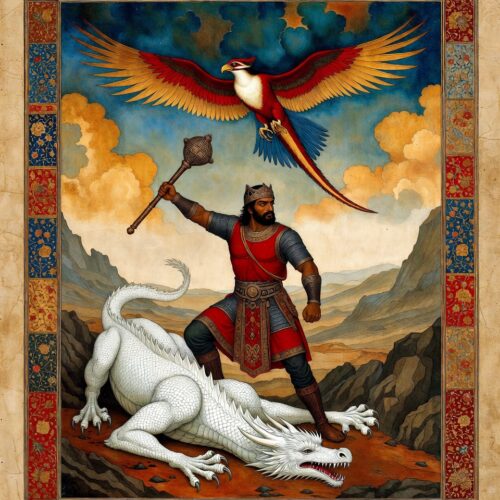 He wasn’t starting from scratch. A prose *Shahnameh* had been compiled in 957 under the Samanid dynasty by a vizier named Abu Mansur Mamari. The Samanids ruled from Bukhara and claimed descent from the old Sasanian house of Bahram Chobin. They were on a full Persian cultural revival kick—funding poets, translating Pahlavi texts into the new Persian, and generally telling the caliph in Baghdad, “Thanks for the religion, we’ll take it from here.” Ferdowsi got hold of that prose book through a friend in Tus named Muhammad Lashkari and began turning it into verse.
He chose the *motaqareb* meter—eleven-syllable lines that gallop like a horse, perfect for battle scenes. He deliberately kept Arabic loanwords to a minimum (only about 9 percent of the final vocabulary), so the language would feel purely Iranian. For the next thirty-three years he wrote, rewrote, and polished. That’s longer than most careers today. He was already middle-aged when he started. He outlived two dynasties. He buried his only son in 1006 and inserted a heartbreaking elegy right into the poem: “The world is a place of sorrow and pain / Where no one remains, and nothing will remain.” Then he kept writing.
The political ground shifted under his feet like quicksand. The Samanids, his original patrons, were crumbling. In 999 the Turkic Ghaznavids—fierce warriors from Afghanistan—conquered their territories. Ferdowsi had to pivot. He rewrote the dedication to flatter the new boss, Sultan Mahmud of Ghazni, a man who had just sacked Indian temples and was swimming in looted gold. Mahmud’s court was a viper pit of jealous poets and pious busybodies who didn’t like Ferdowsi’s suspiciously pre-Islamic flavor. Ferdowsi complained in the poem itself about old age, poverty, and illness. Yet somehow the couplets kept coming.
He wasn’t starting from scratch. A prose *Shahnameh* had been compiled in 957 under the Samanid dynasty by a vizier named Abu Mansur Mamari. The Samanids ruled from Bukhara and claimed descent from the old Sasanian house of Bahram Chobin. They were on a full Persian cultural revival kick—funding poets, translating Pahlavi texts into the new Persian, and generally telling the caliph in Baghdad, “Thanks for the religion, we’ll take it from here.” Ferdowsi got hold of that prose book through a friend in Tus named Muhammad Lashkari and began turning it into verse.
He chose the *motaqareb* meter—eleven-syllable lines that gallop like a horse, perfect for battle scenes. He deliberately kept Arabic loanwords to a minimum (only about 9 percent of the final vocabulary), so the language would feel purely Iranian. For the next thirty-three years he wrote, rewrote, and polished. That’s longer than most careers today. He was already middle-aged when he started. He outlived two dynasties. He buried his only son in 1006 and inserted a heartbreaking elegy right into the poem: “The world is a place of sorrow and pain / Where no one remains, and nothing will remain.” Then he kept writing.
The political ground shifted under his feet like quicksand. The Samanids, his original patrons, were crumbling. In 999 the Turkic Ghaznavids—fierce warriors from Afghanistan—conquered their territories. Ferdowsi had to pivot. He rewrote the dedication to flatter the new boss, Sultan Mahmud of Ghazni, a man who had just sacked Indian temples and was swimming in looted gold. Mahmud’s court was a viper pit of jealous poets and pious busybodies who didn’t like Ferdowsi’s suspiciously pre-Islamic flavor. Ferdowsi complained in the poem itself about old age, poverty, and illness. Yet somehow the couplets kept coming.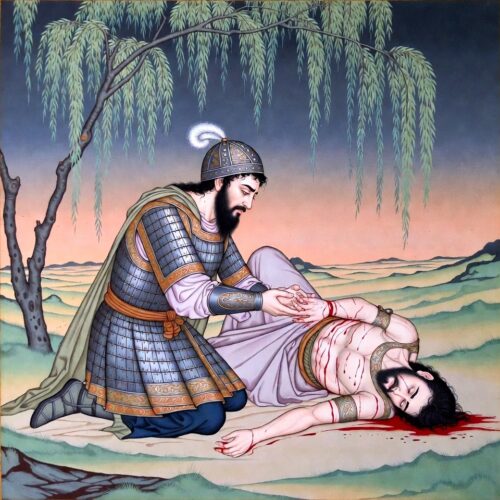 By March 8, 1010—Spandarmad 400 in the Persian calendar—he was done. He was seventy-one. He wrote in the closing lines: “I have labored thirty years in this task / I have revived the Ajam with my verse / I will not die; these seeds I have sown will save / My name and reputation from the grave.” Then he packed seven volumes and headed to Ghazni with a scribe named Ali Deylam.
Here comes the comedy gold that makes this story unforgettable. Sultan Mahmud had supposedly promised one gold dinar for every couplet—60,000 dinars, a fortune that would have set Ferdowsi up for life. Court intrigue got in the way. Vizier Ahmad ibn Hasan Maymandi tried to help, but rival poets whispered that Ferdowsi was a Shiite heretic or too attached to the old Zoroastrian kings. Mahmud, the conqueror of India, suddenly developed a case of cheapskate-itis. He sent silver dirhams instead—worth far less. Legend says the caravan arrived while Ferdowsi was in the bathhouse. He took one look at the coins, divided them between the bath attendant and a nearby beer seller, and stormed off.
Then he did what any self-respecting poet would do: wrote a 100-line satire called the *Hajw-nama* that roasted Mahmud so hard only six lines survive today because admirers bought and destroyed the rest to protect him. Ferdowsi fled Ghazni. Years later, when the sultan finally heard the *Shahnameh* recited by someone who actually understood its genius, he regretted everything. He ordered a caravan of gold to be sent to Tus. It arrived exactly as Ferdowsi’s funeral procession was leaving his house. The poet’s daughter (or heir, depending on the version) refused the money. Some say it was used to build a caravanserai for travelers. Either way, the irony is chef’s-kiss perfect: the richest man in the world tried to pay the immortal with pocket change and lost.
Ferdowsi died around 1020 or 1025. A local cleric refused to let him be buried in the Muslim cemetery—too pagan, apparently—so he was interred in his own garden. Centuries later, Reza Shah Pahlavi turned the spot into a national shrine that still stands today.
By March 8, 1010—Spandarmad 400 in the Persian calendar—he was done. He was seventy-one. He wrote in the closing lines: “I have labored thirty years in this task / I have revived the Ajam with my verse / I will not die; these seeds I have sown will save / My name and reputation from the grave.” Then he packed seven volumes and headed to Ghazni with a scribe named Ali Deylam.
Here comes the comedy gold that makes this story unforgettable. Sultan Mahmud had supposedly promised one gold dinar for every couplet—60,000 dinars, a fortune that would have set Ferdowsi up for life. Court intrigue got in the way. Vizier Ahmad ibn Hasan Maymandi tried to help, but rival poets whispered that Ferdowsi was a Shiite heretic or too attached to the old Zoroastrian kings. Mahmud, the conqueror of India, suddenly developed a case of cheapskate-itis. He sent silver dirhams instead—worth far less. Legend says the caravan arrived while Ferdowsi was in the bathhouse. He took one look at the coins, divided them between the bath attendant and a nearby beer seller, and stormed off.
Then he did what any self-respecting poet would do: wrote a 100-line satire called the *Hajw-nama* that roasted Mahmud so hard only six lines survive today because admirers bought and destroyed the rest to protect him. Ferdowsi fled Ghazni. Years later, when the sultan finally heard the *Shahnameh* recited by someone who actually understood its genius, he regretted everything. He ordered a caravan of gold to be sent to Tus. It arrived exactly as Ferdowsi’s funeral procession was leaving his house. The poet’s daughter (or heir, depending on the version) refused the money. Some say it was used to build a caravanserai for travelers. Either way, the irony is chef’s-kiss perfect: the richest man in the world tried to pay the immortal with pocket change and lost.
Ferdowsi died around 1020 or 1025. A local cleric refused to let him be buried in the Muslim cemetery—too pagan, apparently—so he was interred in his own garden. Centuries later, Reza Shah Pahlavi turned the spot into a national shrine that still stands today.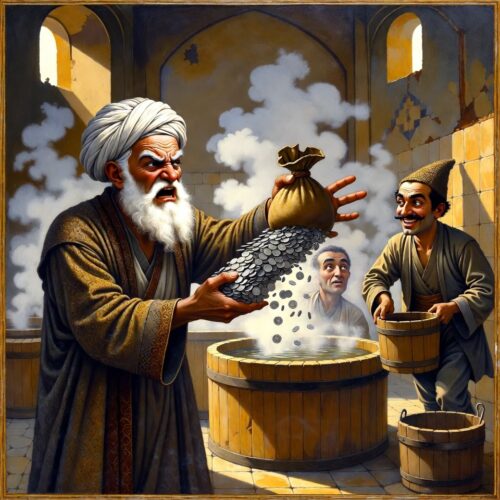 Now, what exactly did this 50,000-couplet monster contain that was worth three decades of blood, sweat, and royal disrespect?
The *Shahnameh* is divided into three great ages, like a blockbuster trilogy that never needed sequels.
First, the Mythical Age—about 2,100 verses, short but foundational. It opens with creation itself. The first king, Keyumars, emerges from the mountains and teaches humanity how to live. His grandson Hushang discovers fire and invents the Sadeh festival. Tahmuras wrestles demons. Jamshid builds a golden age, invents wine and medicine, then gets arrogant and loses his divine glory to the serpent-shouldered tyrant Zahhak. Enter Kaveh the blacksmith, who raises his leather apron as a banner of revolt—the same apron that became the flag of Iran for centuries. Fereydun defeats Zahhak, chains him under Mount Damavand (still there today), and divides the world among his three sons. The youngest, Iraj, gets Iran; his jealous brothers murder him. Revenge, betrayal, the cycle begins.
Then comes the Heroic Age—two-thirds of the entire poem. This is where Rostam lives. Rostam, the ultimate paladin, son of Zal (the white-haired baby abandoned on a mountain and raised by the mythical Simurgh bird). Rostam performs seven legendary labors that make Hercules look like he’s doing cardio. He fights demons, crosses deserts, and—most famously—kills his own son Sohrab in single combat without realizing who the boy is until it’s too late. The scene is devastating: Sohrab has been searching for his father his whole life; Rostam only learns the truth when he sees his own armband on the dying boy’s arm. The tragedy has been retold in operas, films, and graphic novels for a thousand years. Other highlights: the star-crossed romance of Bijan and Manijeh, the endless wars against the Turanian king Afrasiab, and Rostam’s final duel with Esfandyar, another invincible hero. Every Persian kid grows up knowing these names the way American kids know Batman and Superman.
Finally, the Historical Age covers the real dynasties—the Parthians briefly, then the Sasanians in loving, sometimes romanticized detail—right up to the Arab conquest. Ferdowsi treats the Muslim arrival with melancholy respect rather than rage, but the message is clear: Iran’s soul survived.
The poem’s moral DNA is simple and timeless: worship one God, be loyal to family and country, help the poor, and remember that power is temporary. Ferdowsi barely mentions Islam; he lets the ancient kings speak for themselves. That’s why later rulers sometimes got nervous about it. Yet the *Shahnameh* became the glue that held Persian identity together through Mongol invasions, Turkic dynasties, and everything else the world threw at Iran. It kept the language alive. It inspired miniature paintings so gorgeous that museums fight over them today—the Great Mongol *Shahnameh*, the Baysonghori manuscript, the Tahmasp *Shahnameh* with its 258 illustrations. It gave Georgians, Turks, and Central Asians their own heroes. It even snuck into Goethe’s *West-Eastern Divan*.
Reciters still perform *Shahnameh-khani* in coffeehouses. Children are named Rostam and Sohrab. When modern Iranians want to say “this is who we are,” they reach for Ferdowsi. One man, one pen, one ridiculously long poem, and he basically saved a civilization’s memory.
So what does any of this have to do with your life in 2026?
Now, what exactly did this 50,000-couplet monster contain that was worth three decades of blood, sweat, and royal disrespect?
The *Shahnameh* is divided into three great ages, like a blockbuster trilogy that never needed sequels.
First, the Mythical Age—about 2,100 verses, short but foundational. It opens with creation itself. The first king, Keyumars, emerges from the mountains and teaches humanity how to live. His grandson Hushang discovers fire and invents the Sadeh festival. Tahmuras wrestles demons. Jamshid builds a golden age, invents wine and medicine, then gets arrogant and loses his divine glory to the serpent-shouldered tyrant Zahhak. Enter Kaveh the blacksmith, who raises his leather apron as a banner of revolt—the same apron that became the flag of Iran for centuries. Fereydun defeats Zahhak, chains him under Mount Damavand (still there today), and divides the world among his three sons. The youngest, Iraj, gets Iran; his jealous brothers murder him. Revenge, betrayal, the cycle begins.
Then comes the Heroic Age—two-thirds of the entire poem. This is where Rostam lives. Rostam, the ultimate paladin, son of Zal (the white-haired baby abandoned on a mountain and raised by the mythical Simurgh bird). Rostam performs seven legendary labors that make Hercules look like he’s doing cardio. He fights demons, crosses deserts, and—most famously—kills his own son Sohrab in single combat without realizing who the boy is until it’s too late. The scene is devastating: Sohrab has been searching for his father his whole life; Rostam only learns the truth when he sees his own armband on the dying boy’s arm. The tragedy has been retold in operas, films, and graphic novels for a thousand years. Other highlights: the star-crossed romance of Bijan and Manijeh, the endless wars against the Turanian king Afrasiab, and Rostam’s final duel with Esfandyar, another invincible hero. Every Persian kid grows up knowing these names the way American kids know Batman and Superman.
Finally, the Historical Age covers the real dynasties—the Parthians briefly, then the Sasanians in loving, sometimes romanticized detail—right up to the Arab conquest. Ferdowsi treats the Muslim arrival with melancholy respect rather than rage, but the message is clear: Iran’s soul survived.
The poem’s moral DNA is simple and timeless: worship one God, be loyal to family and country, help the poor, and remember that power is temporary. Ferdowsi barely mentions Islam; he lets the ancient kings speak for themselves. That’s why later rulers sometimes got nervous about it. Yet the *Shahnameh* became the glue that held Persian identity together through Mongol invasions, Turkic dynasties, and everything else the world threw at Iran. It kept the language alive. It inspired miniature paintings so gorgeous that museums fight over them today—the Great Mongol *Shahnameh*, the Baysonghori manuscript, the Tahmasp *Shahnameh* with its 258 illustrations. It gave Georgians, Turks, and Central Asians their own heroes. It even snuck into Goethe’s *West-Eastern Divan*.
Reciters still perform *Shahnameh-khani* in coffeehouses. Children are named Rostam and Sohrab. When modern Iranians want to say “this is who we are,” they reach for Ferdowsi. One man, one pen, one ridiculously long poem, and he basically saved a civilization’s memory.
So what does any of this have to do with your life in 2026?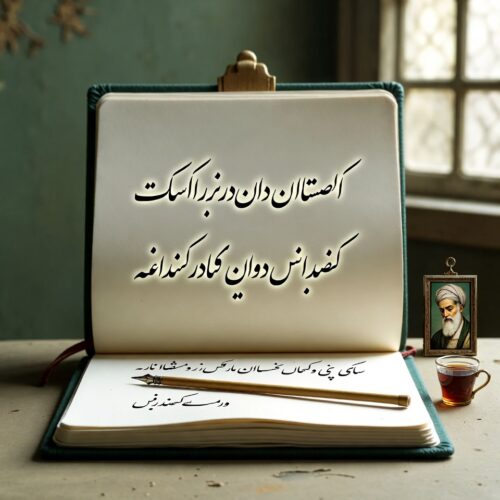 Everything. The outcome of Ferdowsi’s grind is proof that a single, unglamorous, decades-long act of creation can outrun death, poverty, and royal pettiness. Empires that paid him in silver are footnotes. The poem is still printing money for publishers and feeding national pride. You don’t need to write 50,000 couplets. You just need to stop treating your biggest project like a side hustle and start treating it like a *Shahnameh*.
Here are the exact benefits you harvest when you apply that mindset today:
- You build something that compounds beyond your lifetime instead of chasing likes that disappear in 24 hours.
- You become immune to short-term rejection because you’ve already decided the work itself is the reward.
- You preserve your own “kingdom”—whether that’s your family stories, your craft, your business, or your weird collection of vintage keyboards—so future generations have a map of who you were.
- You develop a ridiculous tolerance for chaos because Ferdowsi wrote through dynastic collapse and personal tragedy; your bad quarter at work suddenly looks manageable.
- You get to laugh at the sultans in your own life—the cheap bosses, flaky clients, algorithm changes—because history already proved they don’t write the final chapter.
Now here’s the part no other self-help garbage online is offering: the Ferdowsi Legacy Protocol. It is deliberately weird, stupidly specific, and built to run in under thirty days before you go full epic-mode for the rest of your life. It has nothing to do with morning routines, gratitude journals, or “disrupting” anything. It is literally “write your own Shahnameh, one ridiculous couplet at a time.”
**Week 1 – The Mythical Origins (Days 1-7)**
Pick one area of your life you want to turn into legend: career, family, creative project, health, whatever. On Day 1, write exactly two lines describing your “creation story”—where you came from, what forces shaped you, the moment you decided this thing matters. No editing. Day 2: two lines about your first “fire discovery” (the skill or insight that changed everything). By Day 7 you have fourteen lines that sound like an origin myth. Read them out loud in the shower. Feel ridiculous. That’s the point.
**Week 2 – The Heroic Labors (Days 8-14)**
List your seven personal labors—the obstacles that feel demonic. For each one, write a two-line “battle scene” where you defeat it. Example: “The email dragon rose with teeth of deadlines / I slew it with one coffee and three deadlines.” Make it over-the-top. On Day 14, pick the scariest labor and actually do the first real-world step while reciting your couplet like a battle cry. Rostam didn’t whine; he tied a lion’s mouth shut. Neither do you.
**Week 3 – The Tragic Sohrab Moment (Days 15-21)**
Every epic has a gut-punch realization. Identify the one thing you’ve been fighting that might actually be part of you (bad habit, toxic relationship, limiting belief). Write two lines admitting it. Then write two lines forgiving yourself the way Rostam mourns Sohrab. Then take one concrete action to make peace with it. This is the part where most self-help books bail. Ferdowsi didn’t. He put his dead son in the poem and kept going.
**Week 4 – The Royal Presentation (Days 22-28)**
Compile your 56 lines into a tiny “manuscript.” Show it to exactly one person who matters—someone who can actually help or appreciate it. If they offer you silver (lukewarm praise, a participation trophy), do exactly what Ferdowsi did: give the praise away and keep writing anyway. Then send the sultan (your real target—boss, client, publisher, family member) a better version anyway. The satire is optional but highly recommended for stress relief.
**The Eternal Mode (Day 29 onward)**
Keep a running “Shahnameh journal.” Every week add exactly two new lines about that week’s victory or lesson. In thirty years you will have something ridiculous and beautiful that no algorithm can delete. When someone tries to pay you in dirhams—metaphorically or literally—smile, remember the bathhouse, and keep versifying.
That’s it. No apps. No masterminds. Just two lines, every week, forever. Ferdowsi didn’t have Notion or a content calendar; he had a reed pen and a grudge against oblivion. You have slightly better tools and the same grudge.
On March 8, 1010, one stubborn dehqan from Tus finished a poem that empires couldn’t kill. Today you can open a notebook and write the first two lines of yours. The sultans will forget you. The verses won’t. Get to work—your *Shahnameh* is waiting.
Everything. The outcome of Ferdowsi’s grind is proof that a single, unglamorous, decades-long act of creation can outrun death, poverty, and royal pettiness. Empires that paid him in silver are footnotes. The poem is still printing money for publishers and feeding national pride. You don’t need to write 50,000 couplets. You just need to stop treating your biggest project like a side hustle and start treating it like a *Shahnameh*.
Here are the exact benefits you harvest when you apply that mindset today:
- You build something that compounds beyond your lifetime instead of chasing likes that disappear in 24 hours.
- You become immune to short-term rejection because you’ve already decided the work itself is the reward.
- You preserve your own “kingdom”—whether that’s your family stories, your craft, your business, or your weird collection of vintage keyboards—so future generations have a map of who you were.
- You develop a ridiculous tolerance for chaos because Ferdowsi wrote through dynastic collapse and personal tragedy; your bad quarter at work suddenly looks manageable.
- You get to laugh at the sultans in your own life—the cheap bosses, flaky clients, algorithm changes—because history already proved they don’t write the final chapter.
Now here’s the part no other self-help garbage online is offering: the Ferdowsi Legacy Protocol. It is deliberately weird, stupidly specific, and built to run in under thirty days before you go full epic-mode for the rest of your life. It has nothing to do with morning routines, gratitude journals, or “disrupting” anything. It is literally “write your own Shahnameh, one ridiculous couplet at a time.”
**Week 1 – The Mythical Origins (Days 1-7)**
Pick one area of your life you want to turn into legend: career, family, creative project, health, whatever. On Day 1, write exactly two lines describing your “creation story”—where you came from, what forces shaped you, the moment you decided this thing matters. No editing. Day 2: two lines about your first “fire discovery” (the skill or insight that changed everything). By Day 7 you have fourteen lines that sound like an origin myth. Read them out loud in the shower. Feel ridiculous. That’s the point.
**Week 2 – The Heroic Labors (Days 8-14)**
List your seven personal labors—the obstacles that feel demonic. For each one, write a two-line “battle scene” where you defeat it. Example: “The email dragon rose with teeth of deadlines / I slew it with one coffee and three deadlines.” Make it over-the-top. On Day 14, pick the scariest labor and actually do the first real-world step while reciting your couplet like a battle cry. Rostam didn’t whine; he tied a lion’s mouth shut. Neither do you.
**Week 3 – The Tragic Sohrab Moment (Days 15-21)**
Every epic has a gut-punch realization. Identify the one thing you’ve been fighting that might actually be part of you (bad habit, toxic relationship, limiting belief). Write two lines admitting it. Then write two lines forgiving yourself the way Rostam mourns Sohrab. Then take one concrete action to make peace with it. This is the part where most self-help books bail. Ferdowsi didn’t. He put his dead son in the poem and kept going.
**Week 4 – The Royal Presentation (Days 22-28)**
Compile your 56 lines into a tiny “manuscript.” Show it to exactly one person who matters—someone who can actually help or appreciate it. If they offer you silver (lukewarm praise, a participation trophy), do exactly what Ferdowsi did: give the praise away and keep writing anyway. Then send the sultan (your real target—boss, client, publisher, family member) a better version anyway. The satire is optional but highly recommended for stress relief.
**The Eternal Mode (Day 29 onward)**
Keep a running “Shahnameh journal.” Every week add exactly two new lines about that week’s victory or lesson. In thirty years you will have something ridiculous and beautiful that no algorithm can delete. When someone tries to pay you in dirhams—metaphorically or literally—smile, remember the bathhouse, and keep versifying.
That’s it. No apps. No masterminds. Just two lines, every week, forever. Ferdowsi didn’t have Notion or a content calendar; he had a reed pen and a grudge against oblivion. You have slightly better tools and the same grudge.
On March 8, 1010, one stubborn dehqan from Tus finished a poem that empires couldn’t kill. Today you can open a notebook and write the first two lines of yours. The sultans will forget you. The verses won’t. Get to work—your *Shahnameh* is waiting.