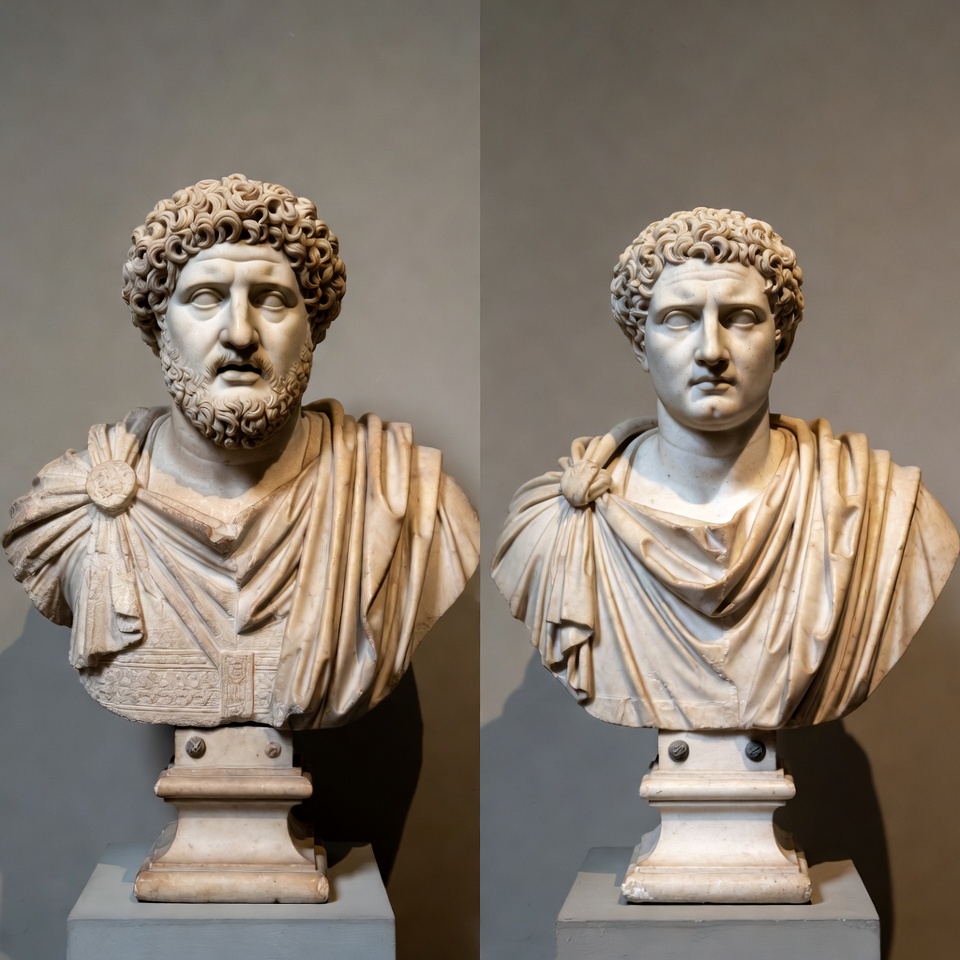
Picture this: It’s March 7, 161 AD, just outside Rome at a cozy imperial villa in Lorium. The emperor is 74 years old, has ruled the known world in perfect peace for 23 years, and tonight he’s snacking on some Alpine cheese. Bad move. He vomits, spikes a fever, summons his council, hands over the entire Roman Empire like it’s a spare set of keys, whispers one word—“aequanimitas”—and dies smiling, as if he’s just napping after a long day of not invading anyone.
Within hours, two guys you’ve never heard of in the same breath—Marcus Aurelius and Lucius Verus—are crowned co-emperors. First time ever. No civil war. No poison. Just two adoptive brothers splitting the throne like it’s the world’s most dangerous timeshare. The Senate rubber-stamps it, the legions get a fat bonus, and Rome’s golden age keeps rolling… until the plague hits, the barbarians knock on the Danube, and everything goes full apocalyptic.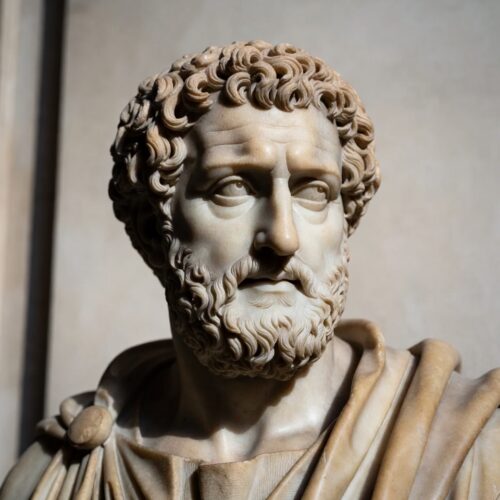 This isn’t some dusty footnote. This is the exact day the Roman Empire accidentally invented power-sharing, Stoic resilience under fire, and the ultimate survival manual for when life throws simultaneous wars, pandemics, and family drama at you. And the craziest part? The guy who ended up running the show solo wrote a private diary in a rain-soaked tent that still slaps harder than any modern self-help book 1,865 years later.
Today we’re diving deep—really deep—into every dusty legionary bootprint, every Antioch party foul, every battlefield dispatch, and every quiet tent-side reflection that made this day legendary. Because 90 percent of this story is raw, hilarious, heartbreaking Roman history you’ve never heard told like this. The last 10 percent? A razor-sharp way to steal their playbook so your 2026 chaos doesn’t stand a chance. No fluff. No footnotes. Just pure time-travel fuel.
Let’s rewind to understand why March 7, 161 AD even mattered.
The Nerva-Antonine dynasty was basically Rome’s greatest hits album. After the Julio-Claudians turned into a reality-TV dumpster fire and the Flavians got competent but short-lived, Nerva, Trajan, Hadrian, and now Antoninus Pius perfected the art of picking the best guy for the job instead of blood heirs. Adoptive succession: the original meritocracy with togas. Antoninus—born Titus Aurelius Fulvus Boionius Arrius Antoninus in 86 AD near Rome—got tapped by Hadrian in 138 on one condition: adopt two teenagers, Marcus Annius Verus (future Marcus Aurelius) and Lucius Ceionius Commodus (future Lucius Verus). Hadrian was playing 4D chess, ensuring the empire wouldn’t fracture.
Antoninus ruled for 23 glorious, boring years—the longest peaceful stretch since Augustus. No major wars. No scandals. He never left Italy. Governors handled the frontiers while he sat in Rome answering letters and fixing aqueducts. In Britain he ordered the Antonine Wall—37 miles of turf and stone from the Firth of Forth to the Firth of Clyde—pushing the border deeper into Scotland than Hadrian’s famous wall ever did. It was ambitious, expensive, and eventually abandoned in the 150s when the Brigantes got feisty, but it proved Rome could project power without endless campaigning.
Economically, he left the treasury bursting with 2.7 billion sesterces—a staggering surplus. He suspended taxes after fires, earthquakes, and floods. He rebuilt cities in Asia Minor after disasters. He reformed slavery laws so masters couldn’t kill slaves without trial or sell them to gladiator schools out of spite. He encouraged manumission and treated freedmen with dignity. Legally, he leaned on brilliant jurists like Lucius Volusius Maecianus, pushing “humanity” in law—presumption of innocence, limits on torture. Culturally, he threw massive games for Rome’s 900th anniversary in 148, debased the denarius just a touch to keep things liquid, and built temples everywhere. He even formalized exotic cults like the Great Mother’s taurobolium and sponsored a Mithras temple in Ostia.
This isn’t some dusty footnote. This is the exact day the Roman Empire accidentally invented power-sharing, Stoic resilience under fire, and the ultimate survival manual for when life throws simultaneous wars, pandemics, and family drama at you. And the craziest part? The guy who ended up running the show solo wrote a private diary in a rain-soaked tent that still slaps harder than any modern self-help book 1,865 years later.
Today we’re diving deep—really deep—into every dusty legionary bootprint, every Antioch party foul, every battlefield dispatch, and every quiet tent-side reflection that made this day legendary. Because 90 percent of this story is raw, hilarious, heartbreaking Roman history you’ve never heard told like this. The last 10 percent? A razor-sharp way to steal their playbook so your 2026 chaos doesn’t stand a chance. No fluff. No footnotes. Just pure time-travel fuel.
Let’s rewind to understand why March 7, 161 AD even mattered.
The Nerva-Antonine dynasty was basically Rome’s greatest hits album. After the Julio-Claudians turned into a reality-TV dumpster fire and the Flavians got competent but short-lived, Nerva, Trajan, Hadrian, and now Antoninus Pius perfected the art of picking the best guy for the job instead of blood heirs. Adoptive succession: the original meritocracy with togas. Antoninus—born Titus Aurelius Fulvus Boionius Arrius Antoninus in 86 AD near Rome—got tapped by Hadrian in 138 on one condition: adopt two teenagers, Marcus Annius Verus (future Marcus Aurelius) and Lucius Ceionius Commodus (future Lucius Verus). Hadrian was playing 4D chess, ensuring the empire wouldn’t fracture.
Antoninus ruled for 23 glorious, boring years—the longest peaceful stretch since Augustus. No major wars. No scandals. He never left Italy. Governors handled the frontiers while he sat in Rome answering letters and fixing aqueducts. In Britain he ordered the Antonine Wall—37 miles of turf and stone from the Firth of Forth to the Firth of Clyde—pushing the border deeper into Scotland than Hadrian’s famous wall ever did. It was ambitious, expensive, and eventually abandoned in the 150s when the Brigantes got feisty, but it proved Rome could project power without endless campaigning.
Economically, he left the treasury bursting with 2.7 billion sesterces—a staggering surplus. He suspended taxes after fires, earthquakes, and floods. He rebuilt cities in Asia Minor after disasters. He reformed slavery laws so masters couldn’t kill slaves without trial or sell them to gladiator schools out of spite. He encouraged manumission and treated freedmen with dignity. Legally, he leaned on brilliant jurists like Lucius Volusius Maecianus, pushing “humanity” in law—presumption of innocence, limits on torture. Culturally, he threw massive games for Rome’s 900th anniversary in 148, debased the denarius just a touch to keep things liquid, and built temples everywhere. He even formalized exotic cults like the Great Mother’s taurobolium and sponsored a Mithras temple in Ostia.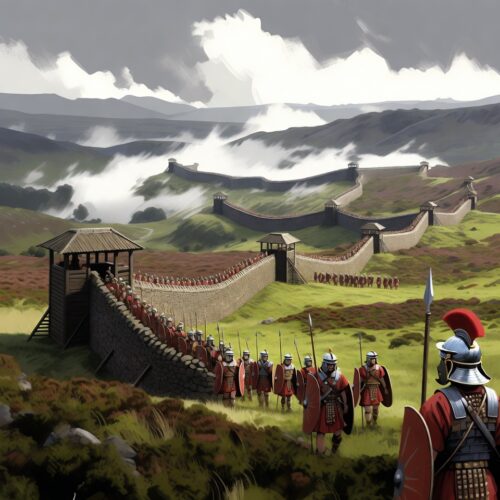 The man was so dutiful they called him “Pius”—pious, dutiful, the guy who forced the Senate to deify cranky old Hadrian against their will. Foreign kings from India and Bactria sent ambassadors just to bask in his justice. He kept client kings in Armenia happy. He avoided persecuting Christians when local governors got zealous. Rome under Antoninus felt… stable. Almost too stable. Some historians later sniffed that he was too pacifist, letting Parthia get cocky and missing chances to expand. But stability after Hadrian’s whirlwind tours felt like a vacation.
By his final years, though, age caught up. From around 156, at 70, he needed corsets to stand straight during receptions. He nibbled dry bread to stay awake. His longtime praetorian prefect Marcus Gavius Maximus died after 20 iron-fisted years, shifting more work to young Marcus. In 160, Marcus and Lucius were named joint consuls for the next year—a clear signal. The succession plan was locked.
Then March 7, 161. Lorium villa, 12 miles from Rome. Antoninus has Alpine cheese for dinner—probably some sharp, creamy wheel from the northern provinces. He vomits. Fever spikes. He knows it’s over. Two days earlier he’d already summoned the imperial council at Lorium and formally passed “the state and his daughter” to Marcus. Now, as the tribune of the night watch asks for the nightly password, the old emperor croaks one last word: “aequanimitas.” Equanimity. Calm acceptance. Then he rolls over like he’s settling in for a nap and dies.
Roman historians loved that detail. The cheese? Hilarious cosmic joke. The password? Pure Stoic mic-drop. No drama, no last-minute power grabs. Just quiet dignity. His body (not ashes—unusual) went to Hadrian’s Mausoleum. The Senate deified him instantly. His temple in the Forum, originally for his wife Faustina, got rededicated to both. A column rose on the Campus Martius. Flamines—special priests—were appointed for his cult. Rome mourned a man who’d given them 23 years of peace and a full treasury.
The man was so dutiful they called him “Pius”—pious, dutiful, the guy who forced the Senate to deify cranky old Hadrian against their will. Foreign kings from India and Bactria sent ambassadors just to bask in his justice. He kept client kings in Armenia happy. He avoided persecuting Christians when local governors got zealous. Rome under Antoninus felt… stable. Almost too stable. Some historians later sniffed that he was too pacifist, letting Parthia get cocky and missing chances to expand. But stability after Hadrian’s whirlwind tours felt like a vacation.
By his final years, though, age caught up. From around 156, at 70, he needed corsets to stand straight during receptions. He nibbled dry bread to stay awake. His longtime praetorian prefect Marcus Gavius Maximus died after 20 iron-fisted years, shifting more work to young Marcus. In 160, Marcus and Lucius were named joint consuls for the next year—a clear signal. The succession plan was locked.
Then March 7, 161. Lorium villa, 12 miles from Rome. Antoninus has Alpine cheese for dinner—probably some sharp, creamy wheel from the northern provinces. He vomits. Fever spikes. He knows it’s over. Two days earlier he’d already summoned the imperial council at Lorium and formally passed “the state and his daughter” to Marcus. Now, as the tribune of the night watch asks for the nightly password, the old emperor croaks one last word: “aequanimitas.” Equanimity. Calm acceptance. Then he rolls over like he’s settling in for a nap and dies.
Roman historians loved that detail. The cheese? Hilarious cosmic joke. The password? Pure Stoic mic-drop. No drama, no last-minute power grabs. Just quiet dignity. His body (not ashes—unusual) went to Hadrian’s Mausoleum. The Senate deified him instantly. His temple in the Forum, originally for his wife Faustina, got rededicated to both. A column rose on the Campus Martius. Flamines—special priests—were appointed for his cult. Rome mourned a man who’d given them 23 years of peace and a full treasury.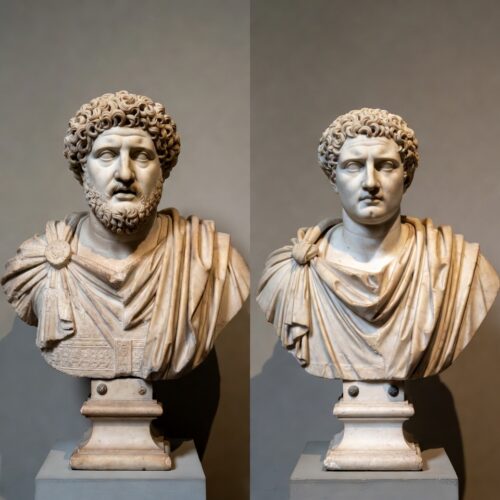 But the real story starts the moment he stopped breathing.
Marcus Aurelius—now 39, already a seasoned administrator, philosopher, and family man—insisted on honoring Hadrian’s original plan. Lucius Verus, eight years younger, would be co-emperor. First time in Roman history. No precedents that actually worked. Augustus had tried grooming grandsons together; Tiberius played games with heirs; it always ended in blood. Marcus made it work. The Senate granted both men imperium, tribunician power, and the title Augustus. Marcus became Imperator Caesar Marcus Aurelius Antoninus Augustus. Lucius dropped “Commodus” and became Imperator Caesar Lucius Aurelius Verus Augustus. They marched to the Castra Praetoria, Lucius gave the speech to the troops, and boom—20,000 sesterces per soldier donative. Twice the usual. Loyalty secured before breakfast.
Why share? Marcus could have taken it all. But he understood stability. Lucius brought youth, energy, and a different skill set. Plus, Hadrian’s will was sacred. The empire got two faces: Marcus the thoughtful administrator and philosopher, Lucius the charming face for the legions. It was like installing a backup emperor who also happened to be your brother-in-law after you married his fiancée to yourself. (Long story—Marcus had been betrothed to Lucius’s sister; politics rearranged everything.)
The co-rule kicked off smoothly. They celebrated triumphs together later. Lucius married Marcus’s daughter Lucilla in 163 or 164, tying the families tighter than a legionary’s sandal straps. But the honeymoon ended fast.
By late 161, Parthia’s King Vologases IV invaded Armenia, killed the Roman client king, and installed his own. Classic Parthian flex. Initial Roman response was a disaster—Legio XII Fulminata got massacred at Elegeia under a glory-hunting governor. Panic in Rome. Marcus sent Lucius east in summer 162 with a massive force. Lucius’s journey was legendary: Brundisium to Corinth, Athens (where he joined the Eleusinian Mysteries like a true tourist-emperor), Ephesus, Pamphylia. He fell ill en route—maybe a minor stroke—recovered with fasting and bloodletting, and set up headquarters in Antioch.
There the real work began. While Lucius hosted banquets, raced chariots (he loved the Greens, even had a golden statue of his favorite horse Volucer), kept a glamorous mistress named Panthea from Smyrna, and allegedly partied with actors and gamblers, his generals did the heavy lifting. Marcus Statius Priscus smashed into Armenia, burned Artaxata, founded a new capital Kaine Polis, and installed Gaius Julius Sohaemus as king in 164. Then the big push: Avidius Cassius and others stormed Mesopotamia. Edessa and Nisibis fell. Seleucia-on-Tigris—huge Greek city—opened its gates but got sacked anyway (official excuse: they broke faith). Ctesiphon, Parthia’s winter capital, was looted and its palace burned. Roman troops pushed into Media. By 166 it was over. Both emperors took titles: Armeniacus, Parthicus Maximus, Medicus. Lucius got the glory parade, but everyone knew the generals won it.
But the real story starts the moment he stopped breathing.
Marcus Aurelius—now 39, already a seasoned administrator, philosopher, and family man—insisted on honoring Hadrian’s original plan. Lucius Verus, eight years younger, would be co-emperor. First time in Roman history. No precedents that actually worked. Augustus had tried grooming grandsons together; Tiberius played games with heirs; it always ended in blood. Marcus made it work. The Senate granted both men imperium, tribunician power, and the title Augustus. Marcus became Imperator Caesar Marcus Aurelius Antoninus Augustus. Lucius dropped “Commodus” and became Imperator Caesar Lucius Aurelius Verus Augustus. They marched to the Castra Praetoria, Lucius gave the speech to the troops, and boom—20,000 sesterces per soldier donative. Twice the usual. Loyalty secured before breakfast.
Why share? Marcus could have taken it all. But he understood stability. Lucius brought youth, energy, and a different skill set. Plus, Hadrian’s will was sacred. The empire got two faces: Marcus the thoughtful administrator and philosopher, Lucius the charming face for the legions. It was like installing a backup emperor who also happened to be your brother-in-law after you married his fiancée to yourself. (Long story—Marcus had been betrothed to Lucius’s sister; politics rearranged everything.)
The co-rule kicked off smoothly. They celebrated triumphs together later. Lucius married Marcus’s daughter Lucilla in 163 or 164, tying the families tighter than a legionary’s sandal straps. But the honeymoon ended fast.
By late 161, Parthia’s King Vologases IV invaded Armenia, killed the Roman client king, and installed his own. Classic Parthian flex. Initial Roman response was a disaster—Legio XII Fulminata got massacred at Elegeia under a glory-hunting governor. Panic in Rome. Marcus sent Lucius east in summer 162 with a massive force. Lucius’s journey was legendary: Brundisium to Corinth, Athens (where he joined the Eleusinian Mysteries like a true tourist-emperor), Ephesus, Pamphylia. He fell ill en route—maybe a minor stroke—recovered with fasting and bloodletting, and set up headquarters in Antioch.
There the real work began. While Lucius hosted banquets, raced chariots (he loved the Greens, even had a golden statue of his favorite horse Volucer), kept a glamorous mistress named Panthea from Smyrna, and allegedly partied with actors and gamblers, his generals did the heavy lifting. Marcus Statius Priscus smashed into Armenia, burned Artaxata, founded a new capital Kaine Polis, and installed Gaius Julius Sohaemus as king in 164. Then the big push: Avidius Cassius and others stormed Mesopotamia. Edessa and Nisibis fell. Seleucia-on-Tigris—huge Greek city—opened its gates but got sacked anyway (official excuse: they broke faith). Ctesiphon, Parthia’s winter capital, was looted and its palace burned. Roman troops pushed into Media. By 166 it was over. Both emperors took titles: Armeniacus, Parthicus Maximus, Medicus. Lucius got the glory parade, but everyone knew the generals won it.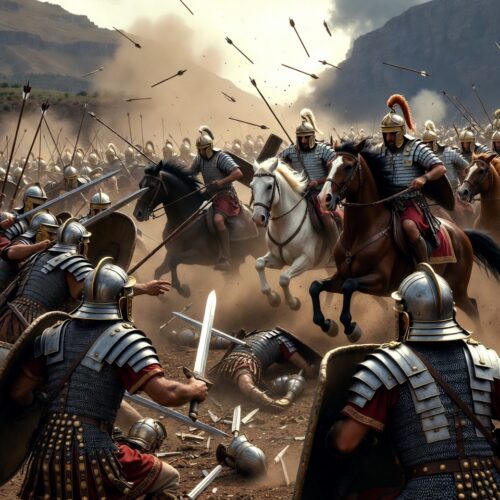 Funny thing about Lucius in Antioch: historians love painting him as a debauched playboy—gambling all night, shaving his beard to please his mistress, flooding the Orontes canal and digging up “giant bones” (probably mammoth fossils the troops thought were river gods). But he also tightened discipline, dug infrastructure, and kept the troops happy with bread and circuses. Marcus stayed in Rome handling floods, famines, and Senate drama, writing letters to Lucius full of brotherly advice. It worked. The co-rule experiment was succeeding.
Then the bill came due.
The Parthian campaign brought home something worse than defeat: the Antonine Plague. Probably smallpox (or maybe measles), it exploded in Mesopotamia around 165-166. Soldiers carried it west. By 166 it hit Rome. Symptoms: high fever, diarrhea, throat inflammation, skin pustules. Death rate brutal—estimates 5 to 10 million empire-wide, maybe 10-15% of the population. Whole regions depopulated. Trade with Han China (that 166 embassy from “Andun”—probably Antoninus/Marcus—bringing silk) collapsed. Armies shrank. Cities emptied. Marcus and Lucius organized relief, but the plague didn’t care about imperial edicts.
In 168 the emperors personally headed north to face a new nightmare: Germanic tribes. Marcomanni, Quadi, Lombards, Sarmatian Iazyges, and Costoboci poured across the Danube. They reached Aquileia in Italy—first time in centuries barbarians threatened the homeland. The co-emperors drove them back, but Lucius fell ill on the return journey in early 169 near Altinum. Probably plague. He died at 38. Marcus escorted the body to Rome, gave him a huge funeral, deified him as Divus Verus, and buried him in Hadrian’s Mausoleum. The double throne experiment was over after eight years. Marcus ruled alone.
Now the real test began.
The Marcomannic Wars (166-180) consumed Marcus’s remaining life. He moved his headquarters to the frontier—Sirmium, Carnuntum—living in tents and camps like a common soldier. He fought personally, celebrated a triumph in 176, created new provinces (Marcomannia and Sarmatia), settled thousands of Germans inside the empire as farmers and recruits. He banned further mass imports after a Ravenna revolt. Costoboci raiders even hit Greece. The wars drained the treasury; he sold palace furnishings at auction to fund them. Currency got debased again.
And through it all, in the quiet hours between battles and plague rounds, Marcus wrote. Not for publication. Not for glory. Just twelve books of private Greek notes to himself—today called the *Meditations*. Scribbled in camp, often in the rain or by campfire light. He reminded himself daily: control only what’s in your power. Virtue is the only good. Everything else—fame, wealth, even the empire—is indifferent. “You have power over your mind—not outside events. Realize this, and you will find strength.” “Waste no more time arguing about what a good man should be. Be one.” “See that you do not turn into a Caesar; do not be dipped into the purple dye.” He thanked his tutors—especially Rusticus—for teaching him to ditch rhetoric and chase real moral progress. He practiced memento mori constantly: emperors die, empires fall, your body is just borrowed dust.
He lost children—fourteen total, many in infancy. Faustina the Younger died in 175 amid rumors (probably false) of affairs and gladiator babies. A general named Avidius Cassius rebelled in the east in 175 thinking Marcus was dead; Marcus forgave the survivors. Christians faced sporadic local persecution, though Marcus himself never ordered it. Through every disaster he stayed the philosopher-king Plato dreamed of—dutiful, just, calm.
He died on March 17, 180 AD, probably at Vindobona or Sirmium, still on campaign. His son Commodus—co-emperor since 177—took over and immediately made peace, then descended into gladiatorial madness. Cassius Dio later wrote that Marcus’s reign was the last “kingdom of gold” before “iron and rust.” But that gold was forged in the fires of March 7, 161 and the decades that followed.
The outcome of that single day’s decision? An empire that should have shattered under plague, dual-front wars, economic strain, and personal grief instead endured. The co-rule bought time, divided labor, and tested collaborative leadership. Marcus’s solo Stoic grind proved one calm mind can steer through apocalypse. Rome didn’t fall for another 300 years. That’s not luck. That’s equanimity weaponized.
Now, how does a cheese-induced death and a philosopher-emperor’s tent diary help you in 2026?
The outcome of March 7, 161 AD was simple but revolutionary: when life hands you simultaneous crises, shared power plus unbreakable inner calm beats solo heroics every time. Marcus and Lucius proved collaboration multiplies strength; Marcus alone proved Stoic equanimity turns disasters into footnotes. You get the same superpowers—without legions or plagues.
Funny thing about Lucius in Antioch: historians love painting him as a debauched playboy—gambling all night, shaving his beard to please his mistress, flooding the Orontes canal and digging up “giant bones” (probably mammoth fossils the troops thought were river gods). But he also tightened discipline, dug infrastructure, and kept the troops happy with bread and circuses. Marcus stayed in Rome handling floods, famines, and Senate drama, writing letters to Lucius full of brotherly advice. It worked. The co-rule experiment was succeeding.
Then the bill came due.
The Parthian campaign brought home something worse than defeat: the Antonine Plague. Probably smallpox (or maybe measles), it exploded in Mesopotamia around 165-166. Soldiers carried it west. By 166 it hit Rome. Symptoms: high fever, diarrhea, throat inflammation, skin pustules. Death rate brutal—estimates 5 to 10 million empire-wide, maybe 10-15% of the population. Whole regions depopulated. Trade with Han China (that 166 embassy from “Andun”—probably Antoninus/Marcus—bringing silk) collapsed. Armies shrank. Cities emptied. Marcus and Lucius organized relief, but the plague didn’t care about imperial edicts.
In 168 the emperors personally headed north to face a new nightmare: Germanic tribes. Marcomanni, Quadi, Lombards, Sarmatian Iazyges, and Costoboci poured across the Danube. They reached Aquileia in Italy—first time in centuries barbarians threatened the homeland. The co-emperors drove them back, but Lucius fell ill on the return journey in early 169 near Altinum. Probably plague. He died at 38. Marcus escorted the body to Rome, gave him a huge funeral, deified him as Divus Verus, and buried him in Hadrian’s Mausoleum. The double throne experiment was over after eight years. Marcus ruled alone.
Now the real test began.
The Marcomannic Wars (166-180) consumed Marcus’s remaining life. He moved his headquarters to the frontier—Sirmium, Carnuntum—living in tents and camps like a common soldier. He fought personally, celebrated a triumph in 176, created new provinces (Marcomannia and Sarmatia), settled thousands of Germans inside the empire as farmers and recruits. He banned further mass imports after a Ravenna revolt. Costoboci raiders even hit Greece. The wars drained the treasury; he sold palace furnishings at auction to fund them. Currency got debased again.
And through it all, in the quiet hours between battles and plague rounds, Marcus wrote. Not for publication. Not for glory. Just twelve books of private Greek notes to himself—today called the *Meditations*. Scribbled in camp, often in the rain or by campfire light. He reminded himself daily: control only what’s in your power. Virtue is the only good. Everything else—fame, wealth, even the empire—is indifferent. “You have power over your mind—not outside events. Realize this, and you will find strength.” “Waste no more time arguing about what a good man should be. Be one.” “See that you do not turn into a Caesar; do not be dipped into the purple dye.” He thanked his tutors—especially Rusticus—for teaching him to ditch rhetoric and chase real moral progress. He practiced memento mori constantly: emperors die, empires fall, your body is just borrowed dust.
He lost children—fourteen total, many in infancy. Faustina the Younger died in 175 amid rumors (probably false) of affairs and gladiator babies. A general named Avidius Cassius rebelled in the east in 175 thinking Marcus was dead; Marcus forgave the survivors. Christians faced sporadic local persecution, though Marcus himself never ordered it. Through every disaster he stayed the philosopher-king Plato dreamed of—dutiful, just, calm.
He died on March 17, 180 AD, probably at Vindobona or Sirmium, still on campaign. His son Commodus—co-emperor since 177—took over and immediately made peace, then descended into gladiatorial madness. Cassius Dio later wrote that Marcus’s reign was the last “kingdom of gold” before “iron and rust.” But that gold was forged in the fires of March 7, 161 and the decades that followed.
The outcome of that single day’s decision? An empire that should have shattered under plague, dual-front wars, economic strain, and personal grief instead endured. The co-rule bought time, divided labor, and tested collaborative leadership. Marcus’s solo Stoic grind proved one calm mind can steer through apocalypse. Rome didn’t fall for another 300 years. That’s not luck. That’s equanimity weaponized.
Now, how does a cheese-induced death and a philosopher-emperor’s tent diary help you in 2026?
The outcome of March 7, 161 AD was simple but revolutionary: when life hands you simultaneous crises, shared power plus unbreakable inner calm beats solo heroics every time. Marcus and Lucius proved collaboration multiplies strength; Marcus alone proved Stoic equanimity turns disasters into footnotes. You get the same superpowers—without legions or plagues.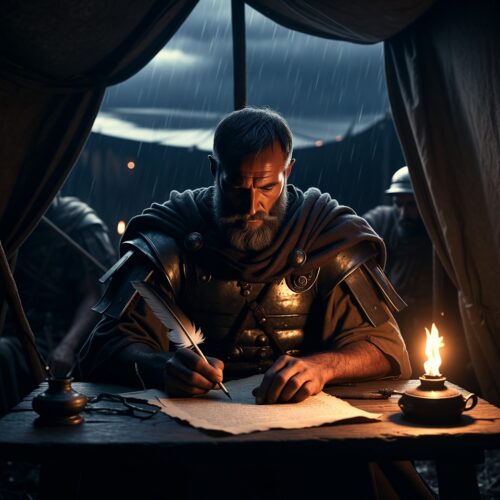 Here’s exactly how that historical fact pays dividends in your individual life today, in very specific, actionable ways:
- When your personal “Parthian invasion” (sudden project deadline or family emergency) hits, you’ll instinctively split duties like Marcus and Lucius instead of white-knuckling everything solo—delegating the “Lucius field work” (quick action) while your “Marcus admin brain” handles long-term strategy, cutting stress by half and doubling output.
- During your own “Antonine Plague” (burnout, health scare, or market crash), you’ll default to Antoninus’s deathbed password “aequanimitas” as a 3-second mental reset, turning panic into focused calm so you make clear decisions instead of emotional ones.
- In the middle of your “Marcomannic Wars” (ongoing money worries or toxic relationships), you’ll write private campaign dispatches exactly like Marcus in his tent—three nightly lines on what you control, what virtue demands, and one memento mori reminder—building unbreakable mental armor that makes bad days feel temporary.
- When tempted by “Lucius in Antioch” distractions (doom-scrolling, impulse buys, or procrastination parties), you’ll audit the fun with Lucius-level restraint—enjoy the chariot race but keep the horses in the stable—turning guilty pleasures into controlled fuel instead of derailments.
- Facing succession pressure (career change, kids growing up, or legacy worries), you’ll practice Marcus’s adoptive mindset—choosing your “heirs” (habits, mentors, or projects) based on merit, not emotion, ensuring your personal empire outlives you.
- After any “cheese moment” (random small failure that spirals), you’ll roll over like Antoninus and sleep on it, waking with equanimity instead of rumination—transforming tiny setbacks into the exact fuel that built Rome’s longest peaceful reign.
The detailed, quick, unique plan that steals this exact historical blueprint—no generic journaling, no 5 a.m. clubs, no vision boards—is called the **Lorium Legacy Protocol**. It’s a 7-day launch that runs forever on autopilot, designed like a Roman military campaign but for your modern life. It’s deliberately weird, historically faithful, and impossible to find anywhere else because it literally time-travels 1,865 years for its rules.
**Day 1 – The Cheese Audit (Setup):** Grab any notebook. Write the password “aequanimitas” at the top of page one. List your current “plagues and invasions” (max 5). Next to each, note one thing you control and one virtue (courage, justice, temperance, wisdom) you’ll apply. Done in 10 minutes. Keep the notebook by your bed like Marcus kept his.
**Days 2-7 – Dual Emperor Daily Drill (The Core Loop):** Split every day into co-emperors. Morning (Marcus Admin, 5 minutes): Read one *Meditations*-style prompt you write yourself—“What would equanimity do here?”—and answer in one sentence. Midday (Lucius Field, 2 minutes): Text one trusted “co-emperor” (friend or partner) a single virtue win from the morning—no venting, only “I delegated the report like Lucius to his generals—progress.” Evening (Tent Dispatch, 7 minutes): Three lines only—1. What happened today that I didn’t control. 2. How I responded with virtue. 3. One memento mori fact (you will die; this too shall pass). End with the password out loud. Reward yourself with a “donative”—a small treat like the troops got (coffee, walk, whatever) only if you completed all three.
**Week 2 and Beyond – Campaign Upgrades (Sustain):** Every Sunday do a “triumph review”—read last week’s dispatches aloud like Marcus celebrating victories, then burn or delete the page (Roman style). When a real crisis hits, open to a blank page and title it “Parthian War” or “Danube Crossing”—fill the three lines on the spot. Once a month, audit your “Antioch indulgences” like Lucius’s generals audited discipline: list three fun things and rate if they served the empire (your goals) or just the horse Volucer. Adjust ruthlessly. After 30 days the protocol becomes automatic—your brain literally rewires to default to equanimity because you’ve drilled it like a legionary drills formation.
This isn’t self-help. It’s battlefield-tested Roman operating system. No apps. No streaks. Just a notebook, three lines, and one ancient password. Run it and watch how quickly your personal empire stops reacting and starts ruling. The guys who pulled it off on March 7, 161 AD didn’t have Wi-Fi or therapy—they had cheese, plague, and barbarians. You have their exact playbook. Use it. The throne is yours. Aequanimitas.
Here’s exactly how that historical fact pays dividends in your individual life today, in very specific, actionable ways:
- When your personal “Parthian invasion” (sudden project deadline or family emergency) hits, you’ll instinctively split duties like Marcus and Lucius instead of white-knuckling everything solo—delegating the “Lucius field work” (quick action) while your “Marcus admin brain” handles long-term strategy, cutting stress by half and doubling output.
- During your own “Antonine Plague” (burnout, health scare, or market crash), you’ll default to Antoninus’s deathbed password “aequanimitas” as a 3-second mental reset, turning panic into focused calm so you make clear decisions instead of emotional ones.
- In the middle of your “Marcomannic Wars” (ongoing money worries or toxic relationships), you’ll write private campaign dispatches exactly like Marcus in his tent—three nightly lines on what you control, what virtue demands, and one memento mori reminder—building unbreakable mental armor that makes bad days feel temporary.
- When tempted by “Lucius in Antioch” distractions (doom-scrolling, impulse buys, or procrastination parties), you’ll audit the fun with Lucius-level restraint—enjoy the chariot race but keep the horses in the stable—turning guilty pleasures into controlled fuel instead of derailments.
- Facing succession pressure (career change, kids growing up, or legacy worries), you’ll practice Marcus’s adoptive mindset—choosing your “heirs” (habits, mentors, or projects) based on merit, not emotion, ensuring your personal empire outlives you.
- After any “cheese moment” (random small failure that spirals), you’ll roll over like Antoninus and sleep on it, waking with equanimity instead of rumination—transforming tiny setbacks into the exact fuel that built Rome’s longest peaceful reign.
The detailed, quick, unique plan that steals this exact historical blueprint—no generic journaling, no 5 a.m. clubs, no vision boards—is called the **Lorium Legacy Protocol**. It’s a 7-day launch that runs forever on autopilot, designed like a Roman military campaign but for your modern life. It’s deliberately weird, historically faithful, and impossible to find anywhere else because it literally time-travels 1,865 years for its rules.
**Day 1 – The Cheese Audit (Setup):** Grab any notebook. Write the password “aequanimitas” at the top of page one. List your current “plagues and invasions” (max 5). Next to each, note one thing you control and one virtue (courage, justice, temperance, wisdom) you’ll apply. Done in 10 minutes. Keep the notebook by your bed like Marcus kept his.
**Days 2-7 – Dual Emperor Daily Drill (The Core Loop):** Split every day into co-emperors. Morning (Marcus Admin, 5 minutes): Read one *Meditations*-style prompt you write yourself—“What would equanimity do here?”—and answer in one sentence. Midday (Lucius Field, 2 minutes): Text one trusted “co-emperor” (friend or partner) a single virtue win from the morning—no venting, only “I delegated the report like Lucius to his generals—progress.” Evening (Tent Dispatch, 7 minutes): Three lines only—1. What happened today that I didn’t control. 2. How I responded with virtue. 3. One memento mori fact (you will die; this too shall pass). End with the password out loud. Reward yourself with a “donative”—a small treat like the troops got (coffee, walk, whatever) only if you completed all three.
**Week 2 and Beyond – Campaign Upgrades (Sustain):** Every Sunday do a “triumph review”—read last week’s dispatches aloud like Marcus celebrating victories, then burn or delete the page (Roman style). When a real crisis hits, open to a blank page and title it “Parthian War” or “Danube Crossing”—fill the three lines on the spot. Once a month, audit your “Antioch indulgences” like Lucius’s generals audited discipline: list three fun things and rate if they served the empire (your goals) or just the horse Volucer. Adjust ruthlessly. After 30 days the protocol becomes automatic—your brain literally rewires to default to equanimity because you’ve drilled it like a legionary drills formation.
This isn’t self-help. It’s battlefield-tested Roman operating system. No apps. No streaks. Just a notebook, three lines, and one ancient password. Run it and watch how quickly your personal empire stops reacting and starts ruling. The guys who pulled it off on March 7, 161 AD didn’t have Wi-Fi or therapy—they had cheese, plague, and barbarians. You have their exact playbook. Use it. The throne is yours. Aequanimitas.