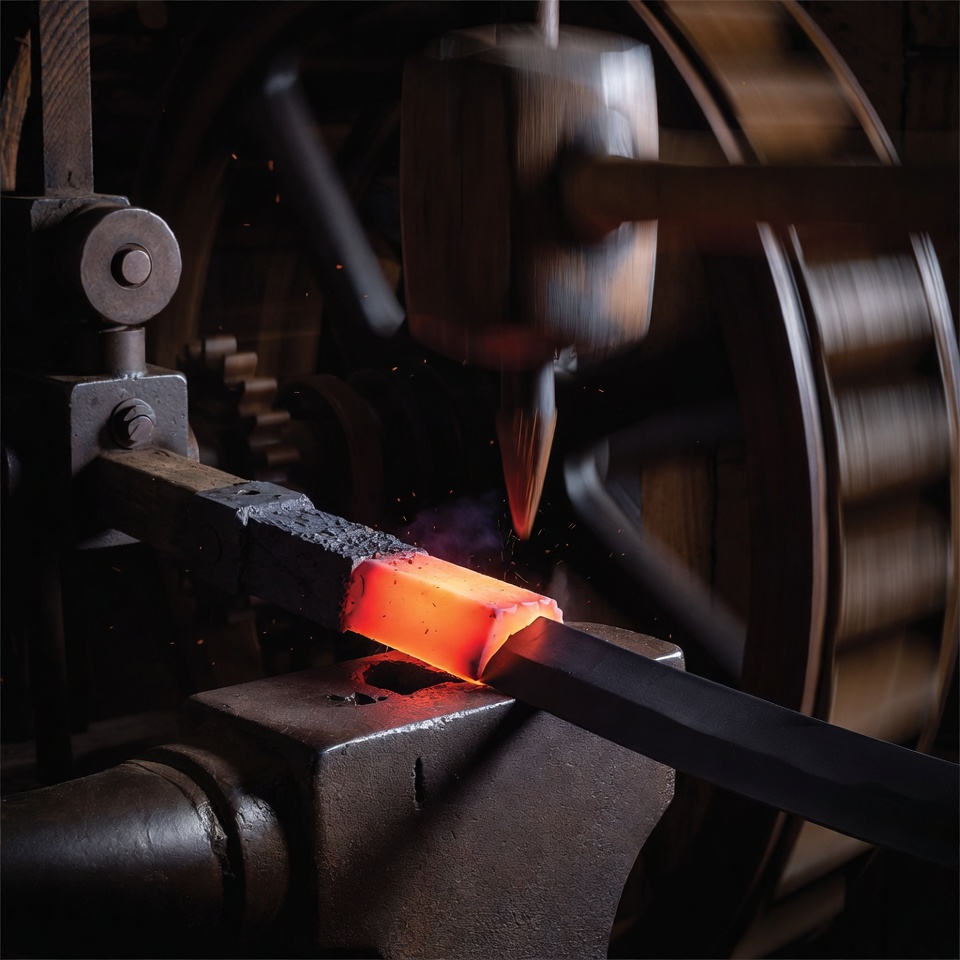
Imagine a crisp March morning in 1646. The Massachusetts Bay Colony is barely a teenager—raw, muddy, half-starved, and surrounded by forest that doesn’t care if you live or die. A blacksmith named Joseph Jenkes stands before the stern Puritan gentlemen of the General Court clutching a petition that sounds almost desperate. He has spent years, his entire estate, and every ounce of his cunning perfecting a water-driven machine that can crank out scythes, saw blades, and edged tools faster and better than any hand-forged junk shipped from England. He begs them: protect this idea, or “another when he seeth it makes the like… which will tend to my Great damadg if not my utter undoeing.”
On March 6, 1646, they said yes. The first patent ever granted in North America was his—fourteen full years of exclusive rights. That single sheet of parchment didn’t just protect a machine. It lit the fuse on American ingenuity, manufacturing independence, and the radical notion that a regular working man could own his own brainchild. And the wildest part? Almost nobody talks about it today. While everyone obsesses over tea parties and midnight rides, this quiet blade of history is still razor-sharp enough to cut through modern excuses and hand you a life you actually built instead of borrowed. Let’s travel back—deep back—and live the whole story the way it deserves to be told. Because 90 percent of real transformation comes from understanding where the fire actually started.
Joseph Jenkes was born into the clanging, smoky world of 1599 London. Baptized August 26 at St. Ann Blackfriars, he grew up in a cutler family neck-deep in the Worshipful Company of Cutlers and even the bakers’ guild (yes, guilds were weirdly flexible back then). His grandfather was a German immigrant blade-maker; his father and half-brothers hammered steel for a living. Young Joseph learned early that sharp edges weren’t just tools—they were power, status, and survival.
By 1627 he had married Joan Hearne and was forging swords at Benjamin Stone’s legendary Hounslow factory on the Cutt River. This wasn’t some backyard shop. Stone had converted a grain mill into a full-on war-machine factory to feed the Thirty Years’ War raging across Europe. English cutlers worked shoulder-to-shoulder with elite German sword-makers from Solingen. Blades poured out for the Tower of London armory. One surviving sword still bears the inscription “JENCKES JOSEPH” on one side and “ME FECIT HOVNSLO” on the other—proof the man knew how to put his name on excellence.
Then life swung its own brutal blade. In 1635 Joan died. One of their two children followed in 1638. Suddenly a widower with a young son (Joseph Jr., born 1628) left behind with relatives, Jenkes did what thousands of restless Englishmen were doing: he looked west. Around 1641 he sailed alone into the unknown, landing first in New Hampshire records by 1642, then scratching out a deed near Kittery, Maine, on the York River. The wilderness was merciless—wolves, Wabanaki raids, Puritan suspicion of anyone who smelled too much like old-world craftsmanship. But Jenkes carried something no Puritan sermon could extinguish: the itch to build better.
By 1645 he had migrated south to the brand-new settlement of Hammersmith (today’s Saugus, Massachusetts), just ten miles north of Boston. And there he stepped into history’s furnace.
The Saugus Iron Works was the most audacious industrial gamble in the Western Hemisphere. In 1641 John Winthrop the Younger had sailed to England, hat in hand, begging investors to fund “The Company of Undertakers of the Iron Workes in New England.” They wanted to stop bleeding money importing every nail, axe, and horseshoe from across the Atlantic. Bog iron—those reddish lumps that bubbled up in local swamps—seemed like manna from heaven. Richard Leader, the ironmaster who took over in 1645, chose the perfect spot on the Saugus River: deep enough for ships, forests thick enough for endless charcoal, and a natural waterfall for power.
What they built was insane for 1646. A blast furnace 25 feet tall that belched fire day and night. Bellows the size of small boats, powered by massive waterwheels, forcing air into the charge of bog ore, charcoal, and gabbro flux (local rock that acted like limestone). Molten pig iron poured out like liquid hell. Then a forge with a 500-pound trip-hammer that slammed wrought iron into bars. A rolling and slitting mill that turned those bars into flat stock for nails, hoops, and blades. Seven waterwheels in total, some working in tandem through wooden gears the size of wagon wheels. At peak they employed over 200 men—English specialists, indentured servants, and later Scottish prisoners of war captured at the Battle of Dunbar in 1650. One ton of cast iron a day. Thirty weeks a year. This was not a blacksmith shop. This was the Industrial Revolution’s secret American baby, born a century and a half before anyone gave it that name.
Let’s travel back—deep back—and live the whole story the way it deserves to be told. Because 90 percent of real transformation comes from understanding where the fire actually started.
Joseph Jenkes was born into the clanging, smoky world of 1599 London. Baptized August 26 at St. Ann Blackfriars, he grew up in a cutler family neck-deep in the Worshipful Company of Cutlers and even the bakers’ guild (yes, guilds were weirdly flexible back then). His grandfather was a German immigrant blade-maker; his father and half-brothers hammered steel for a living. Young Joseph learned early that sharp edges weren’t just tools—they were power, status, and survival.
By 1627 he had married Joan Hearne and was forging swords at Benjamin Stone’s legendary Hounslow factory on the Cutt River. This wasn’t some backyard shop. Stone had converted a grain mill into a full-on war-machine factory to feed the Thirty Years’ War raging across Europe. English cutlers worked shoulder-to-shoulder with elite German sword-makers from Solingen. Blades poured out for the Tower of London armory. One surviving sword still bears the inscription “JENCKES JOSEPH” on one side and “ME FECIT HOVNSLO” on the other—proof the man knew how to put his name on excellence.
Then life swung its own brutal blade. In 1635 Joan died. One of their two children followed in 1638. Suddenly a widower with a young son (Joseph Jr., born 1628) left behind with relatives, Jenkes did what thousands of restless Englishmen were doing: he looked west. Around 1641 he sailed alone into the unknown, landing first in New Hampshire records by 1642, then scratching out a deed near Kittery, Maine, on the York River. The wilderness was merciless—wolves, Wabanaki raids, Puritan suspicion of anyone who smelled too much like old-world craftsmanship. But Jenkes carried something no Puritan sermon could extinguish: the itch to build better.
By 1645 he had migrated south to the brand-new settlement of Hammersmith (today’s Saugus, Massachusetts), just ten miles north of Boston. And there he stepped into history’s furnace.
The Saugus Iron Works was the most audacious industrial gamble in the Western Hemisphere. In 1641 John Winthrop the Younger had sailed to England, hat in hand, begging investors to fund “The Company of Undertakers of the Iron Workes in New England.” They wanted to stop bleeding money importing every nail, axe, and horseshoe from across the Atlantic. Bog iron—those reddish lumps that bubbled up in local swamps—seemed like manna from heaven. Richard Leader, the ironmaster who took over in 1645, chose the perfect spot on the Saugus River: deep enough for ships, forests thick enough for endless charcoal, and a natural waterfall for power.
What they built was insane for 1646. A blast furnace 25 feet tall that belched fire day and night. Bellows the size of small boats, powered by massive waterwheels, forcing air into the charge of bog ore, charcoal, and gabbro flux (local rock that acted like limestone). Molten pig iron poured out like liquid hell. Then a forge with a 500-pound trip-hammer that slammed wrought iron into bars. A rolling and slitting mill that turned those bars into flat stock for nails, hoops, and blades. Seven waterwheels in total, some working in tandem through wooden gears the size of wagon wheels. At peak they employed over 200 men—English specialists, indentured servants, and later Scottish prisoners of war captured at the Battle of Dunbar in 1650. One ton of cast iron a day. Thirty weeks a year. This was not a blacksmith shop. This was the Industrial Revolution’s secret American baby, born a century and a half before anyone gave it that name.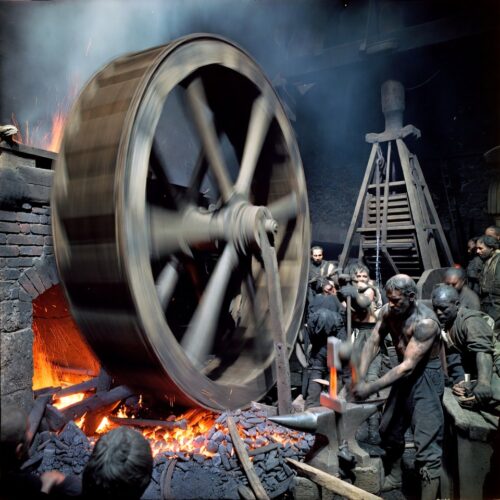 Jenkes didn’t just work there—he leveled up. In 1647 Richard Leader gave him permission to erect his own foundry and forge right on the furnace tailrace, using the spent water power for free. He built a home three-quarters of a mile away on School Street. And then he did the thing that still echoes: he invented a water-driven machine that could mass-produce scythes, sawmill blades, and edged tools with mechanical precision instead of pure muscle and guesswork.
Colonial farmers were breaking their backs with crude English scythes—short, thick blades on straight snaths that dulled in minutes and required constant hammering. Harvest time was a sweaty, bloody war against time and weather. Jenkes’s machine changed the math. It could hammer, shape, and temper blades faster, lighter, and stronger. He poured everything he had into perfecting it—his savings, his nights, his reputation.
That’s when he marched into the General Court with his petition. The language is pure 17th-century desperation wrapped in dignity: he had “expended his estate, study, and labour, and have brought things to perfection.” Without protection, some opportunist would simply copy it and leave him ruined. The Court listened. On March 6, 1646, Governor John Winthrop and Deputy Edward Rawson signed the first machine patent in North America. Fourteen years of monopoly rights. No one else in the colonies could legally build or sell that exact machine.
Jenkes didn’t just work there—he leveled up. In 1647 Richard Leader gave him permission to erect his own foundry and forge right on the furnace tailrace, using the spent water power for free. He built a home three-quarters of a mile away on School Street. And then he did the thing that still echoes: he invented a water-driven machine that could mass-produce scythes, sawmill blades, and edged tools with mechanical precision instead of pure muscle and guesswork.
Colonial farmers were breaking their backs with crude English scythes—short, thick blades on straight snaths that dulled in minutes and required constant hammering. Harvest time was a sweaty, bloody war against time and weather. Jenkes’s machine changed the math. It could hammer, shape, and temper blades faster, lighter, and stronger. He poured everything he had into perfecting it—his savings, his nights, his reputation.
That’s when he marched into the General Court with his petition. The language is pure 17th-century desperation wrapped in dignity: he had “expended his estate, study, and labour, and have brought things to perfection.” Without protection, some opportunist would simply copy it and leave him ruined. The Court listened. On March 6, 1646, Governor John Winthrop and Deputy Edward Rawson signed the first machine patent in North America. Fourteen years of monopoly rights. No one else in the colonies could legally build or sell that exact machine. Think about what that meant in a world without copyright, without corporations, without venture capital. It was revolutionary. It said: your mind is property. Your grind has value. One immigrant blacksmith had just planted the seed of intellectual property law on American soil—decades before the U.S. Constitution’s patent clause in 1787.
The impact rippled outward like a stone skipped across the Saugus River. Better scythes meant faster hay harvests. More hay meant more livestock through winter. More livestock meant more meat, leather, manure for fields. More food security. Stronger colonies. Saw blades meant better lumber for houses, ships, churches. The “American scythe” Jenkes later refined in 1655 (another seven-year patent) featured a double-curved snath for ergonomic swing and a longer, thinner, rib-backed blade that stayed sharp longer. Farmers swore by it. That basic design? It’s still the one you see in every serious hayfield today—almost unchanged after 370 years.
Jenkes didn’t stop. He cast the first iron pot in North America—the famous three-legged “Saugus Pot” with lid and bale handle, now proudly displayed in the local library. Metallurgists later confirmed the metal matches fragments from his forge site. He almost certainly cut the steel dies for the first coins minted in the colonies—the legendary pine-tree shillings of 1652. John Hull and Robert Sanderson ran the mint, but only Hammersmith had a blast furnace hot enough to produce the high-carbon steel needed for proper dies. Jenkes even got tapped in 1654 to possibly build Boston’s first fire engine after a devastating blaze. (The records are fuzzy, but the selectmen gave him the green light to negotiate.)
Life wasn’t all triumph. The parent company went bankrupt in the mid-1650s—classic story of high labor costs, embezzlement rumors, Puritan workers clashing with hard-drinking English specialists. Jenkes mortgaged his own house to buy the rolling mill, slitting mill, and forge when they were auctioned off. He kept grinding. Scottish prisoners of war shoveled charcoal and learned trades, eventually earning freedom and melting into New England bloodlines. Puritan courts fined workers for cursing, gambling, or skipping church—imagine getting docked a day’s pay for swearing at a 500-pound hammer that just smashed your thumb.
There’s even a pirate legend for flavor: in 1658 Captain Thomas Veale supposedly sailed up the Saugus River at night, dropped off three captured pirates at Jenkes’s forge requesting leg irons, then vanished into Lynn Woods with treasure. The irons were made; the pirates got clapped in them; Veale supposedly buried his loot at Dungeon Rock and died in an earthquake. Pure colonial folklore—but it shows how the ironworks had become the place where even outlaws came for quality steel.
Think about what that meant in a world without copyright, without corporations, without venture capital. It was revolutionary. It said: your mind is property. Your grind has value. One immigrant blacksmith had just planted the seed of intellectual property law on American soil—decades before the U.S. Constitution’s patent clause in 1787.
The impact rippled outward like a stone skipped across the Saugus River. Better scythes meant faster hay harvests. More hay meant more livestock through winter. More livestock meant more meat, leather, manure for fields. More food security. Stronger colonies. Saw blades meant better lumber for houses, ships, churches. The “American scythe” Jenkes later refined in 1655 (another seven-year patent) featured a double-curved snath for ergonomic swing and a longer, thinner, rib-backed blade that stayed sharp longer. Farmers swore by it. That basic design? It’s still the one you see in every serious hayfield today—almost unchanged after 370 years.
Jenkes didn’t stop. He cast the first iron pot in North America—the famous three-legged “Saugus Pot” with lid and bale handle, now proudly displayed in the local library. Metallurgists later confirmed the metal matches fragments from his forge site. He almost certainly cut the steel dies for the first coins minted in the colonies—the legendary pine-tree shillings of 1652. John Hull and Robert Sanderson ran the mint, but only Hammersmith had a blast furnace hot enough to produce the high-carbon steel needed for proper dies. Jenkes even got tapped in 1654 to possibly build Boston’s first fire engine after a devastating blaze. (The records are fuzzy, but the selectmen gave him the green light to negotiate.)
Life wasn’t all triumph. The parent company went bankrupt in the mid-1650s—classic story of high labor costs, embezzlement rumors, Puritan workers clashing with hard-drinking English specialists. Jenkes mortgaged his own house to buy the rolling mill, slitting mill, and forge when they were auctioned off. He kept grinding. Scottish prisoners of war shoveled charcoal and learned trades, eventually earning freedom and melting into New England bloodlines. Puritan courts fined workers for cursing, gambling, or skipping church—imagine getting docked a day’s pay for swearing at a 500-pound hammer that just smashed your thumb.
There’s even a pirate legend for flavor: in 1658 Captain Thomas Veale supposedly sailed up the Saugus River at night, dropped off three captured pirates at Jenkes’s forge requesting leg irons, then vanished into Lynn Woods with treasure. The irons were made; the pirates got clapped in them; Veale supposedly buried his loot at Dungeon Rock and died in an earthquake. Pure colonial folklore—but it shows how the ironworks had become the place where even outlaws came for quality steel. Jenkes remarried around 1650 to a woman named Elizabeth. They had five more children. His firstborn son finally joined him from England around 1647 and later founded Pawtucket, Rhode Island. Grandson Joseph Jenckes III became governor of the colony. A later descendant helped fund Brown University. The bloodline of that first patent still pulses through American institutions.
The ironworks itself sputtered out by 1670—too expensive, too far ahead of its time. The great dam was torn down in 1682. Jenkes died the next year on March 16, 1683, at age 83, still swinging hammers in spirit. But the spark never died. Saugus Iron Works is now a National Historic Site, meticulously reconstructed after Roland Robbins’s 1948–1953 excavations uncovered waterwheels, anvils, scythe fragments, and thousands of artifacts. Visitors can still feel the heat of the blast furnace and hear the ghost of that first patented machine humming along the tailrace.
That, friends, is the 90-percent history lesson most self-help gurus will never give you. Not a king. Not a general. Not a billionaire. Just a widowed immigrant blacksmith who refused to let his life’s work be stolen for free. And because the Massachusetts General Court had the vision to say “this idea belongs to the man who bled for it,” America got its first taste of protected innovation. Farming improved. Building accelerated. A culture of “build better and own it” took root.
Now the remaining 10 percent—the part that actually changes your Tuesday morning.
The outcome of March 6, 1646, is simple but nuclear: **protecting what you create is the ultimate force multiplier.** Jenkes didn’t just make better scythes—he made sure the sweat equity stayed his. That single decision rippled for centuries. Today, in an age where AI scrapes your ideas, coworkers “borrow” your strategies, and social media rewards the loudest copycats, that 1646 precedent is your secret weapon.
Here’s exactly how one ordinary person today reaps the harvest of that distant patent:
Jenkes remarried around 1650 to a woman named Elizabeth. They had five more children. His firstborn son finally joined him from England around 1647 and later founded Pawtucket, Rhode Island. Grandson Joseph Jenckes III became governor of the colony. A later descendant helped fund Brown University. The bloodline of that first patent still pulses through American institutions.
The ironworks itself sputtered out by 1670—too expensive, too far ahead of its time. The great dam was torn down in 1682. Jenkes died the next year on March 16, 1683, at age 83, still swinging hammers in spirit. But the spark never died. Saugus Iron Works is now a National Historic Site, meticulously reconstructed after Roland Robbins’s 1948–1953 excavations uncovered waterwheels, anvils, scythe fragments, and thousands of artifacts. Visitors can still feel the heat of the blast furnace and hear the ghost of that first patented machine humming along the tailrace.
That, friends, is the 90-percent history lesson most self-help gurus will never give you. Not a king. Not a general. Not a billionaire. Just a widowed immigrant blacksmith who refused to let his life’s work be stolen for free. And because the Massachusetts General Court had the vision to say “this idea belongs to the man who bled for it,” America got its first taste of protected innovation. Farming improved. Building accelerated. A culture of “build better and own it” took root.
Now the remaining 10 percent—the part that actually changes your Tuesday morning.
The outcome of March 6, 1646, is simple but nuclear: **protecting what you create is the ultimate force multiplier.** Jenkes didn’t just make better scythes—he made sure the sweat equity stayed his. That single decision rippled for centuries. Today, in an age where AI scrapes your ideas, coworkers “borrow” your strategies, and social media rewards the loudest copycats, that 1646 precedent is your secret weapon.
Here’s exactly how one ordinary person today reaps the harvest of that distant patent:
You stop giving your best thinking away for free. Jenkes petitioned because he knew perfection costs years. You start treating your unique systems—whether it’s a killer morning routine, a niche skill, or a side-project process—like the intellectual property they are. Document them privately first. That alone creates an “edge” no one can dull.
You iterate like a blacksmith, not a dreamer. Jenkes didn’t patent a vague dream; he perfected a working machine. You test small, ship small, refine relentlessly. The 1655 improved scythe came after the 1646 one—proof that patents reward ongoing mastery, not one-hit wonders.
You build for the long swing. A scythe’s job is to cut grass season after season. Your life’s work should outlast trends. Jenkes’s American scythe design survived 370 years because it solved a real human problem better. Solve one real problem in your world—parenting, fitness, career, creativity—and protect the solution. Legacy compounds.
You turn obstacles into ore. Bankruptcy, mortgage, Puritan busybodies, Scottish prisoners causing drama—Jenkes used the tailrace water anyway. Today’s “no money, no time, no support” excuses are just more bog iron. Melt them down and cast something useful.
You leave tools sharper for the next generation. Jenkes’s son carried the craft to Rhode Island. Your protected systems—notebooks, templates, processes—become the “American scythe” your kids or colleagues swing without breaking their backs.
And here is the plan no other self-help corner of the internet is running—the **Jenkes Seven-Day Forge Protocol**. It’s not journaling. It’s not vision-boarding. It’s blacksmithing your future in one focused week, using the exact cycle Jenkes lived: heat, hammer, quench, temper, repeat. Do it once and you’ll own a personal “patent” on your potential that no algorithm or opportunist can steal.
**Day 1 – Survey the Bog Ore (Raw Material Audit)**
List every skill, system, or half-finished idea you’ve poured sweat into. Be ruthless. Jenkes inventoried his Hounslow sword knowledge before immigrating. Circle the one that could cut through your biggest current frustration (finances, health, relationships, career). That’s your ore.
**Day 2 – Heat the Forge (Intense Focus Immersion)**
Four uninterrupted hours researching and refining that one thing. No phone. Use the 1646 petition energy—write why this matters so much that “utter undoeing” would follow if someone copied it. Feel the heat. Jenkes spent years at Hounslow; you spend one deep day.
**Day 3 – Hammer the Blade (Build the Prototype)**
Create the smallest testable version. A one-page process doc. A 30-second video. A spreadsheet. A workout template. Whatever your “scythe” is, shape it. Jenkes’s water machine started as one working model. Ship ugly. Test it today.
**Day 4 – Quench & Inspect (Ruthless Review)**
Cool off. Use it yourself or show one trusted person. Note every weakness exactly like an archaeologist at the Jenks forge site catalogued broken blades. No ego. Quenching makes steel stronger; honest feedback does the same for you.
**Day 5 – Temper for Edge (Protect & Document)**
Write the “patent” for your idea: one-page private manifesto with exact steps, your unique twist, and why it works. Date it. Store it somewhere only you control (encrypted note, safety-deposit box, whatever). This is your March 6, 1646 moment. The act of documenting creates psychological ownership no one can touch.
**Day 6 – Swing the Scythe (First Real Harvest)**
Apply the refined version to one real-life situation. Cut the grass. Close the deal. Finish the project. Feel the difference. Jenkes’s farmers reaped more hay; you reap one tangible win that proves the system.
**Day 7 – Pass the Snath (Legacy Lock-In)**
Teach or share one tiny piece of the improved version (without giving the full recipe). Watch it help someone else. Schedule the next iteration date three months out. The American scythe lasted centuries because it got handed down sharper. Your edge does too.
Seven days. No apps. No guru. Just heat, hammer, quench, temper—the same cycle that turned a widowed English blacksmith into the godfather of American patents. Do it and you’ll walk around with the quiet confidence of a man who knows his ideas are legally, morally, and spiritually his.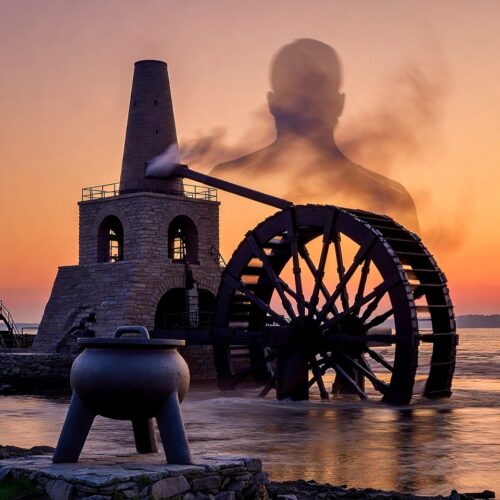 The dust on that 1646 parchment has long settled, but the blade is still swinging. Every time you refuse to let someone dull your edge, every time you protect what you bled for, every time you hand a sharper tool to the next generation, you are living the outcome of March 6, 1646.
So go forge something. The General Court of your own life is waiting for your petition.
And remember the scythe.
It’s still cutting.
The dust on that 1646 parchment has long settled, but the blade is still swinging. Every time you refuse to let someone dull your edge, every time you protect what you bled for, every time you hand a sharper tool to the next generation, you are living the outcome of March 6, 1646.
So go forge something. The General Court of your own life is waiting for your petition.
And remember the scythe.
It’s still cutting.