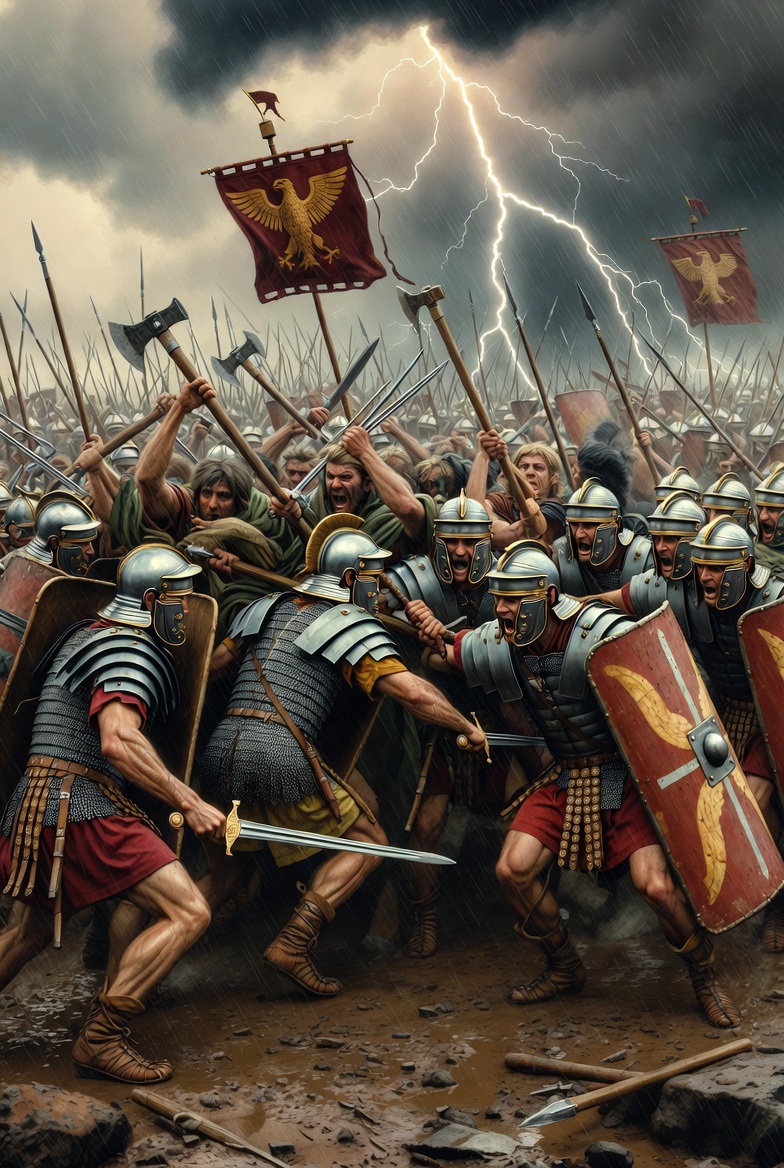
Imagine a world where one guy tries to juggle flaming swords, runaway chariots, and a horde of angry barbarians all at once. That's basically the Roman Empire in the late third century AD – a colossal mess of invasions, rebellions, and economic face-plants that made even the gods throw up their hands. Enter Diocletian, a no-nonsense soldier from the backwoods of Dalmatia, who clawed his way to the top and decided that if one emperor wasn't enough, why not try four? On March 1, 293, he pulled off what could be called the ultimate power-sharing hack: the establishment of the Tetrarchy. This wasn't just some bureaucratic shuffle; it was a radical redesign of how to run the biggest empire the world had ever seen. And while it didn't last forever – spoiler: human egos got in the way – it bought Rome precious time to catch its breath and reinvent itself.
Let's rewind to the chaos that birthed this beast. The Roman Empire, that sprawling behemoth stretching from the misty shores of Britain to the sun-baked sands of Syria, had been teetering on the edge of oblivion for decades. Historians call it the Crisis of the Third Century, a fancy name for what was essentially a 50-year-long dumpster fire. It kicked off around 235 AD with the assassination of Emperor Severus Alexander, unleashing a parade of short-lived rulers – over 20 in 50 years, most of whom met grisly ends. Picture this: emperors popping up like weeds, only to be yanked out by usurpers, legions mutinying faster than you can say "SPQR," and the economy tanking harder than a lead balloon. Inflation soared as emperors debased the currency to pay off troops, turning silver coins into shiny trash. Barbarian tribes like the Goths and Alamanni poured over the Rhine and Danube frontiers, sacking cities and generally treating the empire like their personal buffet. To the east, the Sassanian Persians under kings like Shapur I were flexing, capturing Emperor Valerian in 260 AD – yeah, they literally paraded him around in a cage before stuffing his skin as a trophy. Ouch.
The military was stretched thinner than a toga on a sumo wrestler. One emperor couldn't be everywhere at once. If he dashed to the Rhine to smack down Franks, the Persians would raid Syria. If he fortified the east, Britain might secede (which it did under Carausius in 286). Civil wars drained resources, plagues decimated populations, and trade routes crumbled. By the 280s, the empire was fracturing into breakaway states like the Gallic Empire in the west and the Palmyrene Empire in the east. It was like watching a giant Jenga tower wobble, with everyone holding their breath for the crash.
Enter Diocletian, born around 244 AD as Diocles in a humble Illyrian family – think modern-day Croatia. He wasn't some patrician blue-blood; he was a career soldier who rose through the ranks in the rough-and-tumble legions. In 284, during yet another civil war, he was proclaimed emperor after offing his rival Aper (who had conveniently murdered the previous emperor Numerian). Diocletian wasted no time. He crushed remaining rebels, including the Bagaudae peasants in Gaul who were basically the ancient equivalent of pitchfork-wielding farmers on strike. But he knew solo rule was a recipe for burnout. So, in 285, he appointed his buddy Maximian as Caesar – junior emperor – and bumped him to co-Augustus in 286. This diarchy split the empire informally: Diocletian handled the east from Nicomedia (modern Izmit, Turkey), while Maximian took the west from Mediolanum (Milan, Italy). It was like assigning one CEO to Asia-Pacific and another to Europe-Americas, but with more swords and less PowerPoint.
But two heads weren't enough for this hydra of problems. The empire's sheer size – over 3 million square miles, 50-60 million people – demanded more delegation. Diocletian, ever the pragmatist, looked to mythology for inspiration. He styled himself after Jupiter, the king of gods, and Maximian as Hercules, the heroic sidekick. Why not extend that? On March 1, 293, in a ceremony probably heavy on incense and eagle motifs, Diocletian appointed Galerius as his Caesar in the east, while Maximian got Constantius Chlorus in the west. Boom: Tetrarchy activated. The date isn't arbitrary; March 1 marked the start of the military campaigning season in the old Roman calendar, a nod to renewal and action. These weren't just deputies; they were adopted sons in a fictive family, ensuring loyalty through ties of "divine" kinship. Diocletian remained the senior Augustus, the big cheese calling the shots, but each ruler had operational autonomy in their quadrant.
Let's meet the fab four. Diocletian, the mastermind, was a micromanager extraordinaire. Bald, stern, with a no-frills beard, he was all about efficiency. He reformed everything: taxes, administration, the army. Under him, the empire's bureaucracy ballooned to handle the mess. Maximian, his burly counterpart, was the muscle – a former soldier from Pannonia (Hungary), he crushed revolts in Gaul and Africa with gusto, earning the nickname "Herculius" for his Herculean feats (or maybe just his ego). Constantius Chlorus, the "Pale One," was a steady hand from Illyria, tasked with reclaiming Britain from the usurper Carausius. He did it in 296, sailing across the Channel in foggy weather to surprise the rebels – talk about a British invasion in reverse. Galerius, the hot-headed Dacian (Romanian roots), was Diocletian's right-hand man, smashing Persians in 298 and later pushing anti-Christian persecutions. He was the enforcer, once famously defeated by the Persians in 296 but bouncing back to capture their capital Ctesiphon. These guys weren't pals from the pub; they were battle-hardened pros, chosen for competence over bloodlines.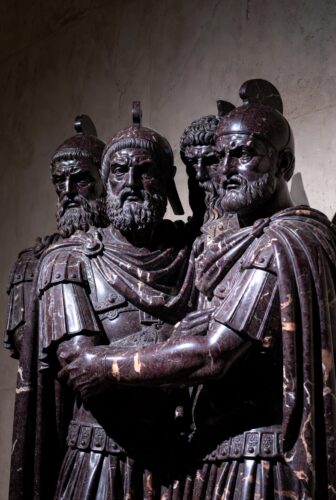 How did this four-way split work in practice? No clean lines on a map – the empire remained one indivisible unit, or "patrimonium indivisum." But practically, it was quartered: Diocletian oversaw the eastern provinces from Thrace to Egypt; Galerius handled the Balkans from Sirmium (Serbia); Maximian covered Italy, Africa, and Spain from Milan; Constantius managed Gaul, Britain, and the Rhine from Trier (Germany). They ditched Rome as the capital – too central, too vulnerable – opting for frontier hubs closer to threats. This was genius for defense: Constantius repelled Alemanni invasions, Maximian quelled Moorish raids in Africa, Galerius humiliated the Persians by capturing King Narseh's harem (embarrassing much?), and Diocletian stamped out an Egyptian revolt under Achilleus in 297-298. The system allowed simultaneous campaigns without the emperor teleporting across continents.
But the Tetrarchy wasn't just military; it was a total overhaul. Diocletian doubled the army to 400,000-500,000 troops, creating mobile field armies (comitatenses) and static border guards (limitanei). He reorganized provinces into smaller units – from 50 to over 100 – grouped into 12 dioceses under vicars, overseen by four praetorian prefects, one per tetrarch. This curbed governors' power, reducing usurpations. Economically, he tried to cap prices with the Edict on Maximum Prices in 301, fighting inflation (spoiler: it flopped, as black markets boomed). Taxes were standardized: the annona for soldiers, capitatio-iugatio linking land and heads. Socially, he mandated hereditary occupations – sons of soldiers became soldiers, bakers' kids baked – to stabilize the workforce. And religion? Diocletian pushed traditional Roman gods, persecuting Manicheans and Christians from 303, blaming them for plagues and defeats. The Great Persecution saw churches razed, scriptures burned, and thousands martyred – ironic, since Christianity would soon conquer Rome.
The first Tetrarchy hummed along like a well-oiled chariot from 293 to 305. Victories piled up: Britain reclaimed, Persians sued for peace (ceding Mesopotamia), Nile secured. Coins and monuments screamed unity – all tetrarchs depicted identically, beardless and stern, in porphyry sculptures like the famous Venice group, hugging like bros eternal. But Diocletian, plagued by illness (possibly a stroke), planned an exit. On May 1, 305, he and Maximian abdicated in synchronized ceremonies – Diocletian at Nicomedia, Maximian at Milan. Galerius and Constantius became Augusti, with new Caesars: Severus in the west and Maximinus Daia (Galerius's nephew) in the east. Diocletian retired to his massive palace in Split, Croatia (still standing, a UNESCO site), growing cabbages and snubbing pleas to return. When asked why he quit, he quipped, "If you could see the vegetables I've grown, you'd understand."
Phase two? Not so smooth. Constantius died in 306 while campaigning in Britain, and his troops acclaimed his son Constantine as Augustus – dynastic loyalty trumping the system. Maximian came out of retirement, his son Maxentius seized Rome, and Severus was captured and killed. Galerius invaded Italy but retreated, then convened the 308 Carnuntum conference, appointing Licinius as western Augustus and demoting Constantine to Caesar (which he ignored). Maximinus Daia proclaimed himself Augustus in 310, making four again – but chaotic. Civil wars erupted: Constantine crushed Maxentius at the Milvian Bridge in 312 (famous for his "In hoc signo vinces" vision), allying with Licinius, who offed Maximinus in 313. By then, the Tetrarchy was dead, morphed into a Constantine-Licinius diarchy, then sole rule under Constantine after 324.
How did this four-way split work in practice? No clean lines on a map – the empire remained one indivisible unit, or "patrimonium indivisum." But practically, it was quartered: Diocletian oversaw the eastern provinces from Thrace to Egypt; Galerius handled the Balkans from Sirmium (Serbia); Maximian covered Italy, Africa, and Spain from Milan; Constantius managed Gaul, Britain, and the Rhine from Trier (Germany). They ditched Rome as the capital – too central, too vulnerable – opting for frontier hubs closer to threats. This was genius for defense: Constantius repelled Alemanni invasions, Maximian quelled Moorish raids in Africa, Galerius humiliated the Persians by capturing King Narseh's harem (embarrassing much?), and Diocletian stamped out an Egyptian revolt under Achilleus in 297-298. The system allowed simultaneous campaigns without the emperor teleporting across continents.
But the Tetrarchy wasn't just military; it was a total overhaul. Diocletian doubled the army to 400,000-500,000 troops, creating mobile field armies (comitatenses) and static border guards (limitanei). He reorganized provinces into smaller units – from 50 to over 100 – grouped into 12 dioceses under vicars, overseen by four praetorian prefects, one per tetrarch. This curbed governors' power, reducing usurpations. Economically, he tried to cap prices with the Edict on Maximum Prices in 301, fighting inflation (spoiler: it flopped, as black markets boomed). Taxes were standardized: the annona for soldiers, capitatio-iugatio linking land and heads. Socially, he mandated hereditary occupations – sons of soldiers became soldiers, bakers' kids baked – to stabilize the workforce. And religion? Diocletian pushed traditional Roman gods, persecuting Manicheans and Christians from 303, blaming them for plagues and defeats. The Great Persecution saw churches razed, scriptures burned, and thousands martyred – ironic, since Christianity would soon conquer Rome.
The first Tetrarchy hummed along like a well-oiled chariot from 293 to 305. Victories piled up: Britain reclaimed, Persians sued for peace (ceding Mesopotamia), Nile secured. Coins and monuments screamed unity – all tetrarchs depicted identically, beardless and stern, in porphyry sculptures like the famous Venice group, hugging like bros eternal. But Diocletian, plagued by illness (possibly a stroke), planned an exit. On May 1, 305, he and Maximian abdicated in synchronized ceremonies – Diocletian at Nicomedia, Maximian at Milan. Galerius and Constantius became Augusti, with new Caesars: Severus in the west and Maximinus Daia (Galerius's nephew) in the east. Diocletian retired to his massive palace in Split, Croatia (still standing, a UNESCO site), growing cabbages and snubbing pleas to return. When asked why he quit, he quipped, "If you could see the vegetables I've grown, you'd understand."
Phase two? Not so smooth. Constantius died in 306 while campaigning in Britain, and his troops acclaimed his son Constantine as Augustus – dynastic loyalty trumping the system. Maximian came out of retirement, his son Maxentius seized Rome, and Severus was captured and killed. Galerius invaded Italy but retreated, then convened the 308 Carnuntum conference, appointing Licinius as western Augustus and demoting Constantine to Caesar (which he ignored). Maximinus Daia proclaimed himself Augustus in 310, making four again – but chaotic. Civil wars erupted: Constantine crushed Maxentius at the Milvian Bridge in 312 (famous for his "In hoc signo vinces" vision), allying with Licinius, who offed Maximinus in 313. By then, the Tetrarchy was dead, morphed into a Constantine-Licinius diarchy, then sole rule under Constantine after 324.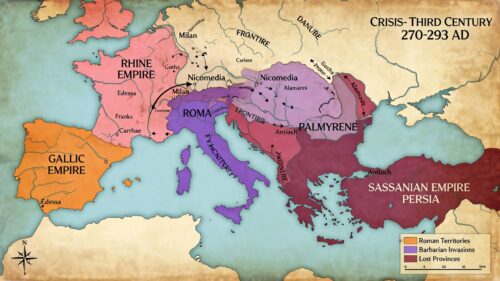 Why did it fail? Human nature, baby. The system assumed merit over blood, but sons like Constantine and Maxentius demanded their due. No clear rules for multiple deaths or retirements led to power vacuums. Ambitious generals exploited ambiguities, and the lack of a fixed capital fostered rival courts. Yet, successes shone: it ended the Third Century Crisis, stabilizing for 20 years. Military reforms held off invaders; administrative divisions lasted centuries, evolving into Byzantine themes. The east-west split foreshadowed the 395 permanent division under Theodosius's sons. Constantine, a tetrarch's son, built on it – Christianizing the empire, founding Constantinople in 330. The Tetrarchy's collegiate idea echoed in later co-emperors, like the Byzantine basileus and co-basileus.
Humor me for a second: if Diocletian were alive today, he'd probably run a multinational corp with regional VPs, quarterly retreats, and a no-nepotism policy (that everyone ignores). His retirement? Goals – from world ruler to cabbage king. But the Tetrarchy teaches that innovation can patch a sinking ship, even if egos eventually torpedo it. It was a bold experiment in distributed power, proving that sometimes, to save an empire, you gotta slice it up.
Why did it fail? Human nature, baby. The system assumed merit over blood, but sons like Constantine and Maxentius demanded their due. No clear rules for multiple deaths or retirements led to power vacuums. Ambitious generals exploited ambiguities, and the lack of a fixed capital fostered rival courts. Yet, successes shone: it ended the Third Century Crisis, stabilizing for 20 years. Military reforms held off invaders; administrative divisions lasted centuries, evolving into Byzantine themes. The east-west split foreshadowed the 395 permanent division under Theodosius's sons. Constantine, a tetrarch's son, built on it – Christianizing the empire, founding Constantinople in 330. The Tetrarchy's collegiate idea echoed in later co-emperors, like the Byzantine basileus and co-basileus.
Humor me for a second: if Diocletian were alive today, he'd probably run a multinational corp with regional VPs, quarterly retreats, and a no-nepotism policy (that everyone ignores). His retirement? Goals – from world ruler to cabbage king. But the Tetrarchy teaches that innovation can patch a sinking ship, even if egos eventually torpedo it. It was a bold experiment in distributed power, proving that sometimes, to save an empire, you gotta slice it up. Fast-forward to today: in our hyper-connected, multitasking world, the Tetrarchy's core idea – dividing overwhelming burdens into manageable parts – is gold. The outcome? A temporary but effective stabilization that allowed Rome to evolve. You can benefit by applying this to your life: treat your personal "empire" (career, health, relationships, hobbies) like Diocletian did Rome. By segmenting chaos into quadrants, you gain control, prevent burnout, and build resilience. Here's how it pays off individually:
- **Enhanced Focus and Efficiency**: Just as tetrarchs handled specific fronts, you tackle one life area at a time, reducing overwhelm and boosting productivity.
- **Better Crisis Management**: Multi-front threats? Delegate mentally – assign "Caesars" to sub-tasks, freeing your inner Augustus for big-picture strategy.
- **Sustainable Growth**: The system's reforms fostered long-term stability; in your life, this means building habits that endure, not quick fixes.
- **Resilience Against Setbacks**: Failures like civil wars happened, but the framework adapted; learn to pivot without crumbling.
- **Balanced Power Dynamics**: Avoid ego clashes by rotating priorities, ensuring no one area dominates and burns you out.
Fast-forward to today: in our hyper-connected, multitasking world, the Tetrarchy's core idea – dividing overwhelming burdens into manageable parts – is gold. The outcome? A temporary but effective stabilization that allowed Rome to evolve. You can benefit by applying this to your life: treat your personal "empire" (career, health, relationships, hobbies) like Diocletian did Rome. By segmenting chaos into quadrants, you gain control, prevent burnout, and build resilience. Here's how it pays off individually:
- **Enhanced Focus and Efficiency**: Just as tetrarchs handled specific fronts, you tackle one life area at a time, reducing overwhelm and boosting productivity.
- **Better Crisis Management**: Multi-front threats? Delegate mentally – assign "Caesars" to sub-tasks, freeing your inner Augustus for big-picture strategy.
- **Sustainable Growth**: The system's reforms fostered long-term stability; in your life, this means building habits that endure, not quick fixes.
- **Resilience Against Setbacks**: Failures like civil wars happened, but the framework adapted; learn to pivot without crumbling.
- **Balanced Power Dynamics**: Avoid ego clashes by rotating priorities, ensuring no one area dominates and burns you out.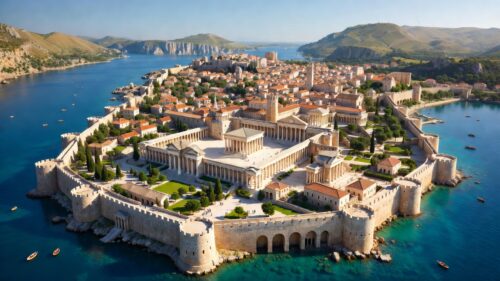 Now, the unique plan: Forget generic self-help like "morning routines" or "vision boards." This is the "Tetrarchic Life Forge" – a quick, 7-day blueprint to forge your personal tetrarchy, using ancient Roman flair with a twist: imaginary "advisors" based on the original four, but gamified as AI-like mental avatars you "summon" via journaling. It's unique because it blends historical role-play with cognitive partitioning, turning self-improvement into an epic quest where you battle "barbarians" (distractions) and secure "frontiers" (goals). No apps, no gurus – just you, a notebook, and Roman grit. Here's the detailed, actionable plan:
Day 1: **Crown Your Augusti** – Identify your two core life pillars (e.g., Career as Diocletian-East: strategic growth; Health as Maximian-West: physical defense). Journal as each "Augustus," listing threats (e.g., procrastination invaders) and strengths. Assign them "capitals" – dedicated spaces/time slots (desk for career, gym for health).
Day 2: **Appoint Your Caesars** – Add two juniors: e.g., Relationships as Constantius (nurturing alliances) and Creativity/Hobbies as Galerius (aggressive innovation). "Adopt" them via sketches or mantras, linking to the originals' traits – Constantius's steadiness for patience in bonds, Galerius's fire for bold ideas.
Day 3: **Divide the Empire** – Map your week into quadrants: mornings for East (planning), afternoons for West (action), evenings for North Caesar (connections), nights for South (creation). No overlaps – strict borders to prevent "civil wars" of multitasking.
Day 4: **Launch Reforms** – Enact one edict per quadrant: e.g., price cap on distractions (30-min social media limit), tax census (track habits daily). Make it funny – decree "barbarian bans" like no junk food in Health's realm.
Day 5: **Wage Campaigns** – Simulate battles: tackle a mini-goal per quadrant (e.g., network call for Relationships). Journal victories as triumphs, defeats as lessons – "Galerius crushed the Persians of writer's block!"
Day 6: **Abdicate and Rotate** – "Retire" one quadrant for the day (rest it), elevating another to senior. This builds adaptability, mimicking Diocletian's exit to prevent stagnation.
Day 7: **Carnuntum Review** – Conference of avatars: reflect on the week, adjust borders, celebrate with a "cabbage feast" (healthy meal). Scale up: monthly abdications for fresh focus.
Now, the unique plan: Forget generic self-help like "morning routines" or "vision boards." This is the "Tetrarchic Life Forge" – a quick, 7-day blueprint to forge your personal tetrarchy, using ancient Roman flair with a twist: imaginary "advisors" based on the original four, but gamified as AI-like mental avatars you "summon" via journaling. It's unique because it blends historical role-play with cognitive partitioning, turning self-improvement into an epic quest where you battle "barbarians" (distractions) and secure "frontiers" (goals). No apps, no gurus – just you, a notebook, and Roman grit. Here's the detailed, actionable plan:
Day 1: **Crown Your Augusti** – Identify your two core life pillars (e.g., Career as Diocletian-East: strategic growth; Health as Maximian-West: physical defense). Journal as each "Augustus," listing threats (e.g., procrastination invaders) and strengths. Assign them "capitals" – dedicated spaces/time slots (desk for career, gym for health).
Day 2: **Appoint Your Caesars** – Add two juniors: e.g., Relationships as Constantius (nurturing alliances) and Creativity/Hobbies as Galerius (aggressive innovation). "Adopt" them via sketches or mantras, linking to the originals' traits – Constantius's steadiness for patience in bonds, Galerius's fire for bold ideas.
Day 3: **Divide the Empire** – Map your week into quadrants: mornings for East (planning), afternoons for West (action), evenings for North Caesar (connections), nights for South (creation). No overlaps – strict borders to prevent "civil wars" of multitasking.
Day 4: **Launch Reforms** – Enact one edict per quadrant: e.g., price cap on distractions (30-min social media limit), tax census (track habits daily). Make it funny – decree "barbarian bans" like no junk food in Health's realm.
Day 5: **Wage Campaigns** – Simulate battles: tackle a mini-goal per quadrant (e.g., network call for Relationships). Journal victories as triumphs, defeats as lessons – "Galerius crushed the Persians of writer's block!"
Day 6: **Abdicate and Rotate** – "Retire" one quadrant for the day (rest it), elevating another to senior. This builds adaptability, mimicking Diocletian's exit to prevent stagnation.
Day 7: **Carnuntum Review** – Conference of avatars: reflect on the week, adjust borders, celebrate with a "cabbage feast" (healthy meal). Scale up: monthly abdications for fresh focus. Repeat weekly, evolving your tetrarchy. This isn't fluffy affirmation stuff; it's a structured siege on mediocrity, turning history's lesson into your personal revolution. Who knew a 1,700-year-old power split could make you emperor of your own fate? Go forth and conquer – your empire awaits.