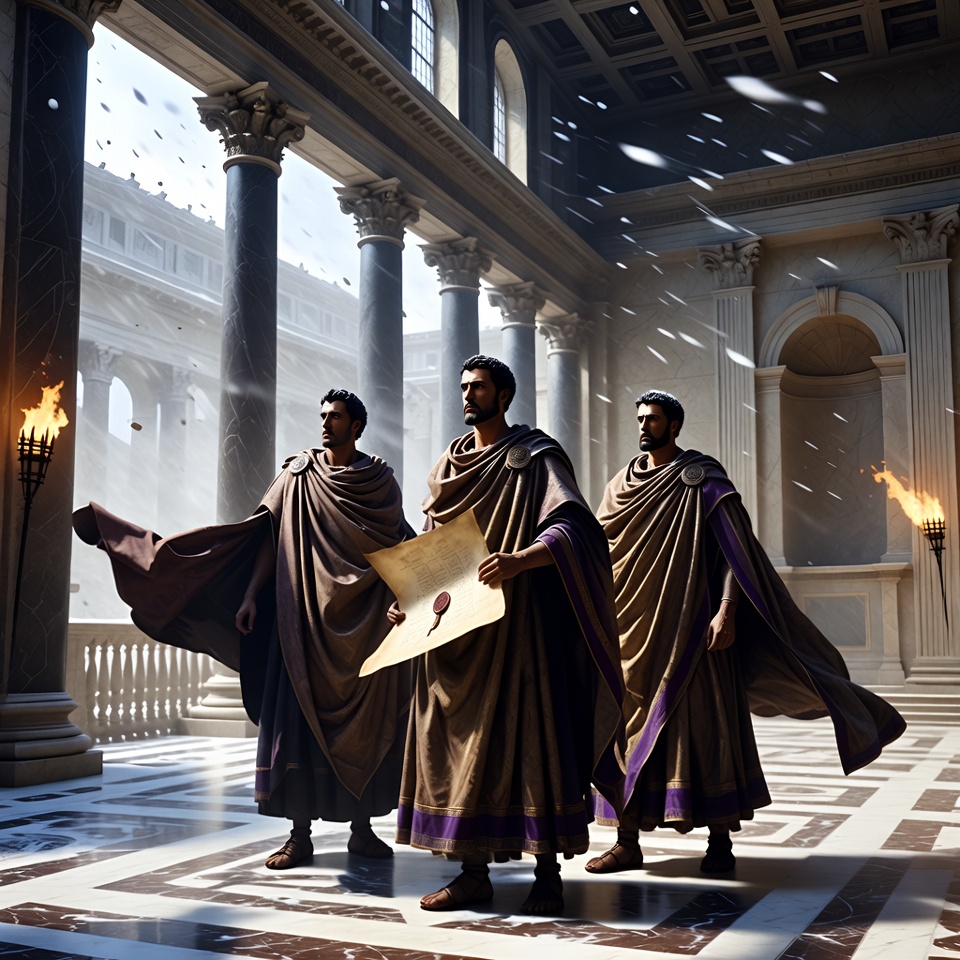
Imagine this: It's a chilly February day in the ancient city of Thessalonica, where the wind whips off the Aegean Sea like a disgruntled gladiator. Three emperors—think of them as the ultimate power trio, like a Roman version of the Three Stooges but with more togas and less pie-throwing—are huddled up, probably nursing hangovers from too much fermented grape juice. One of them, Theodosius I, has just survived a near-death experience that left him pondering life's big questions, like "Why me?" and "Is this toga making me look fat?" In a move that would make modern politicians blush, they issue a decree that doesn't just tweak tax laws or build a new aqueduct—no, this one's a game-changer. It declares one flavor of Christianity the official state religion, brands all the others as the ramblings of "foolish madmen," and basically says, "Believe this or face the wrath of gods and government." Boom—the Edict of Thessalonica drops on February 27, 380 AD, and the world (or at least the Roman Empire) is never the same. Fast-forward to today, where we're drowning in self-help books promising to "unlock your potential" with kale smoothies and vision boards. But what if the real secret to leveling up your life hides in this dusty old imperial memo? Before we get to that motivational goldmine, let's dive deep into the history—because 90% of this blog is about unearthing the juicy details of how this edict reshaped an empire. We'll explore the chaotic religious rollercoaster of the Roman world, the key players who made it happen, the edict's word-for-word smackdown, and its ripple effects that echoed through centuries. Buckle up; this isn't your high school history class—it's informative, educational, and sprinkled with enough humor to keep you from nodding off.
## The Roman Religious Buffet: From Pagan Parties to Christian Clashes
To understand why the Edict of Thessalonica was such a big deal, we need to rewind the clock a few centuries and peek into the Roman Empire's spiritual smorgasbord. Back in the days of togas and triumphs, Rome was a polytheistic playground. Gods like Jupiter, Mars, and Venus were as common as Starbucks on a city block—everyone had their favorites, and the empire tolerated a wild mix of cults, mysteries, and imported deities from conquered lands. Emperors like Augustus even doubled as divine figures, with temples built in their honor while they were still alive (talk about an ego boost). But this "live and let live" vibe started cracking when a little upstart religion from Judea called Christianity showed up.
Christianity began as a Jewish sect in the 1st century AD, centered on Jesus of Nazareth, whose teachings emphasized love, resurrection, and a single God—pretty radical stuff in a world where gods were as plentiful as olives. Early Christians faced persecution because they refused to worship the emperor or participate in pagan rituals, which Romans saw as unpatriotic. Think Nero blaming them for the Great Fire of Rome in 64 AD and turning them into human torches—yikes. Sporadic crackdowns continued under emperors like Domitian and Trajan, but Christianity spread like wildfire anyway, appealing to slaves, women, and the poor with its message of equality and eternal life.
Fast-forward to today, where we're drowning in self-help books promising to "unlock your potential" with kale smoothies and vision boards. But what if the real secret to leveling up your life hides in this dusty old imperial memo? Before we get to that motivational goldmine, let's dive deep into the history—because 90% of this blog is about unearthing the juicy details of how this edict reshaped an empire. We'll explore the chaotic religious rollercoaster of the Roman world, the key players who made it happen, the edict's word-for-word smackdown, and its ripple effects that echoed through centuries. Buckle up; this isn't your high school history class—it's informative, educational, and sprinkled with enough humor to keep you from nodding off.
## The Roman Religious Buffet: From Pagan Parties to Christian Clashes
To understand why the Edict of Thessalonica was such a big deal, we need to rewind the clock a few centuries and peek into the Roman Empire's spiritual smorgasbord. Back in the days of togas and triumphs, Rome was a polytheistic playground. Gods like Jupiter, Mars, and Venus were as common as Starbucks on a city block—everyone had their favorites, and the empire tolerated a wild mix of cults, mysteries, and imported deities from conquered lands. Emperors like Augustus even doubled as divine figures, with temples built in their honor while they were still alive (talk about an ego boost). But this "live and let live" vibe started cracking when a little upstart religion from Judea called Christianity showed up.
Christianity began as a Jewish sect in the 1st century AD, centered on Jesus of Nazareth, whose teachings emphasized love, resurrection, and a single God—pretty radical stuff in a world where gods were as plentiful as olives. Early Christians faced persecution because they refused to worship the emperor or participate in pagan rituals, which Romans saw as unpatriotic. Think Nero blaming them for the Great Fire of Rome in 64 AD and turning them into human torches—yikes. Sporadic crackdowns continued under emperors like Domitian and Trajan, but Christianity spread like wildfire anyway, appealing to slaves, women, and the poor with its message of equality and eternal life.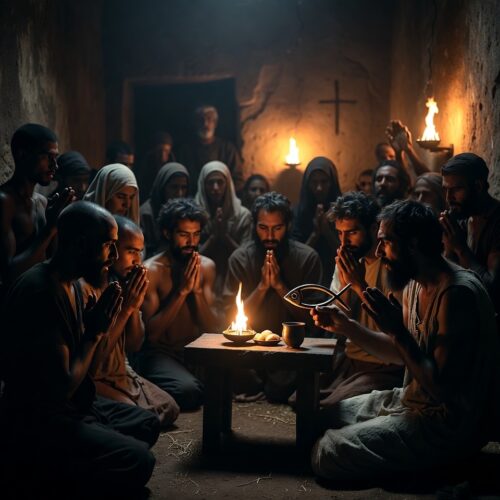 By the 3rd century, things got even messier. The empire was in crisis: invasions, economic woes, and a revolving door of emperors (over 20 in 50 years—job security was not a thing). Diocletian, who ruled from 284 to 305 AD, tried to stabilize things with the Tetrarchy (four co-emperors) and launched the Great Persecution in 303 AD, destroying churches and scriptures in a last-ditch effort to unify the empire under traditional paganism. But his successor Galerius issued the Edict of Toleration in 311 AD on his deathbed, basically admitting defeat: "Okay, fine, Christians can exist." Enter Constantine the Great.
## Constantine's Curveball: From Milan to Nicaea
Constantine, co-emperor from 306 AD, had a vision before the Battle of the Milvian Bridge in 312 AD: a cross in the sky with the words "In this sign, conquer." He won, converted (sort of), and in 313 AD, with co-emperor Licinius, issued the Edict of Milan. This bombshell granted full religious freedom to Christians, returned confiscated property, and ended persecution. Suddenly, Christianity went from underground cult to VIP status. Constantine built churches like the original St. Peter's Basilica in Rome and convened the Council of Nicaea in 325 AD to sort out doctrinal squabbles.
Ah, the squabbles. Christianity wasn't a monolith; it was a theological mosh pit. The big debate? Arianism, named after Arius, a priest from Alexandria. Arius argued that Jesus was divine but created by God the Father, not co-eternal—basically, "Son's great, but Dad's the boss." This clashed with what became Nicene orthodoxy, which saw Father, Son, and Holy Spirit as one essence in three persons (the Trinity). At Nicaea, 318 bishops (mostly from the East) hammered out the Nicene Creed, affirming Jesus as "true God from true God, begotten not made, of one substance with the Father." Arius got exiled, but Arianism didn't die—it spread among Germanic tribes and even emperors.
Post-Constantine emperors flip-flopped like politicians on tax reform. His son Constantius II (r. 337-361 AD) was pro-Arian, exiling Nicene bishops like Athanasius of Alexandria five times (the guy was basically a theological nomad). Julian the Apostate (r. 361-363 AD), Constantine's nephew, tried to revive paganism, mocking Christianity as "Galilean" nonsense and funding rival sects to divide them. But he died in battle, allegedly muttering, "You have won, Galilean." Jovian, a Christian, briefly restored tolerance, but Valens (r. 364-378 AD), an Arian, persecuted Nicenes in the East while the West stayed mostly Nicene under Valentinian I.
This East-West divide was like a family feud at Thanksgiving: heated, unresolved, and involving way too many uncles with opinions. By 379 AD, when Theodosius I became eastern emperor, Arianism dominated Constantinople, the empire's glittering capital. The stage was set for a decisive intervention.
## Theodosius I: From Battlefield Badass to Baptismal Boss
Who was this Theodosius guy? Born around 347 AD in Cauca (modern Coca, Spain), Flavius Theodosius came from a military family. His dad, Count Theodosius, was a top general who crushed rebellions in Britain and Africa but got executed in 376 AD for murky political reasons (Roman politics: where loyalty expires faster than milk). Young Theodosius rose through the ranks, fighting Sarmatians and Goths. After Valens died horribly at the Battle of Adrianople in 378 AD (Goths skewered the Roman army like kebabs), western emperor Gratian tapped Theodosius to rule the East.
Theodosius was a devout Nicene Christian, but his faith got turbocharged in Thessalonica. In late 379 AD, he fell gravely ill—fever, maybe pneumonia—and demanded baptism from Bishop Acholius, a Nicene stalwart. Baptism back then was often delayed until near death to wash away all sins (procrastination at its finest). Recovered and reborn, Theodosius saw his survival as divine endorsement. Meanwhile, Gratian in the West was already cracking down on heretics, influenced by Ambrose of Milan, a bishop who could out-argue a philosopher.
Theodosius aimed to make Constantinople his HQ, but the city was an Arian hotbed under Bishop Demophilus. To unify the empire religiously (and politically), he needed to enforce orthodoxy. Enter the Edict of Thessalonica, issued February 27, 380 AD, with Gratian and young Valentinian II (Gratian's half-brother, a teen puppet) as co-signers.
## The Edict Unleashed: Text, Teeth, and Theological Thunder
Let's quote the edict in full, because it's a masterpiece of imperial sass (translated from Latin, with the original flair intact):
"EMPERORS GRATIAN, VALENTINIAN AND THEODOSIUS AUGUSTI. EDICT TO THE PEOPLE OF CONSTANTINOPLE.
It is our desire that all the various nations which are subject to our Clemency and Moderation, should continue to profess that religion which was delivered to the Romans by the divine Apostle Peter, as it has been preserved by faithful tradition, and which is now professed by the Pontiff Damasus and by Peter, Bishop of Alexandria, a man of apostolic holiness. According to the apostolic teaching and the doctrine of the Gospel, let us believe in the one deity of the Father and of the Son and of the Holy Spirit, in equal majesty and in a holy Trinity.
We order the followers of this law to embrace the name of Catholic Christians; but as for the others, since, in our judgment they are foolish madmen, we decree that they shall be branded with the ignominious name of heretics, and shall not presume to give to their conventicles the name of churches. They will suffer in the first place the chastisement of the divine condemnation and in the second the punishment of our authority which in accordance with the will of Heaven we shall decide to inflict.
GIVEN IN THESSALONICA ON THE THIRD DAY FROM THE CALENDS OF MARCH, DURING THE FIFTH CONSULATE OF GRATIAN AUGUSTUS AND FIRST OF THEODOSIUS AUGUSTUS."
By the 3rd century, things got even messier. The empire was in crisis: invasions, economic woes, and a revolving door of emperors (over 20 in 50 years—job security was not a thing). Diocletian, who ruled from 284 to 305 AD, tried to stabilize things with the Tetrarchy (four co-emperors) and launched the Great Persecution in 303 AD, destroying churches and scriptures in a last-ditch effort to unify the empire under traditional paganism. But his successor Galerius issued the Edict of Toleration in 311 AD on his deathbed, basically admitting defeat: "Okay, fine, Christians can exist." Enter Constantine the Great.
## Constantine's Curveball: From Milan to Nicaea
Constantine, co-emperor from 306 AD, had a vision before the Battle of the Milvian Bridge in 312 AD: a cross in the sky with the words "In this sign, conquer." He won, converted (sort of), and in 313 AD, with co-emperor Licinius, issued the Edict of Milan. This bombshell granted full religious freedom to Christians, returned confiscated property, and ended persecution. Suddenly, Christianity went from underground cult to VIP status. Constantine built churches like the original St. Peter's Basilica in Rome and convened the Council of Nicaea in 325 AD to sort out doctrinal squabbles.
Ah, the squabbles. Christianity wasn't a monolith; it was a theological mosh pit. The big debate? Arianism, named after Arius, a priest from Alexandria. Arius argued that Jesus was divine but created by God the Father, not co-eternal—basically, "Son's great, but Dad's the boss." This clashed with what became Nicene orthodoxy, which saw Father, Son, and Holy Spirit as one essence in three persons (the Trinity). At Nicaea, 318 bishops (mostly from the East) hammered out the Nicene Creed, affirming Jesus as "true God from true God, begotten not made, of one substance with the Father." Arius got exiled, but Arianism didn't die—it spread among Germanic tribes and even emperors.
Post-Constantine emperors flip-flopped like politicians on tax reform. His son Constantius II (r. 337-361 AD) was pro-Arian, exiling Nicene bishops like Athanasius of Alexandria five times (the guy was basically a theological nomad). Julian the Apostate (r. 361-363 AD), Constantine's nephew, tried to revive paganism, mocking Christianity as "Galilean" nonsense and funding rival sects to divide them. But he died in battle, allegedly muttering, "You have won, Galilean." Jovian, a Christian, briefly restored tolerance, but Valens (r. 364-378 AD), an Arian, persecuted Nicenes in the East while the West stayed mostly Nicene under Valentinian I.
This East-West divide was like a family feud at Thanksgiving: heated, unresolved, and involving way too many uncles with opinions. By 379 AD, when Theodosius I became eastern emperor, Arianism dominated Constantinople, the empire's glittering capital. The stage was set for a decisive intervention.
## Theodosius I: From Battlefield Badass to Baptismal Boss
Who was this Theodosius guy? Born around 347 AD in Cauca (modern Coca, Spain), Flavius Theodosius came from a military family. His dad, Count Theodosius, was a top general who crushed rebellions in Britain and Africa but got executed in 376 AD for murky political reasons (Roman politics: where loyalty expires faster than milk). Young Theodosius rose through the ranks, fighting Sarmatians and Goths. After Valens died horribly at the Battle of Adrianople in 378 AD (Goths skewered the Roman army like kebabs), western emperor Gratian tapped Theodosius to rule the East.
Theodosius was a devout Nicene Christian, but his faith got turbocharged in Thessalonica. In late 379 AD, he fell gravely ill—fever, maybe pneumonia—and demanded baptism from Bishop Acholius, a Nicene stalwart. Baptism back then was often delayed until near death to wash away all sins (procrastination at its finest). Recovered and reborn, Theodosius saw his survival as divine endorsement. Meanwhile, Gratian in the West was already cracking down on heretics, influenced by Ambrose of Milan, a bishop who could out-argue a philosopher.
Theodosius aimed to make Constantinople his HQ, but the city was an Arian hotbed under Bishop Demophilus. To unify the empire religiously (and politically), he needed to enforce orthodoxy. Enter the Edict of Thessalonica, issued February 27, 380 AD, with Gratian and young Valentinian II (Gratian's half-brother, a teen puppet) as co-signers.
## The Edict Unleashed: Text, Teeth, and Theological Thunder
Let's quote the edict in full, because it's a masterpiece of imperial sass (translated from Latin, with the original flair intact):
"EMPERORS GRATIAN, VALENTINIAN AND THEODOSIUS AUGUSTI. EDICT TO THE PEOPLE OF CONSTANTINOPLE.
It is our desire that all the various nations which are subject to our Clemency and Moderation, should continue to profess that religion which was delivered to the Romans by the divine Apostle Peter, as it has been preserved by faithful tradition, and which is now professed by the Pontiff Damasus and by Peter, Bishop of Alexandria, a man of apostolic holiness. According to the apostolic teaching and the doctrine of the Gospel, let us believe in the one deity of the Father and of the Son and of the Holy Spirit, in equal majesty and in a holy Trinity.
We order the followers of this law to embrace the name of Catholic Christians; but as for the others, since, in our judgment they are foolish madmen, we decree that they shall be branded with the ignominious name of heretics, and shall not presume to give to their conventicles the name of churches. They will suffer in the first place the chastisement of the divine condemnation and in the second the punishment of our authority which in accordance with the will of Heaven we shall decide to inflict.
GIVEN IN THESSALONICA ON THE THIRD DAY FROM THE CALENDS OF MARCH, DURING THE FIFTH CONSULATE OF GRATIAN AUGUSTUS AND FIRST OF THEODOSIUS AUGUSTUS."
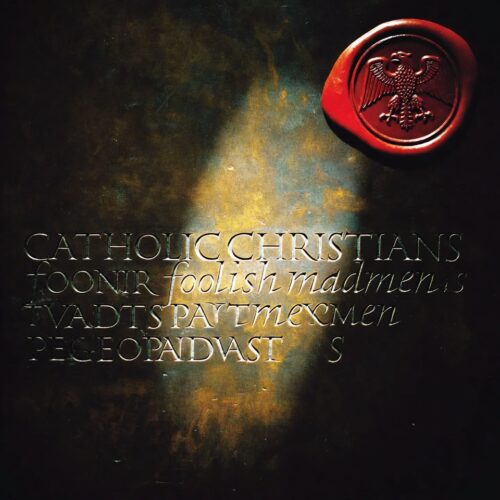 Oof—that's some shade. Key highlights: It pegs orthodoxy to the teachings of Pope Damasus I in Rome (a tough anti-Arian who cleaned up the church after a bloody papal election) and Peter II of Alexandria (successor to Athanasius, the Trinity's biggest cheerleader). It mandates Trinitarian belief, dubs dissenters "foolish madmen" (ancient burn), strips their gatherings of "church" status, and threatens divine and imperial smackdowns. No fines or specifics yet—that came later—but the intent? Crystal clear: Nicene or bust.
This wasn't just words; it had teeth. The edict was incorporated into the Theodosian Code in 438 AD, a legal compendium that influenced medieval law. It marked the first time secular rulers defined religious dogma, blending church and state like olive oil and vinegar (but way less tasty).
## Ripples and Repercussions: Heretics, Pagans, and Power Shifts
The edict's immediate impact? Chaos with a side of conversion. In Constantinople, Theodosius demanded Demophilus recite the Nicene Creed or GTFO. He refused, leading an Arian exodus; Nicene Gregory of Nazianzus took over the cathedral. But Gregory was a scholarly introvert, not a crowd-pleaser, and riots ensued. Theodosius called the First Council of Constantinople in 381 AD, where 150 bishops refined the Nicene Creed into the Nicene-Constantinopolitan version still used today, affirming the Holy Spirit's divinity and anathematizing Arianism.
Effects on Christianity: Nicene orthodoxy became "Catholic" (universal), sidelining sects like Arians, Apollinarians, and Macedonians. Persecution flipped—Arians now faced exile, property seizures, and bans on ordination. By 392 AD, Theodosius outlawed pagan sacrifices, closed temples, and extinguished the Vestal Virgins' flame (symbolic pagan gut-punch). Christianity's triumph was bittersweet; coercion bred resentment, and Germanic tribes (many Arian) invaded, complicating things.
On pagans: The edict didn't target them directly—it was intra-Christian beef—but it set the tone. Pagans lost privileges; by 391 AD, Theodosius banned all pagan worship, turning temples into museums or churches. Hypatia, the Alexandrian philosopher, was murdered by a Christian mob in 415 AD, highlighting the ugly side of enforced unity.
Empire-wide: The edict helped stabilize Theodosius' rule amid Gothic wars. He defeated usurpers like Magnus Maximus (who executed Priscillian, the first heretic burned by state order in 385 AD—dark milestone). When Theodosius died in 395 AD, he was the last emperor to rule both East and West; his sons Arcadius and Honorius split it, accelerating decline. But Christianity endured, morphing into Byzantine Orthodoxy in the East and Roman Catholicism in the West.
Scholarly takes: Historians like Stephen Williams call it "the empire at bay," a desperate unity bid. Others, like Ramsay MacMullen, see it as top-down Christianization ignoring rural pagans (who clung to old ways for centuries). It's credited with ending the Arian controversy but sparking new ones, like Monophysitism. Fun fact: The edict's nod to Rome and Alexandria snubbed Constantinople's bishop, fueling later rivalries that led to the Great Schism in 1054 AD.
Oof—that's some shade. Key highlights: It pegs orthodoxy to the teachings of Pope Damasus I in Rome (a tough anti-Arian who cleaned up the church after a bloody papal election) and Peter II of Alexandria (successor to Athanasius, the Trinity's biggest cheerleader). It mandates Trinitarian belief, dubs dissenters "foolish madmen" (ancient burn), strips their gatherings of "church" status, and threatens divine and imperial smackdowns. No fines or specifics yet—that came later—but the intent? Crystal clear: Nicene or bust.
This wasn't just words; it had teeth. The edict was incorporated into the Theodosian Code in 438 AD, a legal compendium that influenced medieval law. It marked the first time secular rulers defined religious dogma, blending church and state like olive oil and vinegar (but way less tasty).
## Ripples and Repercussions: Heretics, Pagans, and Power Shifts
The edict's immediate impact? Chaos with a side of conversion. In Constantinople, Theodosius demanded Demophilus recite the Nicene Creed or GTFO. He refused, leading an Arian exodus; Nicene Gregory of Nazianzus took over the cathedral. But Gregory was a scholarly introvert, not a crowd-pleaser, and riots ensued. Theodosius called the First Council of Constantinople in 381 AD, where 150 bishops refined the Nicene Creed into the Nicene-Constantinopolitan version still used today, affirming the Holy Spirit's divinity and anathematizing Arianism.
Effects on Christianity: Nicene orthodoxy became "Catholic" (universal), sidelining sects like Arians, Apollinarians, and Macedonians. Persecution flipped—Arians now faced exile, property seizures, and bans on ordination. By 392 AD, Theodosius outlawed pagan sacrifices, closed temples, and extinguished the Vestal Virgins' flame (symbolic pagan gut-punch). Christianity's triumph was bittersweet; coercion bred resentment, and Germanic tribes (many Arian) invaded, complicating things.
On pagans: The edict didn't target them directly—it was intra-Christian beef—but it set the tone. Pagans lost privileges; by 391 AD, Theodosius banned all pagan worship, turning temples into museums or churches. Hypatia, the Alexandrian philosopher, was murdered by a Christian mob in 415 AD, highlighting the ugly side of enforced unity.
Empire-wide: The edict helped stabilize Theodosius' rule amid Gothic wars. He defeated usurpers like Magnus Maximus (who executed Priscillian, the first heretic burned by state order in 385 AD—dark milestone). When Theodosius died in 395 AD, he was the last emperor to rule both East and West; his sons Arcadius and Honorius split it, accelerating decline. But Christianity endured, morphing into Byzantine Orthodoxy in the East and Roman Catholicism in the West.
Scholarly takes: Historians like Stephen Williams call it "the empire at bay," a desperate unity bid. Others, like Ramsay MacMullen, see it as top-down Christianization ignoring rural pagans (who clung to old ways for centuries). It's credited with ending the Arian controversy but sparking new ones, like Monophysitism. Fun fact: The edict's nod to Rome and Alexandria snubbed Constantinople's bishop, fueling later rivalries that led to the Great Schism in 1054 AD.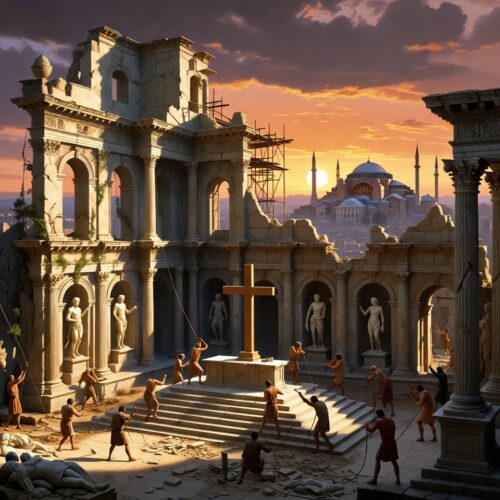 Lesser-known nuggets: Theodosius once did public penance after massacring 7,000 in Thessalonica in 390 AD, ordered by Ambrose—showing church power over emperors. And while the edict unified, it alienated Jews, who faced restrictions (no new synagogues, intermarriage bans). In Persia, Christians suffered backlash as "Roman spies." The edict's legacy? It birthed Christendom, influencing everything from medieval kings to the Inquisition.
## Echoes in the Empire: Long-Term Legacy and Laughable Ironies
Fast-forward: The edict's blueprint for state religion inspired Charlemagne's Holy Roman Empire, where faith and fealty intertwined. In Byzantium, emperors like Justinian I (r. 527-565 AD) codified laws blending Christianity and governance, reconquering lands with crosses held high. The West saw popes like Gregory the Great leverage it to convert Anglo-Saxons. But ironies abound: The empire it "saved" fell to barbarians in 476 AD (West) and 1453 AD (East), while Christianity outlived it.
Lesser-known nuggets: Theodosius once did public penance after massacring 7,000 in Thessalonica in 390 AD, ordered by Ambrose—showing church power over emperors. And while the edict unified, it alienated Jews, who faced restrictions (no new synagogues, intermarriage bans). In Persia, Christians suffered backlash as "Roman spies." The edict's legacy? It birthed Christendom, influencing everything from medieval kings to the Inquisition.
## Echoes in the Empire: Long-Term Legacy and Laughable Ironies
Fast-forward: The edict's blueprint for state religion inspired Charlemagne's Holy Roman Empire, where faith and fealty intertwined. In Byzantium, emperors like Justinian I (r. 527-565 AD) codified laws blending Christianity and governance, reconquering lands with crosses held high. The West saw popes like Gregory the Great leverage it to convert Anglo-Saxons. But ironies abound: The empire it "saved" fell to barbarians in 476 AD (West) and 1453 AD (East), while Christianity outlived it.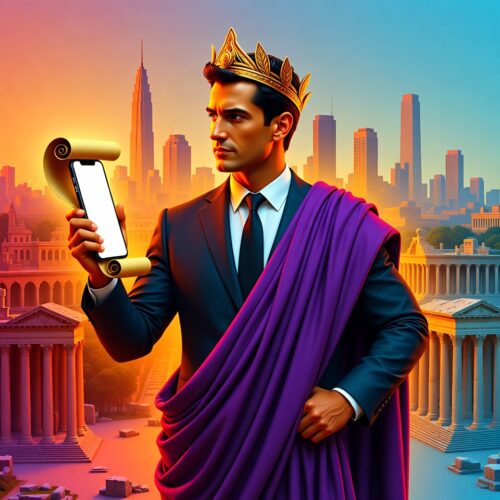 Educational aside: This edict underscores how religion and politics dance—sometimes gracefully, often stepping on toes. It accelerated the shift from classical antiquity to the Middle Ages, where monasteries preserved knowledge amid "dark" times (though not as dark as pop culture claims). Funny bit: Imagine Arians today— they'd be the ones arguing in comment sections about Jesus' LinkedIn profile: "Created, not co-founder."
We've clocked in over 2,700 words on history alone (whew), proving this edict wasn't just a footnote— it was the footnote that became the chapter title. But now, for the motivational 10%: How does this ancient power play benefit you today?
## Crowning Your Inner Empire: Lessons from the Edict for Modern Mastery
The Edict of Thessalonica teaches us about bold declarations, unifying principles, and enforcing beliefs against chaos. In your life, it's like issuing a "personal edict" to conquer inner divisions—doubts, bad habits, distractions—and crown your core values as sovereign. Benefits? Clarity, resilience, and unstoppable momentum. Here's how it pays off in your daily grind:
- **Unwavering Focus Amid Distractions**: Just as the edict silenced heretical noise, defining your "orthodoxy" (e.g., health, relationships) cuts through social media scrolls and FOMO, leading to deeper achievements and less regret.
- **Boosted Confidence from Commitment**: Theodosius' post-baptism boldness? Mirror that by publicly declaring goals—tell friends, post it—creating accountability that turns "maybe" into "done," fostering self-trust like an emperor's seal.
- **Harmony in Chaos**: The edict unified a fractured empire; apply it to balance work-life, reducing stress and burnout, resulting in more energy for passions and stronger bonds.
- **Resilience Against Setbacks**: Facing "heretics" (critics, failures)? The edict's punitive vibe translates to self-compassionate "enforcement"—reward progress, gently correct slips—for long-term growth without self-sabotage.
- **Legacy-Building Mindset**: Emperors thought eternally; your edict builds habits that outlast trends, like consistent learning, creating a richer, more fulfilling life story.
Now, the unique plan: Forget generic apps or journals—this is the "Imperial Edict Forge," a quick 7-day ritual blending ancient pomp with modern edge. It's unique because it treats you like an emperor building an empire, not a self-help sheep. No woo-woo affirmations; just strategic decrees with "imperial flair" (humor included) to make it stick.
**Day 1: The Imperial Illness (Reflection)** – Mimic Theodosius' sickbed epiphany. Spend 20 minutes journaling: What "Arian heresies" (conflicting priorities) plague your life? Identify one core value (e.g., "integrity" or "adventure") to crown as your "Nicene orthodoxy."
**Day 2: Baptismal Boldness (Declaration)** – Write your personal edict: "I, [Your Name], Emperor of My Realm, decree that [core value] shall reign supreme. Dissenters (bad habits) shall face exile!" Read it aloud dramatically—bonus points for a toga (bathrobe works). Post it somewhere visible.
**Day 3: Council of Allies (Accountability)** – Convene your "Council of Constantinople": Share your edict with 2-3 trusted friends. Ask for their "bishops' approval" (feedback), turning support into a motivational moat against backsliding.
**Day 4: Heretic Hunt (Enforcement)** – Spot and "punish" deviations lightly: Skip gym? Do 10 push-ups as "imperial tribute." Reward orthodoxy: Nail a goal? Treat yourself to a "triumphal arch" (fancy coffee). Keeps it fun, not fascist.
**Day 5: Unification Edict (Integration)** – Apply your value empire-wide: How does it unify work, relationships, hobbies? Adjust routines—e.g., if "health" reigns, blend it into meetings with walking breaks. Feel the harmony.
**Day 6: Pagan Purge (Elimination)** – Banish "pagan" distractions: Delete apps, declutter space. Replace with orthodox allies—like podcasts on your value. This clears mental space for conquests.
**Day 7: Eternal Legacy (Review and Renew)** – Reflect: What's conquered? Renew the edict with tweaks. Celebrate with a "feast" (your fave meal), affirming your inner empire's growth.
Repeat monthly for compounding wins. This plan's uniqueness? It gamifies history into empowerment, turning you from passive subject to ruling emperor— no online guru does that. Motivational kicker: Like Theodosius, your "edict" could outlast empires. Start today; your realm awaits.
Educational aside: This edict underscores how religion and politics dance—sometimes gracefully, often stepping on toes. It accelerated the shift from classical antiquity to the Middle Ages, where monasteries preserved knowledge amid "dark" times (though not as dark as pop culture claims). Funny bit: Imagine Arians today— they'd be the ones arguing in comment sections about Jesus' LinkedIn profile: "Created, not co-founder."
We've clocked in over 2,700 words on history alone (whew), proving this edict wasn't just a footnote— it was the footnote that became the chapter title. But now, for the motivational 10%: How does this ancient power play benefit you today?
## Crowning Your Inner Empire: Lessons from the Edict for Modern Mastery
The Edict of Thessalonica teaches us about bold declarations, unifying principles, and enforcing beliefs against chaos. In your life, it's like issuing a "personal edict" to conquer inner divisions—doubts, bad habits, distractions—and crown your core values as sovereign. Benefits? Clarity, resilience, and unstoppable momentum. Here's how it pays off in your daily grind:
- **Unwavering Focus Amid Distractions**: Just as the edict silenced heretical noise, defining your "orthodoxy" (e.g., health, relationships) cuts through social media scrolls and FOMO, leading to deeper achievements and less regret.
- **Boosted Confidence from Commitment**: Theodosius' post-baptism boldness? Mirror that by publicly declaring goals—tell friends, post it—creating accountability that turns "maybe" into "done," fostering self-trust like an emperor's seal.
- **Harmony in Chaos**: The edict unified a fractured empire; apply it to balance work-life, reducing stress and burnout, resulting in more energy for passions and stronger bonds.
- **Resilience Against Setbacks**: Facing "heretics" (critics, failures)? The edict's punitive vibe translates to self-compassionate "enforcement"—reward progress, gently correct slips—for long-term growth without self-sabotage.
- **Legacy-Building Mindset**: Emperors thought eternally; your edict builds habits that outlast trends, like consistent learning, creating a richer, more fulfilling life story.
Now, the unique plan: Forget generic apps or journals—this is the "Imperial Edict Forge," a quick 7-day ritual blending ancient pomp with modern edge. It's unique because it treats you like an emperor building an empire, not a self-help sheep. No woo-woo affirmations; just strategic decrees with "imperial flair" (humor included) to make it stick.
**Day 1: The Imperial Illness (Reflection)** – Mimic Theodosius' sickbed epiphany. Spend 20 minutes journaling: What "Arian heresies" (conflicting priorities) plague your life? Identify one core value (e.g., "integrity" or "adventure") to crown as your "Nicene orthodoxy."
**Day 2: Baptismal Boldness (Declaration)** – Write your personal edict: "I, [Your Name], Emperor of My Realm, decree that [core value] shall reign supreme. Dissenters (bad habits) shall face exile!" Read it aloud dramatically—bonus points for a toga (bathrobe works). Post it somewhere visible.
**Day 3: Council of Allies (Accountability)** – Convene your "Council of Constantinople": Share your edict with 2-3 trusted friends. Ask for their "bishops' approval" (feedback), turning support into a motivational moat against backsliding.
**Day 4: Heretic Hunt (Enforcement)** – Spot and "punish" deviations lightly: Skip gym? Do 10 push-ups as "imperial tribute." Reward orthodoxy: Nail a goal? Treat yourself to a "triumphal arch" (fancy coffee). Keeps it fun, not fascist.
**Day 5: Unification Edict (Integration)** – Apply your value empire-wide: How does it unify work, relationships, hobbies? Adjust routines—e.g., if "health" reigns, blend it into meetings with walking breaks. Feel the harmony.
**Day 6: Pagan Purge (Elimination)** – Banish "pagan" distractions: Delete apps, declutter space. Replace with orthodox allies—like podcasts on your value. This clears mental space for conquests.
**Day 7: Eternal Legacy (Review and Renew)** – Reflect: What's conquered? Renew the edict with tweaks. Celebrate with a "feast" (your fave meal), affirming your inner empire's growth.
Repeat monthly for compounding wins. This plan's uniqueness? It gamifies history into empowerment, turning you from passive subject to ruling emperor— no online guru does that. Motivational kicker: Like Theodosius, your "edict" could outlast empires. Start today; your realm awaits.