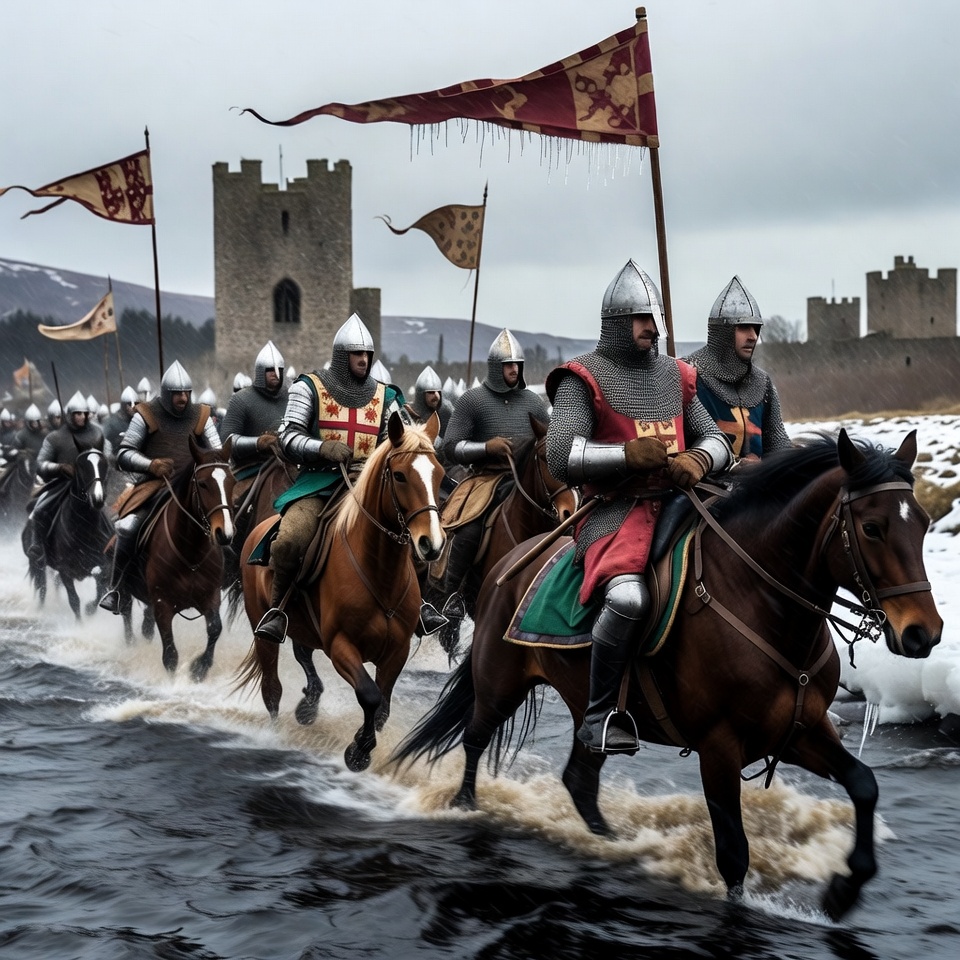
Picture this: It's the dead of a frigid February night in 1303, the kind where your breath hangs like a ghostly banner in the air, and the stars above Midlothian seem to wink knowingly at the folly of men below. Scotland, that rugged emerald isle of mist-shrouded hills and defiant clans, is once again under the bootheel of English ambition. King Edward I, the self-proclaimed "Hammer of the Scots" – a nickname that sounds more like a bad medieval rock band than a monarch – has his eyes set on total domination. But on February 24, in a glen near the village of Roslin, a ragtag band of Scottish warriors is about to pull off one of history's most audacious upsets. This isn't your typical clash of armored titans; it's a story of cunning ambushes, desperate charges, and a victory so improbable it got inflated into legend. Buckle up, because we're diving deep into the Battle of Roslin – a tale that's equal parts gritty history and motivational goldmine, with just enough humor to remind us that even epic battles had their "oops" moments.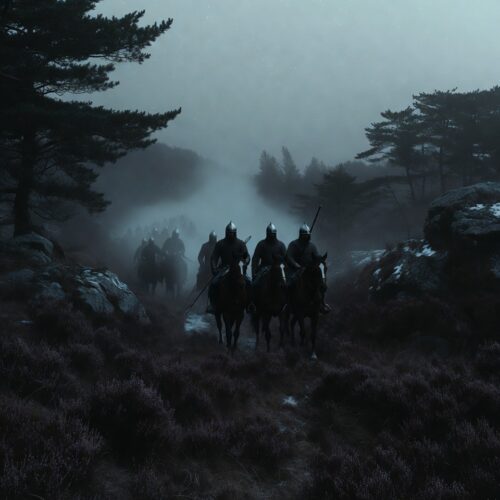 To understand Roslin, we need to rewind the clock to the broader chaos of the First War of Scottish Independence. This wasn't some polite disagreement over tea tariffs; it was a brutal, decade-spanning struggle that pitted a fragmented Scotland against the might of England's feudal machine. The seeds were sown in 1286 when King Alexander III of Scotland took a fatal tumble off his horse during a stormy night ride – talk about a royal faceplant. With no direct heir, Scotland plunged into a succession crisis, and Edward I, ever the opportunist, swooped in as "arbitrator." He installed John Balliol as a puppet king in 1292, but when Balliol grew a spine and allied with France in 1295, Edward invaded, sacked Berwick in a massacre that left rivers of blood, and hauled off the Stone of Destiny like a trophy from a bad divorce.
By 1297, the Scots had had enough. Enter William Wallace, the towering outlaw hero whose life inspired that Mel Gibson movie where everyone yells "Freedom!" a lot. Wallace's stunning victory at Stirling Bridge that year turned him into a legend, but his defeat at Falkirk in 1298 shattered the Scottish army and forced him into guerrilla warfare. Wallace resigned as Guardian of Scotland, and the mantle passed to a rotating cast of nobles, including Robert the Bruce and John Comyn, Lord of Badenoch – the "Red Comyn," so named for his fiery hair or perhaps his temper. Comyn was a complex figure: a noble from a powerful family with ties to both Scottish and English courts, he walked a tightrope between loyalty to his homeland and pragmatic survival. His co-Guardian stints were marked by infighting, but he proved a tenacious fighter against English incursions.
Meanwhile, Simon Fraser, another key player at Roslin, was a knight from the Lowlands with a reputation for boldness. Fraser had fought at Falkirk and later became a thorn in Edward's side through hit-and-run tactics. He wasn't some romanticized kilt-wearing Highlander (kilts weren't even a thing yet); he was a mounted man-at-arms in chainmail and surcoat, wielding lance and sword like extensions of his will. These men weren't superheroes – they were products of a feudal world where loyalty shifted like Highland winds, but when push came to shove, they chose Scotland.
To understand Roslin, we need to rewind the clock to the broader chaos of the First War of Scottish Independence. This wasn't some polite disagreement over tea tariffs; it was a brutal, decade-spanning struggle that pitted a fragmented Scotland against the might of England's feudal machine. The seeds were sown in 1286 when King Alexander III of Scotland took a fatal tumble off his horse during a stormy night ride – talk about a royal faceplant. With no direct heir, Scotland plunged into a succession crisis, and Edward I, ever the opportunist, swooped in as "arbitrator." He installed John Balliol as a puppet king in 1292, but when Balliol grew a spine and allied with France in 1295, Edward invaded, sacked Berwick in a massacre that left rivers of blood, and hauled off the Stone of Destiny like a trophy from a bad divorce.
By 1297, the Scots had had enough. Enter William Wallace, the towering outlaw hero whose life inspired that Mel Gibson movie where everyone yells "Freedom!" a lot. Wallace's stunning victory at Stirling Bridge that year turned him into a legend, but his defeat at Falkirk in 1298 shattered the Scottish army and forced him into guerrilla warfare. Wallace resigned as Guardian of Scotland, and the mantle passed to a rotating cast of nobles, including Robert the Bruce and John Comyn, Lord of Badenoch – the "Red Comyn," so named for his fiery hair or perhaps his temper. Comyn was a complex figure: a noble from a powerful family with ties to both Scottish and English courts, he walked a tightrope between loyalty to his homeland and pragmatic survival. His co-Guardian stints were marked by infighting, but he proved a tenacious fighter against English incursions.
Meanwhile, Simon Fraser, another key player at Roslin, was a knight from the Lowlands with a reputation for boldness. Fraser had fought at Falkirk and later became a thorn in Edward's side through hit-and-run tactics. He wasn't some romanticized kilt-wearing Highlander (kilts weren't even a thing yet); he was a mounted man-at-arms in chainmail and surcoat, wielding lance and sword like extensions of his will. These men weren't superheroes – they were products of a feudal world where loyalty shifted like Highland winds, but when push came to shove, they chose Scotland. Fast-forward to late 1302. An uneasy truce between England and Scotland expired on November 30, like a bad milk carton no one wanted to acknowledge. Edward I, now in his sixties but still as hammer-happy as ever, was gearing up for another full-scale invasion. To soften the ground, he appointed John Segrave, 2nd Baron Segrave, as his lieutenant in Scotland. Segrave was no slouch: a veteran of Edward's Welsh and Scottish campaigns, he was tough, experienced, and loyal. Edward ordered him to assemble a force for "large-scale reconnaissance" – basically, spy out the land, raid a bit, and probe Scottish defenses as far as Kirkintilloch. This wasn't an all-out army; it was a mobile raiding party, drawn from the northern English gentry and aristocracy. No plodding infantry here – just mounted men-at-arms, perhaps 1,000 to 2,000 strong, armored in mail hauberks, bascinets (those pointy helmets that make everyone look like a medieval conehead), and carrying lances, swords, and shields emblazoned with family crests.
Segrave's force mustered at Wark on Tweed, a border castle that had seen its share of skirmishes. They crossed into Scotland in mid-February, moving north with the swagger of invaders who thought the Scots were broken. But the Scots weren't idle. Word of the English advance spread like wildfire through the heather. Comyn and Fraser, operating from bases in the south, gathered a "flying column" – a rapid-response force of chosen men, likely similar in composition to the English: mounted knights and squires, no foot soldiers to slow them down. Estimates vary wildly; medieval chroniclers like John of Fordun claimed 8,000 Scots against 30,000 English, turning Roslin into a mythical bloodbath bigger than Bannockburn. Fordun's account, written decades later, drips with patriotic flair: "There never was so desperate a struggle, or one in which the stoutness of knightly prowess shone forth so brightly." He paints Comyn and Fraser as sleepless guardians, harassing the English "day and night" with "general prowess."
But let's dial back the drama. Modern historians, sifting through pay rolls, muster lists, and contemporary records like those in Sir Thomas Gray's "Scalacronica" (written by a soldier who knew the era), peg the numbers much lower. The English were a reconnaissance raid, not an invasion army – think special ops, not D-Day. Gray suggests they were raised hastily, possibly to relieve a siege at Linlithgow. The Scots, too, were a mobile group, perhaps 1,000-1,500. No massive infantry clashes; this was cavalry-on-cavalry, fast and furious. The exaggeration? Classic medieval PR – Scots chroniclers like Fordun and later Walter Bower in his 15th-century "Scotichronicon" bloated the battle to epic proportions, turning a sharp skirmish into a national triumph. Bower even added fictional flair, making it sound like Armageddon in the glen.
Fast-forward to late 1302. An uneasy truce between England and Scotland expired on November 30, like a bad milk carton no one wanted to acknowledge. Edward I, now in his sixties but still as hammer-happy as ever, was gearing up for another full-scale invasion. To soften the ground, he appointed John Segrave, 2nd Baron Segrave, as his lieutenant in Scotland. Segrave was no slouch: a veteran of Edward's Welsh and Scottish campaigns, he was tough, experienced, and loyal. Edward ordered him to assemble a force for "large-scale reconnaissance" – basically, spy out the land, raid a bit, and probe Scottish defenses as far as Kirkintilloch. This wasn't an all-out army; it was a mobile raiding party, drawn from the northern English gentry and aristocracy. No plodding infantry here – just mounted men-at-arms, perhaps 1,000 to 2,000 strong, armored in mail hauberks, bascinets (those pointy helmets that make everyone look like a medieval conehead), and carrying lances, swords, and shields emblazoned with family crests.
Segrave's force mustered at Wark on Tweed, a border castle that had seen its share of skirmishes. They crossed into Scotland in mid-February, moving north with the swagger of invaders who thought the Scots were broken. But the Scots weren't idle. Word of the English advance spread like wildfire through the heather. Comyn and Fraser, operating from bases in the south, gathered a "flying column" – a rapid-response force of chosen men, likely similar in composition to the English: mounted knights and squires, no foot soldiers to slow them down. Estimates vary wildly; medieval chroniclers like John of Fordun claimed 8,000 Scots against 30,000 English, turning Roslin into a mythical bloodbath bigger than Bannockburn. Fordun's account, written decades later, drips with patriotic flair: "There never was so desperate a struggle, or one in which the stoutness of knightly prowess shone forth so brightly." He paints Comyn and Fraser as sleepless guardians, harassing the English "day and night" with "general prowess."
But let's dial back the drama. Modern historians, sifting through pay rolls, muster lists, and contemporary records like those in Sir Thomas Gray's "Scalacronica" (written by a soldier who knew the era), peg the numbers much lower. The English were a reconnaissance raid, not an invasion army – think special ops, not D-Day. Gray suggests they were raised hastily, possibly to relieve a siege at Linlithgow. The Scots, too, were a mobile group, perhaps 1,000-1,500. No massive infantry clashes; this was cavalry-on-cavalry, fast and furious. The exaggeration? Classic medieval PR – Scots chroniclers like Fordun and later Walter Bower in his 15th-century "Scotichronicon" bloated the battle to epic proportions, turning a sharp skirmish into a national triumph. Bower even added fictional flair, making it sound like Armageddon in the glen.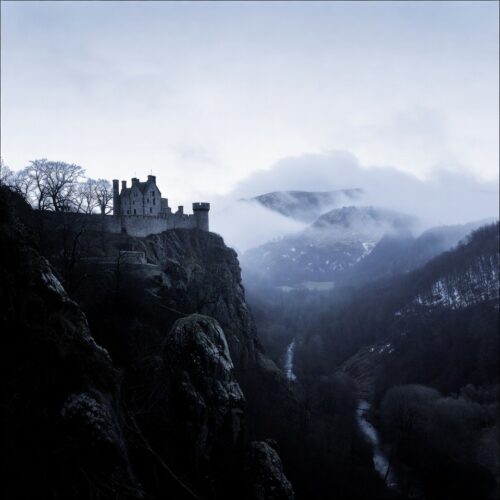 As Segrave's men pushed north, the Scots shadowed them, nipping at heels like Highland midges. The English, wary of ambushes, divided into three divisions for safety, camping miles apart to avoid being caught en masse. This was their fatal mistake – or as we'd say today, "Don't split the party." The first division, under Segrave himself, encamped near Roslin, a picturesque glen carved by the River North Esk, flanked by steep banks and woods perfect for hiding. Nearby loomed Roslin Castle, a Sinclair stronghold perched on a rocky outcrop, its towers glowering over the landscape. (Fun fact: The Sinclairs, or St. Clairs, were Norman descendants who had integrated into Scottish nobility; their castle would later become famous for its chapel and Da Vinci Code conspiracy theories, but in 1303, it was just a sturdy fort.)
Comyn and Fraser, based at Biggar about 20 miles southwest, got wind of the English positions via scouts – those unsung heroes of medieval warfare who risked life and limb sneaking through enemy lines. Deciding offense was the best defense, they mounted a grueling night march. Imagine it: Hooves muffled on mossy paths, men whispering oaths under their breath, the chill wind carrying the scent of pine and impending doom. They aimed to "steal a march" – surprise the English at dawn, when guards were drowsy and horses unsaddled.
The battle unfolded in three brutal phases on February 24, a testament to Scottish grit and English overconfidence. Phase one: Dawn ambush on Segrave's vanguard. The Scots burst from the woods like avenging spirits, crashing into the English camp. Chaos ensued – tents toppled, men scrambling for weapons, horses stampeding. Segrave was captured in the melee, along with knights like Philip de Mowbray (who'd later switch sides and become a Scottish hero). The English paymaster, Ralph de Manton – a cleric in armor, because why not? – fought valiantly but fell to Scottish blades. Fordun describes the fight as "desperate," with knights' prowess shining "brightly." In the confusion, some Scots even freed Segrave temporarily, perhaps to ransom him later, but the victory was swift.
But wait – plot twist! Alarms rang out, and the second English division, under Ralph Confrey or perhaps Robert Neville (sources quibble), thundered in. The weary Scots, fresh from victory but low on arrows and energy, withdrew to a ridge beyond a burn (stream). Overconfident, the English charged across, only to be met by a hail of Scottish missiles. Veering right to avoid the barrage, they got trapped against the steep banks of the Bilston Burn – a natural kill zone. The Scots pounced, cutting them down in a frenzy of steel and shouts. Losses were heavy; one source claims the English "veered off to their right, where they were trapped... and cut to pieces."
As Segrave's men pushed north, the Scots shadowed them, nipping at heels like Highland midges. The English, wary of ambushes, divided into three divisions for safety, camping miles apart to avoid being caught en masse. This was their fatal mistake – or as we'd say today, "Don't split the party." The first division, under Segrave himself, encamped near Roslin, a picturesque glen carved by the River North Esk, flanked by steep banks and woods perfect for hiding. Nearby loomed Roslin Castle, a Sinclair stronghold perched on a rocky outcrop, its towers glowering over the landscape. (Fun fact: The Sinclairs, or St. Clairs, were Norman descendants who had integrated into Scottish nobility; their castle would later become famous for its chapel and Da Vinci Code conspiracy theories, but in 1303, it was just a sturdy fort.)
Comyn and Fraser, based at Biggar about 20 miles southwest, got wind of the English positions via scouts – those unsung heroes of medieval warfare who risked life and limb sneaking through enemy lines. Deciding offense was the best defense, they mounted a grueling night march. Imagine it: Hooves muffled on mossy paths, men whispering oaths under their breath, the chill wind carrying the scent of pine and impending doom. They aimed to "steal a march" – surprise the English at dawn, when guards were drowsy and horses unsaddled.
The battle unfolded in three brutal phases on February 24, a testament to Scottish grit and English overconfidence. Phase one: Dawn ambush on Segrave's vanguard. The Scots burst from the woods like avenging spirits, crashing into the English camp. Chaos ensued – tents toppled, men scrambling for weapons, horses stampeding. Segrave was captured in the melee, along with knights like Philip de Mowbray (who'd later switch sides and become a Scottish hero). The English paymaster, Ralph de Manton – a cleric in armor, because why not? – fought valiantly but fell to Scottish blades. Fordun describes the fight as "desperate," with knights' prowess shining "brightly." In the confusion, some Scots even freed Segrave temporarily, perhaps to ransom him later, but the victory was swift.
But wait – plot twist! Alarms rang out, and the second English division, under Ralph Confrey or perhaps Robert Neville (sources quibble), thundered in. The weary Scots, fresh from victory but low on arrows and energy, withdrew to a ridge beyond a burn (stream). Overconfident, the English charged across, only to be met by a hail of Scottish missiles. Veering right to avoid the barrage, they got trapped against the steep banks of the Bilston Burn – a natural kill zone. The Scots pounced, cutting them down in a frenzy of steel and shouts. Losses were heavy; one source claims the English "veered off to their right, where they were trapped... and cut to pieces."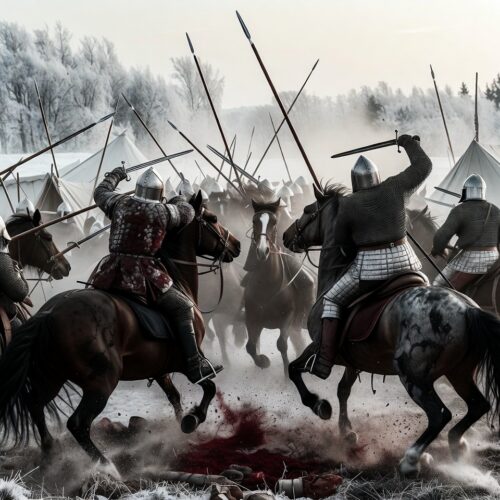 Exhausted but exhilarated, the Scots barely had time to catch their breath. Women and servants from Roslin Castle tended the wounded and served hasty meals – oatcakes and ale, no doubt – while the victors regrouped. Then, the third English division arrived, led by Neville or another sub-commander. Another charge, another trap. The Scots, inspired by Fraser's rallying cries (legend says he shouted words of freedom and defiance), held the line. The English broke, fleeing in disarray. By sunset, the glen was littered with bodies – English casualties estimated at hundreds, Scottish lighter but not insignificant. Segrave was recaptured but later ransomed; he lived to fight another day, even marrying a Scottish noblewoman in a twist of irony.
The aftermath? Roslin was a morale booster for the Scots, disrupting Edward's plans and proving resistance was alive. But it wasn't decisive; Edward invaded later that year, capturing Comyn and forcing submissions. Fraser, ever the rebel, was executed in 1306 – drawn, hanged, and quartered in London, his head joining Wallace's on the bridge. Comyn met a grisly end too, stabbed by Bruce in 1306 over Guardianship disputes, sparking Bruce's kingship bid. Roslin faded into obscurity, overshadowed by Bannockburn in 1314, where Bruce crushed Edward II.
Yet, the battle's legacy endures. In the 1990s, the Roslin Heritage Society erected a cairn monument, a pile of stones marking the site. Historic Scotland inventoried it as a protected battlefield in 2012, preserving the glen from development. Debates rage: Was it three separate battles or one extended fight? How big was it really? Sources like Fordun and Bower romanticized it, but records from Edward's court confirm Segrave's defeat and Manton's death. Gray's "Scalacronica," written from a border knight's perspective, downplays it as a raid gone wrong. Modern takes, like Peter Traquair's "Freedom's Sword" (1998), emphasize its tactical brilliance amid exaggeration.
Roslin teaches us about medieval warfare: No grand strategies, just opportunistic strikes. Armies were small, mobile, and personal – feuds and ransoms drove as much as patriotism. Scotland's terrain favored defenders; English supply lines stretched thin. It's a snapshot of a nation forging identity through blood and banter – Comyn and Fraser, rivals in peace, allies in war.
And here's the funny bit: Imagine Edward I, that long-shanked tyrant, fuming in his tent upon hearing of Roslin. "Thirty thousand men beaten by a dawn raid? That's not a battle; that's a bad hangover!" Or Segrave, captured twice in one day – the medieval equivalent of locking yourself out of your house twice. History's full of these human moments, reminding us that even legends tripped over their own lances.
Exhausted but exhilarated, the Scots barely had time to catch their breath. Women and servants from Roslin Castle tended the wounded and served hasty meals – oatcakes and ale, no doubt – while the victors regrouped. Then, the third English division arrived, led by Neville or another sub-commander. Another charge, another trap. The Scots, inspired by Fraser's rallying cries (legend says he shouted words of freedom and defiance), held the line. The English broke, fleeing in disarray. By sunset, the glen was littered with bodies – English casualties estimated at hundreds, Scottish lighter but not insignificant. Segrave was recaptured but later ransomed; he lived to fight another day, even marrying a Scottish noblewoman in a twist of irony.
The aftermath? Roslin was a morale booster for the Scots, disrupting Edward's plans and proving resistance was alive. But it wasn't decisive; Edward invaded later that year, capturing Comyn and forcing submissions. Fraser, ever the rebel, was executed in 1306 – drawn, hanged, and quartered in London, his head joining Wallace's on the bridge. Comyn met a grisly end too, stabbed by Bruce in 1306 over Guardianship disputes, sparking Bruce's kingship bid. Roslin faded into obscurity, overshadowed by Bannockburn in 1314, where Bruce crushed Edward II.
Yet, the battle's legacy endures. In the 1990s, the Roslin Heritage Society erected a cairn monument, a pile of stones marking the site. Historic Scotland inventoried it as a protected battlefield in 2012, preserving the glen from development. Debates rage: Was it three separate battles or one extended fight? How big was it really? Sources like Fordun and Bower romanticized it, but records from Edward's court confirm Segrave's defeat and Manton's death. Gray's "Scalacronica," written from a border knight's perspective, downplays it as a raid gone wrong. Modern takes, like Peter Traquair's "Freedom's Sword" (1998), emphasize its tactical brilliance amid exaggeration.
Roslin teaches us about medieval warfare: No grand strategies, just opportunistic strikes. Armies were small, mobile, and personal – feuds and ransoms drove as much as patriotism. Scotland's terrain favored defenders; English supply lines stretched thin. It's a snapshot of a nation forging identity through blood and banter – Comyn and Fraser, rivals in peace, allies in war.
And here's the funny bit: Imagine Edward I, that long-shanked tyrant, fuming in his tent upon hearing of Roslin. "Thirty thousand men beaten by a dawn raid? That's not a battle; that's a bad hangover!" Or Segrave, captured twice in one day – the medieval equivalent of locking yourself out of your house twice. History's full of these human moments, reminding us that even legends tripped over their own lances.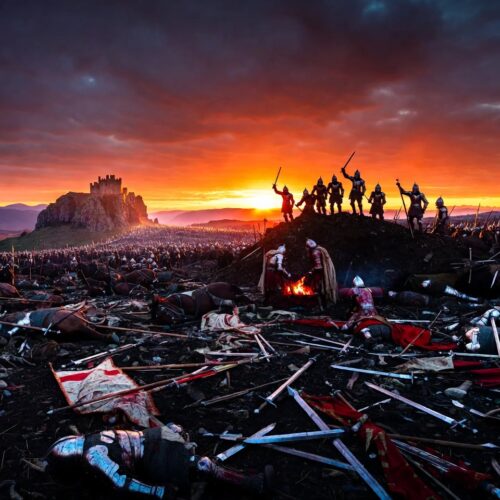 But Roslin isn't just dusty lore; it's a blueprint for personal triumph. The Scots faced impossible odds – outnumbered, out-equipped – yet won through unity, surprise, and unyielding resolve. Today, in our world of overwhelming challenges (deadlines, diets, doom-scrolling), channel that Roslin spirit. The outcome? Determination beats domination. Apply it to your life: When life's "English army" looms – a toxic job, health setback, or creative block – ambush it with strategy.
Here's how you benefit, with specific bullet points:
- **Embrace the Night March Mindset**: Like Comyn and Fraser's grueling trek, prepare in the shadows. Bullet: Dedicate 30 minutes before bed to plan your next day's "ambush" – list three key actions to tackle your biggest obstacle, turning dread into direction.
- **Divide and Conquer Your Foes**: The English split; don't let your problems unite against you. Bullet: Break overwhelming tasks into "divisions" – e.g., if job-hunting daunts, split into resume tweak (first camp), network outreach (second), interview prep (third) – conquer one per day.
- **Rally Your Inner Clan**: Allies turned the tide. Bullet: Identify your "Frasers" – a mentor, friend, or app – and schedule weekly check-ins for accountability, transforming solo struggles into shared victories.
Now, the unique plan: The "Roslin Dawn Raid Protocol" – not your generic self-help fluff like "wake at 5 AM and journal gratitude." This is a guerrilla tactic for life, blending historical reenactment with modern biohacking, zero apps required. It's unique because it treats your brain like a medieval battlefield: Surprise your subconscious, harness fatigue for focus, and celebrate micro-victories with ritual.
Step 1: **Scout the Glen (Evening Recon)** – At dusk, like Scottish scouts, survey your "terrain." Walk 10 minutes outdoors (no phone), mentally mapping challenges. Note one "English camp" – a habit to raid, like procrastination.
Step 2: **The Night March (Pre-Sleep Prep)** – Brew herbal tea (chamomile for calm), dim lights, and script your ambush: Write a "battle cry" affirmation in third person, e.g., "The warrior rises at dawn to claim the glen." Sleep 7-8 hours – no screens post-9 PM.
Step 3: **Dawn Ambush (Morning Strike)** – Wake 30 minutes early to natural light (open curtains). Immediately "charge" – do a 5-minute bodyweight circuit (jumps, pushes) to spike adrenaline, then tackle your target for 25 minutes uninterrupted. No coffee yet; let endorphins fuel you.
Step 4: **Ridge Defense (Midday Rally)** – When fatigue hits (like the Scots after phase one), pause for a "castle meal" – protein-rich snack with a view (window or park). Reflect: What "Segrave" did you capture? Adjust for the next "division."
Step 5: **Glen Feast (Evening Triumph)** – End with a ritual: Light a candle (tallow optional), recount wins aloud, and "ransom" a reward – a favorite book or bath. Track in a "chronicler's journal" – one sentence per day, building your personal legend.
Repeat daily for 21 days; it's not about perfection but persistence. Unlike cookie-cutter plans, this mimics Roslin's chaos: Adapt, surprise yourself, and laugh at setbacks – because if 1303's underdogs could rout invaders thrice in a day, you can conquer your inbox. Roslin whispers: Victory isn't in numbers; it's in the nerve to strike first. Go forth, warrior – your glen awaits.
But Roslin isn't just dusty lore; it's a blueprint for personal triumph. The Scots faced impossible odds – outnumbered, out-equipped – yet won through unity, surprise, and unyielding resolve. Today, in our world of overwhelming challenges (deadlines, diets, doom-scrolling), channel that Roslin spirit. The outcome? Determination beats domination. Apply it to your life: When life's "English army" looms – a toxic job, health setback, or creative block – ambush it with strategy.
Here's how you benefit, with specific bullet points:
- **Embrace the Night March Mindset**: Like Comyn and Fraser's grueling trek, prepare in the shadows. Bullet: Dedicate 30 minutes before bed to plan your next day's "ambush" – list three key actions to tackle your biggest obstacle, turning dread into direction.
- **Divide and Conquer Your Foes**: The English split; don't let your problems unite against you. Bullet: Break overwhelming tasks into "divisions" – e.g., if job-hunting daunts, split into resume tweak (first camp), network outreach (second), interview prep (third) – conquer one per day.
- **Rally Your Inner Clan**: Allies turned the tide. Bullet: Identify your "Frasers" – a mentor, friend, or app – and schedule weekly check-ins for accountability, transforming solo struggles into shared victories.
Now, the unique plan: The "Roslin Dawn Raid Protocol" – not your generic self-help fluff like "wake at 5 AM and journal gratitude." This is a guerrilla tactic for life, blending historical reenactment with modern biohacking, zero apps required. It's unique because it treats your brain like a medieval battlefield: Surprise your subconscious, harness fatigue for focus, and celebrate micro-victories with ritual.
Step 1: **Scout the Glen (Evening Recon)** – At dusk, like Scottish scouts, survey your "terrain." Walk 10 minutes outdoors (no phone), mentally mapping challenges. Note one "English camp" – a habit to raid, like procrastination.
Step 2: **The Night March (Pre-Sleep Prep)** – Brew herbal tea (chamomile for calm), dim lights, and script your ambush: Write a "battle cry" affirmation in third person, e.g., "The warrior rises at dawn to claim the glen." Sleep 7-8 hours – no screens post-9 PM.
Step 3: **Dawn Ambush (Morning Strike)** – Wake 30 minutes early to natural light (open curtains). Immediately "charge" – do a 5-minute bodyweight circuit (jumps, pushes) to spike adrenaline, then tackle your target for 25 minutes uninterrupted. No coffee yet; let endorphins fuel you.
Step 4: **Ridge Defense (Midday Rally)** – When fatigue hits (like the Scots after phase one), pause for a "castle meal" – protein-rich snack with a view (window or park). Reflect: What "Segrave" did you capture? Adjust for the next "division."
Step 5: **Glen Feast (Evening Triumph)** – End with a ritual: Light a candle (tallow optional), recount wins aloud, and "ransom" a reward – a favorite book or bath. Track in a "chronicler's journal" – one sentence per day, building your personal legend.
Repeat daily for 21 days; it's not about perfection but persistence. Unlike cookie-cutter plans, this mimics Roslin's chaos: Adapt, surprise yourself, and laugh at setbacks – because if 1303's underdogs could rout invaders thrice in a day, you can conquer your inbox. Roslin whispers: Victory isn't in numbers; it's in the nerve to strike first. Go forth, warrior – your glen awaits.