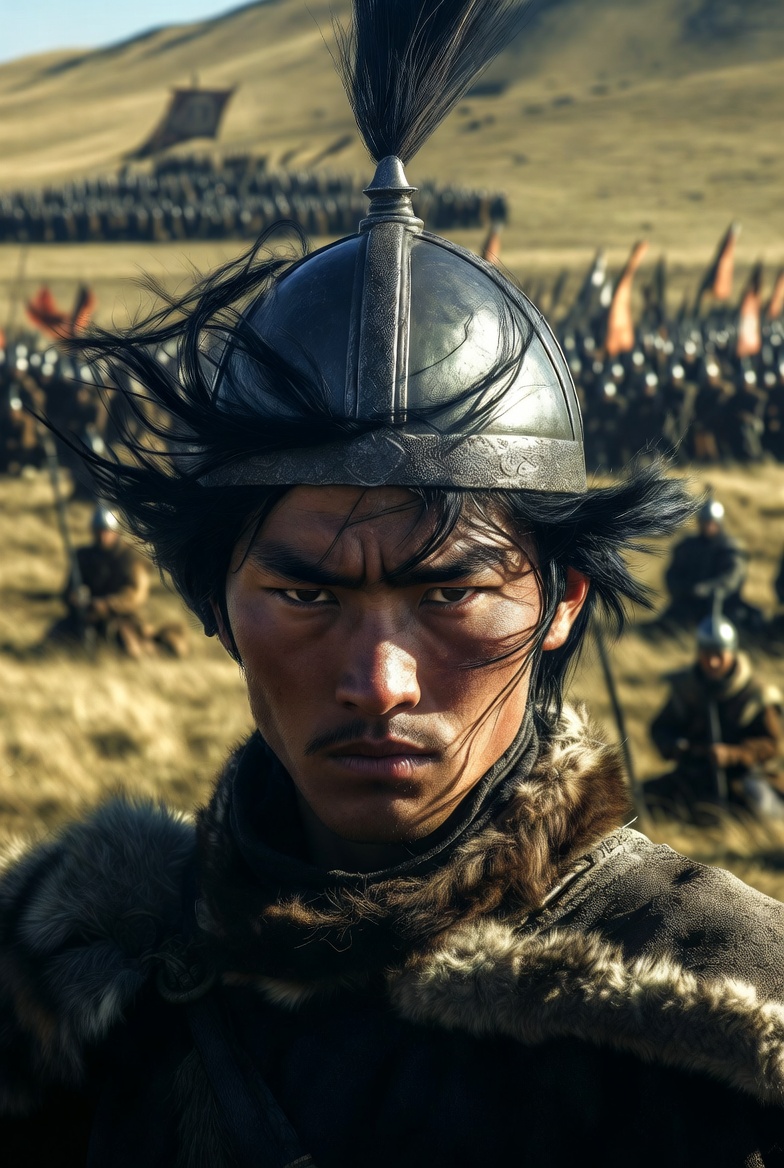
Picture this: It's the dead of winter in 1220, and a dust-choked wind is whipping across the endless sands of the Kyzylkum Desert. Most maps called it impassable—a 300-mile death trap of shifting dunes, scorpions, and zero water. Armies had tried. Armies had died. But on this particular February day, something impossible was happening. A horde of 30,000 to 50,000 Mongol warriors—hardened horse archers who could shoot arrows while galloping backward at full speed—were emerging from that wasteland like ghosts from a nightmare. At their head rode Temüjin, the man the world would soon fear as Genghis Khan, the Universal Ruler. And their target? Bukhara, the glittering jewel of the Silk Road, a city so rich and cultured that scholars called it "the dome of Islam," with libraries bursting at the seams with 45,000 volumes, mosques that could swallow cathedrals, and a population pushing 300,000 souls.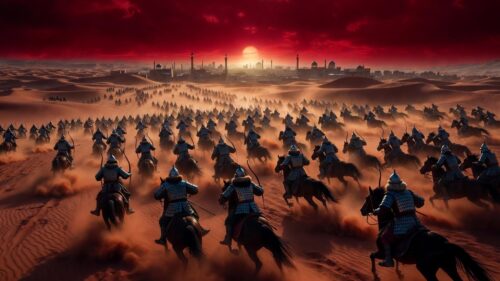 By the time the sun set on February 15, 1220, Bukhara wasn't just under siege. It was cracking open like a ripe melon under a Mongol boot. The outer city had already fallen days earlier in a whirlwind of fire and steel, but the citadel—the ancient Ark fortress that had stood for centuries—still held out. Or so its defenders thought. What they didn't know was that Genghis had already turned their greatest strength against them: their own overconfidence. This wasn't just another battle. This was the day the Mongol machine proved that no wall, no army, no empire was safe from sheer, unyielding momentum. And the echoes of that day? They're still teaching lessons that could rewrite your entire life if you let them.
But we're getting ahead of ourselves. To understand why February 15, 1220, matters—and why it should matter to you—we have to go back. Way back. To the windswept steppes of Mongolia around 1162, when a boy named Temüjin was born into a world of blood feuds, horse raids, and tribes that made the Hatfields and McCoys look like a book club.
### The Making of a Monster (and a Mastermind)
Temüjin’s early life was a masterclass in survival theater. His father, a minor chieftain named Yesugei, was poisoned by rival Tatars when the boy was just nine. The family was abandoned on the steppe—standard procedure in those days for "losers." Young Temüjin and his mother Hoelun scraped by on wild onions, marmots, and sheer spite. His half-brothers tried to kill him. He killed one back. He was captured, enslaved, escaped with a wooden collar still around his neck. By his teens, he was forging alliances the old-fashioned way: through marriage, betrayal, and the occasional well-timed massacre.
But here’s where it gets interesting—and where the funny part of history kicks in. Temüjin wasn’t some mindless brute. He was a nerd with a sword. He studied people like a psychologist on horseback. He noticed that the nomadic tribes were forever at each other’s throats because of petty grudges and bad leadership. So he did something revolutionary: he started promoting based on merit, not blood. A low-born herder who could ride and shoot? General. A captured enemy who swore loyalty? Trusted advisor. He banned feuds within his ranks, created a decimal military system (units of 10, 100, 1,000, 10,000—simple, scalable, terrifying), and turned loyalty into a religion. By 1206, when he was proclaimed Genghis Khan at a grand assembly on the Onon River, he ruled a unified Mongolia that had never existed before.
By the time the sun set on February 15, 1220, Bukhara wasn't just under siege. It was cracking open like a ripe melon under a Mongol boot. The outer city had already fallen days earlier in a whirlwind of fire and steel, but the citadel—the ancient Ark fortress that had stood for centuries—still held out. Or so its defenders thought. What they didn't know was that Genghis had already turned their greatest strength against them: their own overconfidence. This wasn't just another battle. This was the day the Mongol machine proved that no wall, no army, no empire was safe from sheer, unyielding momentum. And the echoes of that day? They're still teaching lessons that could rewrite your entire life if you let them.
But we're getting ahead of ourselves. To understand why February 15, 1220, matters—and why it should matter to you—we have to go back. Way back. To the windswept steppes of Mongolia around 1162, when a boy named Temüjin was born into a world of blood feuds, horse raids, and tribes that made the Hatfields and McCoys look like a book club.
### The Making of a Monster (and a Mastermind)
Temüjin’s early life was a masterclass in survival theater. His father, a minor chieftain named Yesugei, was poisoned by rival Tatars when the boy was just nine. The family was abandoned on the steppe—standard procedure in those days for "losers." Young Temüjin and his mother Hoelun scraped by on wild onions, marmots, and sheer spite. His half-brothers tried to kill him. He killed one back. He was captured, enslaved, escaped with a wooden collar still around his neck. By his teens, he was forging alliances the old-fashioned way: through marriage, betrayal, and the occasional well-timed massacre.
But here’s where it gets interesting—and where the funny part of history kicks in. Temüjin wasn’t some mindless brute. He was a nerd with a sword. He studied people like a psychologist on horseback. He noticed that the nomadic tribes were forever at each other’s throats because of petty grudges and bad leadership. So he did something revolutionary: he started promoting based on merit, not blood. A low-born herder who could ride and shoot? General. A captured enemy who swore loyalty? Trusted advisor. He banned feuds within his ranks, created a decimal military system (units of 10, 100, 1,000, 10,000—simple, scalable, terrifying), and turned loyalty into a religion. By 1206, when he was proclaimed Genghis Khan at a grand assembly on the Onon River, he ruled a unified Mongolia that had never existed before. And unification wasn’t enough. He wanted the world.
The Mongols under Genghis were the ultimate disruptors. Their army was lean, mobile, and terrifyingly efficient. Every warrior had multiple horses, could cover 100 miles a day, lived off blood and mare’s milk when supplies ran low, and carried a toolkit that included a lasso, a file for arrows, and a waterproof silk shirt they could inflate to float across rivers. Their composite bows could punch through armor at 300 yards. Their intelligence network—spies disguised as merchants—made the CIA look amateur. And their psychological warfare? Chef’s kiss. They spread rumors of their own invincibility, offered surrender terms that were generous to cities that folded quickly, and turned into demons if you resisted.
By 1219, the Mongol Empire stretched from the Pacific to the Caspian. But Genghis wasn’t done. He had his eyes on the west—and the Khwarazmian Empire was begging for it.
### The Spark That Lit the Fuse
The Khwarazmian Empire, ruled by the arrogant Shah Muhammad II, was everything the Mongols weren’t: bloated, divided, and drowning in its own luxury. Stretching from modern Iran to Uzbekistan, it controlled the heart of the Silk Road. Bukhara and its sister city Samarkand were the Vegas of the medieval world—bazaars selling Chinese silk, Indian spices, Persian poetry, and African slaves. The shah’s mother, Terken Khatun, basically ran a parallel government. His generals hated each other. His son Jalal al-Din was the only competent one, and even he got sidelined.
The breaking point came in 1218. A Mongol trade caravan—450 merchants and their goods—arrived in the border city of Otrar. The governor, Inalchuq (the shah’s uncle, naturally), got greedy. He accused them of spying, seized the goods, and executed the entire party. One survivor escaped back to Mongolia.
Genghis sent three ambassadors to demand justice. The shah, in a fit of imperial ego, shaved the heads of two and beheaded the third. Big mistake. As the chronicler Juvaini later wrote, "The cup of the Shah’s arrogance overflowed."
Genghis didn’t rage. He planned. In the fall of 1219, he launched the largest invasion the world had ever seen. Four armies, over 100,000 men total. His eldest son Jochi swept north along the Syr Darya. His middle sons Chagatai and Ögedei hammered Otrar. Generals Jebe and Subutai went rogue on a reconnaissance raid that would eventually circle the Caspian. And Genghis himself, with his youngest and favorite son Tolui, took the main force straight into the unknown.
### The Impossible Crossing
The Kyzylkum Desert. Locals called it "the red sand." No army had ever crossed it with more than a few scouts. But Genghis had done his homework. Mongol scouts had mapped hidden wells and camel trails. The army moved in small, self-sufficient groups, each carrying dried meat, fermented mare’s milk, and collapsible yurts. They drank from their horses’ veins when water ran out (yes, really—slice a vein, drink, seal it up). Camels carried the heavy stuff. And because the Mongols traveled light—no massive supply trains—they could move like lightning.
They emerged near Bukhara in early February 1220, weeks ahead of schedule. The shah, who had expected them to slog through the mountains or along the rivers, was stunned. His garrisons were scattered. Bukhara’s defenders—maybe 20,000 at most, mostly Turkish mercenaries and local levies—woke up one morning to find the horizon black with Mongol horsemen.
And unification wasn’t enough. He wanted the world.
The Mongols under Genghis were the ultimate disruptors. Their army was lean, mobile, and terrifyingly efficient. Every warrior had multiple horses, could cover 100 miles a day, lived off blood and mare’s milk when supplies ran low, and carried a toolkit that included a lasso, a file for arrows, and a waterproof silk shirt they could inflate to float across rivers. Their composite bows could punch through armor at 300 yards. Their intelligence network—spies disguised as merchants—made the CIA look amateur. And their psychological warfare? Chef’s kiss. They spread rumors of their own invincibility, offered surrender terms that were generous to cities that folded quickly, and turned into demons if you resisted.
By 1219, the Mongol Empire stretched from the Pacific to the Caspian. But Genghis wasn’t done. He had his eyes on the west—and the Khwarazmian Empire was begging for it.
### The Spark That Lit the Fuse
The Khwarazmian Empire, ruled by the arrogant Shah Muhammad II, was everything the Mongols weren’t: bloated, divided, and drowning in its own luxury. Stretching from modern Iran to Uzbekistan, it controlled the heart of the Silk Road. Bukhara and its sister city Samarkand were the Vegas of the medieval world—bazaars selling Chinese silk, Indian spices, Persian poetry, and African slaves. The shah’s mother, Terken Khatun, basically ran a parallel government. His generals hated each other. His son Jalal al-Din was the only competent one, and even he got sidelined.
The breaking point came in 1218. A Mongol trade caravan—450 merchants and their goods—arrived in the border city of Otrar. The governor, Inalchuq (the shah’s uncle, naturally), got greedy. He accused them of spying, seized the goods, and executed the entire party. One survivor escaped back to Mongolia.
Genghis sent three ambassadors to demand justice. The shah, in a fit of imperial ego, shaved the heads of two and beheaded the third. Big mistake. As the chronicler Juvaini later wrote, "The cup of the Shah’s arrogance overflowed."
Genghis didn’t rage. He planned. In the fall of 1219, he launched the largest invasion the world had ever seen. Four armies, over 100,000 men total. His eldest son Jochi swept north along the Syr Darya. His middle sons Chagatai and Ögedei hammered Otrar. Generals Jebe and Subutai went rogue on a reconnaissance raid that would eventually circle the Caspian. And Genghis himself, with his youngest and favorite son Tolui, took the main force straight into the unknown.
### The Impossible Crossing
The Kyzylkum Desert. Locals called it "the red sand." No army had ever crossed it with more than a few scouts. But Genghis had done his homework. Mongol scouts had mapped hidden wells and camel trails. The army moved in small, self-sufficient groups, each carrying dried meat, fermented mare’s milk, and collapsible yurts. They drank from their horses’ veins when water ran out (yes, really—slice a vein, drink, seal it up). Camels carried the heavy stuff. And because the Mongols traveled light—no massive supply trains—they could move like lightning.
They emerged near Bukhara in early February 1220, weeks ahead of schedule. The shah, who had expected them to slog through the mountains or along the rivers, was stunned. His garrisons were scattered. Bukhara’s defenders—maybe 20,000 at most, mostly Turkish mercenaries and local levies—woke up one morning to find the horizon black with Mongol horsemen.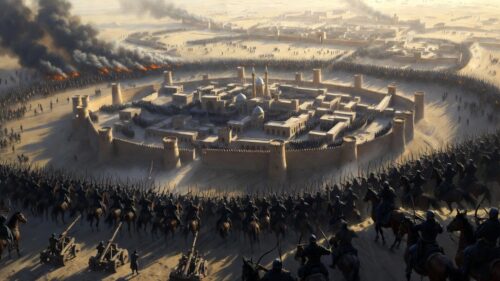 ### The Fall: February 15, 1220
The siege began around February 7-10. Genghis didn’t waste time with fancy maneuvers. He surrounded the city, cut the irrigation canals, and started the terror. Mongol catapults—manned by captured Chinese engineers—hurled stones the size of watermelons. Flaming arrows rained down. The outer walls, impressive but not invincible, crumbled under the barrage.
The defenders tried a desperate sally on the third day. About 20,000 men charged out, hoping to break through to the Amu Darya River and escape. The Mongols let them come, then closed the trap. As Juvaini described it: "The plain seemed to be a tray filled with blood." Almost none survived.
By February 10, the outer city surrendered. The population was herded out, the men sorted: craftsmen kept for the Mongol war machine, young men drafted as cannon fodder for future sieges, the rest enslaved or worse. Genghis rode into the city on horseback and, in a moment of dark poetry, entered the grand Friday Mosque. He ordered the Qurans pulled from their cases and the cases filled with grain for his horses. Then he climbed the minbar (pulpit) and addressed the trembling crowd.
"O people," he thundered, "know that you have committed great sins, and that the great ones among you have committed these sins. If you ask me what proof I have for these words, I say it is because I am the punishment of God. If you had not committed great sins, God would not have sent a punishment like me upon you."
The crowd reportedly wept. Some scholars argue this was Genghis’s way of framing the conquest as divine justice—psychological warfare at its finest. Others say he was just being honest: the shah’s tyranny had invited this.
### The Fall: February 15, 1220
The siege began around February 7-10. Genghis didn’t waste time with fancy maneuvers. He surrounded the city, cut the irrigation canals, and started the terror. Mongol catapults—manned by captured Chinese engineers—hurled stones the size of watermelons. Flaming arrows rained down. The outer walls, impressive but not invincible, crumbled under the barrage.
The defenders tried a desperate sally on the third day. About 20,000 men charged out, hoping to break through to the Amu Darya River and escape. The Mongols let them come, then closed the trap. As Juvaini described it: "The plain seemed to be a tray filled with blood." Almost none survived.
By February 10, the outer city surrendered. The population was herded out, the men sorted: craftsmen kept for the Mongol war machine, young men drafted as cannon fodder for future sieges, the rest enslaved or worse. Genghis rode into the city on horseback and, in a moment of dark poetry, entered the grand Friday Mosque. He ordered the Qurans pulled from their cases and the cases filled with grain for his horses. Then he climbed the minbar (pulpit) and addressed the trembling crowd.
"O people," he thundered, "know that you have committed great sins, and that the great ones among you have committed these sins. If you ask me what proof I have for these words, I say it is because I am the punishment of God. If you had not committed great sins, God would not have sent a punishment like me upon you."
The crowd reportedly wept. Some scholars argue this was Genghis’s way of framing the conquest as divine justice—psychological warfare at its finest. Others say he was just being honest: the shah’s tyranny had invited this.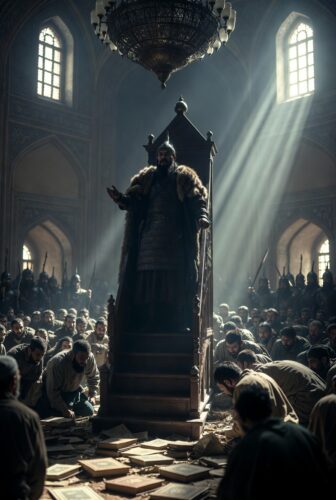 The Ark citadel held out for another week or so, its defenders fighting from the ancient mud-brick walls. But Mongol siege engines—trebuchets, ballistae, even early gunpowder bombs from China—did their work. On or around February 15, the outer defenses were breached in a final, fiery assault. The citadel fell. Every last soldier inside was put to the sword. The city was systematically looted, then torched to flush out any holdouts. Wooden buildings went up like kindling. The great mosque was damaged (though the Kalyan Minaret, that 170-foot brick tower, somehow survived and still stands today).
Bukhara, the "dome of Islam," was a smoking ruin. Estimates of the dead run from 30,000 to over 100,000 when you count the surrounding countryside. The survivors were scattered to the winds.
### The Aftermath: From Ashes to Empire
But here’s the twist that makes this story so deliciously ironic. The Mongols didn’t just destroy—they rebuilt, better. Within a decade, Bukhara was back on its feet, repopulated with artisans from China and Khitans, protected by the Pax Mongolica—the Mongol peace that made the Silk Road safer than it had been in centuries. Trade boomed. Ideas flowed: paper money, gunpowder, the postal system. Bukhara became a center of the Chagatai Khanate, birthing Timur the Lame (Tamerlane) a century and a half later. The very empire that had nearly wiped it off the map ended up spreading its culture farther than the shah ever dreamed.
The Khwarazmian Empire? Toast. Shah Muhammad fled like a coward, dying of pleurisy on a Caspian island. His son Jalal al-Din fought on heroically but was eventually hunted down. By 1221, the Mongols owned Central Asia.
Genghis himself lived another seven years, dying in 1227 while campaigning in China. His empire stretched from Korea to Hungary. But the real legacy was the machine he built: an administrative system so efficient it inspired the Ottomans, the Russians, and even the British Raj.
### What This Means for You in 2026
Okay, enough history. You’ve got the 90%. Now the 10% that turns dusty facts into rocket fuel for your life.
The fall of Bukhara on February 15, 1220, wasn’t luck. It was the inevitable result of a man who refused to accept "impossible." Genghis saw a desert and thought, "Shortcut." He saw a divided enemy and thought, "Target practice." He saw a fortified city and thought, "Temporary inconvenience."
That same mindset can dismantle every excuse holding you back today.
Here’s how to apply it, in very specific, actionable ways:
- **Master the Desert Dash**: When your goal feels impossible—like starting that business, losing the weight, or mending that relationship—map the "impassable" route. Spend one hour this week listing every obstacle, then for each one, brainstorm three workarounds. Genghis didn’t wait for the rivers to freeze; he found the wells. You don’t wait for the "perfect time"; you build the bridge while crossing.
- **Build a Horde of 10s**: Mongols succeeded because every unit of 10 was a self-contained death machine. In your life, stop trying to do everything alone. Identify your top three "generals"—people whose skills complement yours—and delegate ruthlessly this month. Give them ownership. Reward loyalty like Genghis did: with promotions, not just paychecks.
- **Turn Resistance into Recruitment**: The Mongols didn’t slaughter everyone—they drafted the useful ones. When you hit pushback (boss says no, partner doubts you), don’t fight. Convert. Ask: "What would make this a yes?" Then deliver. The citadel fell because the defenders had no options. Give your obstacles options, and they’ll join your side.
- **Speak from the Minbar**: Genghis owned the narrative. Next time you’re in a meeting or a tough conversation, frame the problem as bigger than the people: "We’re all in this together against X." It disarms egos and unites. Practice it daily in the mirror for a week.
- **Burn the Boats (Selectively)**: After taking Bukhara, there was no retreat. Commit to one big goal this quarter by publicly declaring it and setting irreversible consequences (tell your network, invest the money, delete the escape apps). The Mongols torched the city to smoke out the last holdouts. Torch your distractions.
The Ark citadel held out for another week or so, its defenders fighting from the ancient mud-brick walls. But Mongol siege engines—trebuchets, ballistae, even early gunpowder bombs from China—did their work. On or around February 15, the outer defenses were breached in a final, fiery assault. The citadel fell. Every last soldier inside was put to the sword. The city was systematically looted, then torched to flush out any holdouts. Wooden buildings went up like kindling. The great mosque was damaged (though the Kalyan Minaret, that 170-foot brick tower, somehow survived and still stands today).
Bukhara, the "dome of Islam," was a smoking ruin. Estimates of the dead run from 30,000 to over 100,000 when you count the surrounding countryside. The survivors were scattered to the winds.
### The Aftermath: From Ashes to Empire
But here’s the twist that makes this story so deliciously ironic. The Mongols didn’t just destroy—they rebuilt, better. Within a decade, Bukhara was back on its feet, repopulated with artisans from China and Khitans, protected by the Pax Mongolica—the Mongol peace that made the Silk Road safer than it had been in centuries. Trade boomed. Ideas flowed: paper money, gunpowder, the postal system. Bukhara became a center of the Chagatai Khanate, birthing Timur the Lame (Tamerlane) a century and a half later. The very empire that had nearly wiped it off the map ended up spreading its culture farther than the shah ever dreamed.
The Khwarazmian Empire? Toast. Shah Muhammad fled like a coward, dying of pleurisy on a Caspian island. His son Jalal al-Din fought on heroically but was eventually hunted down. By 1221, the Mongols owned Central Asia.
Genghis himself lived another seven years, dying in 1227 while campaigning in China. His empire stretched from Korea to Hungary. But the real legacy was the machine he built: an administrative system so efficient it inspired the Ottomans, the Russians, and even the British Raj.
### What This Means for You in 2026
Okay, enough history. You’ve got the 90%. Now the 10% that turns dusty facts into rocket fuel for your life.
The fall of Bukhara on February 15, 1220, wasn’t luck. It was the inevitable result of a man who refused to accept "impossible." Genghis saw a desert and thought, "Shortcut." He saw a divided enemy and thought, "Target practice." He saw a fortified city and thought, "Temporary inconvenience."
That same mindset can dismantle every excuse holding you back today.
Here’s how to apply it, in very specific, actionable ways:
- **Master the Desert Dash**: When your goal feels impossible—like starting that business, losing the weight, or mending that relationship—map the "impassable" route. Spend one hour this week listing every obstacle, then for each one, brainstorm three workarounds. Genghis didn’t wait for the rivers to freeze; he found the wells. You don’t wait for the "perfect time"; you build the bridge while crossing.
- **Build a Horde of 10s**: Mongols succeeded because every unit of 10 was a self-contained death machine. In your life, stop trying to do everything alone. Identify your top three "generals"—people whose skills complement yours—and delegate ruthlessly this month. Give them ownership. Reward loyalty like Genghis did: with promotions, not just paychecks.
- **Turn Resistance into Recruitment**: The Mongols didn’t slaughter everyone—they drafted the useful ones. When you hit pushback (boss says no, partner doubts you), don’t fight. Convert. Ask: "What would make this a yes?" Then deliver. The citadel fell because the defenders had no options. Give your obstacles options, and they’ll join your side.
- **Speak from the Minbar**: Genghis owned the narrative. Next time you’re in a meeting or a tough conversation, frame the problem as bigger than the people: "We’re all in this together against X." It disarms egos and unites. Practice it daily in the mirror for a week.
- **Burn the Boats (Selectively)**: After taking Bukhara, there was no retreat. Commit to one big goal this quarter by publicly declaring it and setting irreversible consequences (tell your network, invest the money, delete the escape apps). The Mongols torched the city to smoke out the last holdouts. Torch your distractions. And here’s your 30-day "Khan Plan" to turn this history into your reality:
**Week 1: Scout the Terrain**
Day 1-3: Write your "Bukhara"—the one big thing you’ve been avoiding. Detail every wall (fear, money, time).
Day 4-7: Cross the desert. Research three unconventional paths others have taken. Talk to one person who’s done something similar.
**Week 2: Assemble the Horde**
Recruit your inner circle. Schedule three 30-minute "war councils." Assign roles based on strengths. Test them with a small mission.
**Week 3: Launch the Assault**
Take daily action toward the goal, no matter how small. Track it publicly (journal, app, friend). When resistance hits, use the "convert" script above.
**Week 4: Consolidate and Expand**
Review what worked. Reward the team (including yourself). Set the next objective. Celebrate the fall of this Bukhara—then eye Samarkand.
Look, history is littered with empires that thought they were untouchable. Bukhara learned the hard way on February 15, 1220. But you? You get the cheat code. The Mongols didn’t win because they were stronger. They won because they moved faster, thought sharper, and committed harder.
So tomorrow morning, when the alarm goes off and your brain whispers "impossible," remember the man who rode out of a desert no one else could cross. Channel that Khan energy. Charge the walls. Take the city.
Your empire is waiting.
And here’s your 30-day "Khan Plan" to turn this history into your reality:
**Week 1: Scout the Terrain**
Day 1-3: Write your "Bukhara"—the one big thing you’ve been avoiding. Detail every wall (fear, money, time).
Day 4-7: Cross the desert. Research three unconventional paths others have taken. Talk to one person who’s done something similar.
**Week 2: Assemble the Horde**
Recruit your inner circle. Schedule three 30-minute "war councils." Assign roles based on strengths. Test them with a small mission.
**Week 3: Launch the Assault**
Take daily action toward the goal, no matter how small. Track it publicly (journal, app, friend). When resistance hits, use the "convert" script above.
**Week 4: Consolidate and Expand**
Review what worked. Reward the team (including yourself). Set the next objective. Celebrate the fall of this Bukhara—then eye Samarkand.
Look, history is littered with empires that thought they were untouchable. Bukhara learned the hard way on February 15, 1220. But you? You get the cheat code. The Mongols didn’t win because they were stronger. They won because they moved faster, thought sharper, and committed harder.
So tomorrow morning, when the alarm goes off and your brain whispers "impossible," remember the man who rode out of a desert no one else could cross. Channel that Khan energy. Charge the walls. Take the city.
Your empire is waiting.