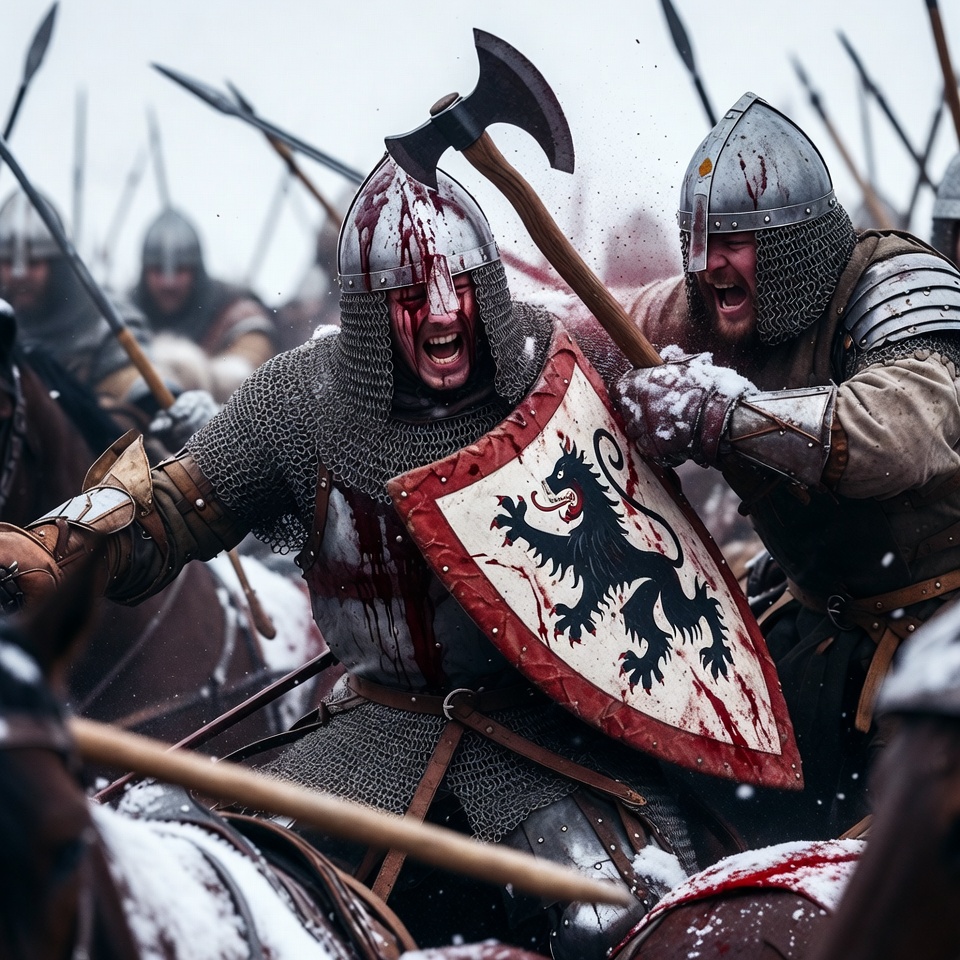
Imagine a frozen landscape in the heart of medieval Sweden, where swirling snowstorms cloak the clash of steel and the cries of warriors. On January 31, 1208, near the humble village of Kungslena in Västergötland, a battle unfolded that would reshape the destiny of a nation. This wasn't just any skirmish; it was the Battle of Lena, a pivotal confrontation in the brutal dynastic wars that gripped Sweden during the High Middle Ages. Pitting the exiled Prince Erik against the Danish-backed King Sverker II, it was a tale of underdogs, foreign meddling, and legendary divine intervention. While history books often gloss over this event in favor of grander European spectacles like the Crusades or the Norman Conquest, the Battle of Lena stands as a testament to the raw, visceral struggles that defined Scandinavian power dynamics. In this deep dive, we'll unearth the intricate web of alliances, betrayals, and bloodshed that led to this wintry showdown, exploring its causes, the chaotic fray, and its rippling consequences. And then, we'll bridge the centuries to see how the spirit of this ancient victory can ignite personal triumphs in our modern world—turning historical grit into a blueprint for unbreakable resolve.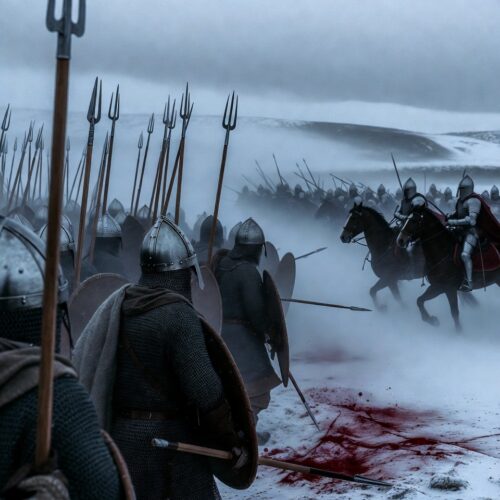 To truly grasp the Battle of Lena, we must rewind to the turbulent tapestry of 12th- and 13th-century Sweden. This era was marked by the so-called "civil wars" or "dynastic struggles" between two rival royal houses: the House of Sverker and the House of Eric. Sweden, at the time, was not the unified kingdom we know today. It was a patchwork of provinces like Västergötland, Östergötland, and Svealand, each with its own laws, assemblies (things), and influential noble families. Kings were elected by these assemblies, often from competing lineages, leading to frequent power shifts and violent purges. The economy revolved around agriculture, fur trading, and iron mining, with Christianity slowly overlaying ancient pagan traditions. Viking raids had long faded, but the warrior ethos lingered, and ties to neighboring Denmark and Norway fueled endless intrigue.
The roots of the conflict trace back to the death of King Knut Eriksson in 1195 or 1196. Knut, from the House of Eric, had ruled since 1167, bringing a measure of stability after ousting the previous Sverker king. His reign saw Sweden's expansion into Finland through crusades and strengthened ties with the church. But upon his death, his four sons—Erik, Johan, Knut, and Joar—were mere children or teenagers, too young to claim the throne decisively. The Swedish nobles, ever pragmatic, elected Sverker II Karlsson from the rival House of Sverker as king in 1196. Sverker was a shrewd operator, married to Benedikta Ebbesdotter, daughter of the powerful Danish noble Ebbe Sunesen. This union wasn't just romantic; it was a strategic alliance that brought Danish muscle into Swedish affairs.
Sverker II's early rule was promising. He donated lands to monasteries, promoted Christianity, and navigated the complex web of papal influences. But resentment simmered among the supporters of the House of Eric, who viewed Sverker as a usurper. By 1205, Knut Eriksson's sons had come of age and rallied an army to challenge the king. The first major clash occurred at Älgarås in Västergötland that year. Details are scarce, as medieval chronicles like the Erik's Chronicle (a 14th-century rhymed account) offer poetic rather than precise narratives. What we know is that Sverker's forces crushed the rebellion. Three of Erik's brothers—Johan, Knut, and Joar—were slain, their heads reportedly displayed as warnings. Prince Erik, the sole survivor, fled across the border to Norway, seeking refuge with King Inge II and his brother-in-law, Jarl Håkon Galen.
To truly grasp the Battle of Lena, we must rewind to the turbulent tapestry of 12th- and 13th-century Sweden. This era was marked by the so-called "civil wars" or "dynastic struggles" between two rival royal houses: the House of Sverker and the House of Eric. Sweden, at the time, was not the unified kingdom we know today. It was a patchwork of provinces like Västergötland, Östergötland, and Svealand, each with its own laws, assemblies (things), and influential noble families. Kings were elected by these assemblies, often from competing lineages, leading to frequent power shifts and violent purges. The economy revolved around agriculture, fur trading, and iron mining, with Christianity slowly overlaying ancient pagan traditions. Viking raids had long faded, but the warrior ethos lingered, and ties to neighboring Denmark and Norway fueled endless intrigue.
The roots of the conflict trace back to the death of King Knut Eriksson in 1195 or 1196. Knut, from the House of Eric, had ruled since 1167, bringing a measure of stability after ousting the previous Sverker king. His reign saw Sweden's expansion into Finland through crusades and strengthened ties with the church. But upon his death, his four sons—Erik, Johan, Knut, and Joar—were mere children or teenagers, too young to claim the throne decisively. The Swedish nobles, ever pragmatic, elected Sverker II Karlsson from the rival House of Sverker as king in 1196. Sverker was a shrewd operator, married to Benedikta Ebbesdotter, daughter of the powerful Danish noble Ebbe Sunesen. This union wasn't just romantic; it was a strategic alliance that brought Danish muscle into Swedish affairs.
Sverker II's early rule was promising. He donated lands to monasteries, promoted Christianity, and navigated the complex web of papal influences. But resentment simmered among the supporters of the House of Eric, who viewed Sverker as a usurper. By 1205, Knut Eriksson's sons had come of age and rallied an army to challenge the king. The first major clash occurred at Älgarås in Västergötland that year. Details are scarce, as medieval chronicles like the Erik's Chronicle (a 14th-century rhymed account) offer poetic rather than precise narratives. What we know is that Sverker's forces crushed the rebellion. Three of Erik's brothers—Johan, Knut, and Joar—were slain, their heads reportedly displayed as warnings. Prince Erik, the sole survivor, fled across the border to Norway, seeking refuge with King Inge II and his brother-in-law, Jarl Håkon Galen.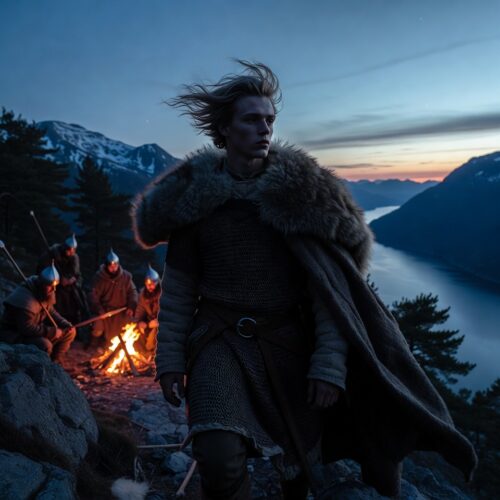 Exile hardened Erik. In Norway, he gathered supporters, including Norwegian nobles and disaffected Swedish exiles. Medieval Scandinavia was a hotbed of such cross-border alliances; kings often meddled in neighbors' affairs to expand influence or settle scores. Denmark, under the ambitious King Valdemar II "the Victorious," saw Sweden as a ripe target for dominance. Valdemar had already conquered parts of northern Germany and Estonia, earning papal approval for his "crusades." Supporting Sverker—his kinsman through marriage—fit Valdemar's expansionist agenda. Meanwhile, Norway, under Inge, was wary of Danish power and backed Erik as a counterbalance.
By late 1207, Erik felt ready to strike. He crossed into Sweden with a mixed force of Norwegians, Swedes loyal to his house, and perhaps some mercenaries. The Erik's Chronicle paints him as a heroic figure, a rightful heir reclaiming his birthright. Sverker, alarmed, appealed to his Danish in-laws. Ebbe Sunesen, a high-ranking Danish noble and brother to Archbishop Anders Sunesen of Lund, rallied a formidable contingent. Danish sources, like the Annals of Lund, exaggerate the numbers: up to 12,000 Danish knights alone, plus Sverker's Swedish levies, totaling perhaps 18,000 men. Erik's army was smaller, estimated at 10,000-15,000, including peasant militias (ledung) and professional warriors. These figures are likely inflated—medieval chroniclers loved hyperbole to glorify victors—but they underscore the perceived imbalance.
As winter gripped Scandinavia in January 1208, the armies converged near Kungslena. Västergötland's terrain was rugged: rolling hills, dense forests, and frozen marshes blanketed in snow. Mobility was key, but heavy snowfall could turn the field into a quagmire. Sverker's forces, bolstered by Danish heavy cavalry—knights in chainmail hauberks, wielding lances and swords—arrived confident. Ebbe Sunesen and his brother Lars (Laurentius) commanded the Danish wings, with Sverker in the center. Erik's troops, lighter and more accustomed to the local winter, included archers, spearmen, and axe-wielding housecarls, remnants of Viking traditions.
Exile hardened Erik. In Norway, he gathered supporters, including Norwegian nobles and disaffected Swedish exiles. Medieval Scandinavia was a hotbed of such cross-border alliances; kings often meddled in neighbors' affairs to expand influence or settle scores. Denmark, under the ambitious King Valdemar II "the Victorious," saw Sweden as a ripe target for dominance. Valdemar had already conquered parts of northern Germany and Estonia, earning papal approval for his "crusades." Supporting Sverker—his kinsman through marriage—fit Valdemar's expansionist agenda. Meanwhile, Norway, under Inge, was wary of Danish power and backed Erik as a counterbalance.
By late 1207, Erik felt ready to strike. He crossed into Sweden with a mixed force of Norwegians, Swedes loyal to his house, and perhaps some mercenaries. The Erik's Chronicle paints him as a heroic figure, a rightful heir reclaiming his birthright. Sverker, alarmed, appealed to his Danish in-laws. Ebbe Sunesen, a high-ranking Danish noble and brother to Archbishop Anders Sunesen of Lund, rallied a formidable contingent. Danish sources, like the Annals of Lund, exaggerate the numbers: up to 12,000 Danish knights alone, plus Sverker's Swedish levies, totaling perhaps 18,000 men. Erik's army was smaller, estimated at 10,000-15,000, including peasant militias (ledung) and professional warriors. These figures are likely inflated—medieval chroniclers loved hyperbole to glorify victors—but they underscore the perceived imbalance.
As winter gripped Scandinavia in January 1208, the armies converged near Kungslena. Västergötland's terrain was rugged: rolling hills, dense forests, and frozen marshes blanketed in snow. Mobility was key, but heavy snowfall could turn the field into a quagmire. Sverker's forces, bolstered by Danish heavy cavalry—knights in chainmail hauberks, wielding lances and swords—arrived confident. Ebbe Sunesen and his brother Lars (Laurentius) commanded the Danish wings, with Sverker in the center. Erik's troops, lighter and more accustomed to the local winter, included archers, spearmen, and axe-wielding housecarls, remnants of Viking traditions.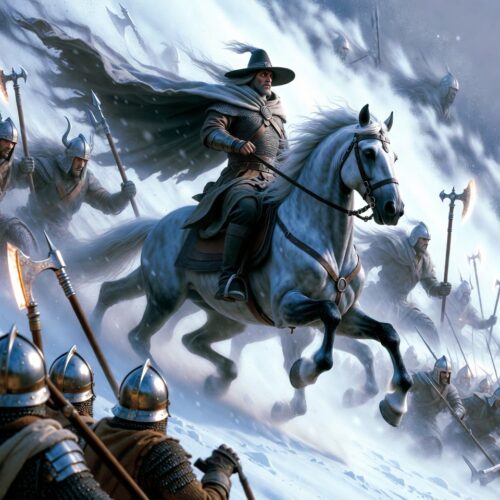 The battle erupted on January 31 amid a blizzard, adding an epic, almost mythical layer to the chaos. No eyewitness accounts survive, but piecing together sagas and annals, we can reconstruct a plausible sequence. Sverker's Danes likely initiated with a cavalry charge, aiming to shatter Erik's lines quickly. But the snow played havoc: horses bogged down, formations broke, and visibility plummeted. Erik's forces, positioned on higher ground or using the terrain wisely, held firm. Swedish archers unleashed volleys, thinning the Danish ranks. As the charge faltered, Erik counterattacked with infantry, exploiting gaps in the enemy lines.
Hand-to-hand combat ensued, brutal and unrelenting. Swords clashed against shields, axes cleaved helmets, and the snow turned red with blood. Ebbe Sunesen, a towering figure in Danish lore, fought valiantly but was cut down—perhaps by a Swedish axe or spear. His brother Lars fell soon after, along with countless knights. Panic spread through the Danish contingents; foreign mercenaries, unaccustomed to the cold and terrain, broke first. Sverker, seeing the tide turn, fled the field with remnants of his guard, racing back to Denmark in humiliation.
The battle erupted on January 31 amid a blizzard, adding an epic, almost mythical layer to the chaos. No eyewitness accounts survive, but piecing together sagas and annals, we can reconstruct a plausible sequence. Sverker's Danes likely initiated with a cavalry charge, aiming to shatter Erik's lines quickly. But the snow played havoc: horses bogged down, formations broke, and visibility plummeted. Erik's forces, positioned on higher ground or using the terrain wisely, held firm. Swedish archers unleashed volleys, thinning the Danish ranks. As the charge faltered, Erik counterattacked with infantry, exploiting gaps in the enemy lines.
Hand-to-hand combat ensued, brutal and unrelenting. Swords clashed against shields, axes cleaved helmets, and the snow turned red with blood. Ebbe Sunesen, a towering figure in Danish lore, fought valiantly but was cut down—perhaps by a Swedish axe or spear. His brother Lars fell soon after, along with countless knights. Panic spread through the Danish contingents; foreign mercenaries, unaccustomed to the cold and terrain, broke first. Sverker, seeing the tide turn, fled the field with remnants of his guard, racing back to Denmark in humiliation.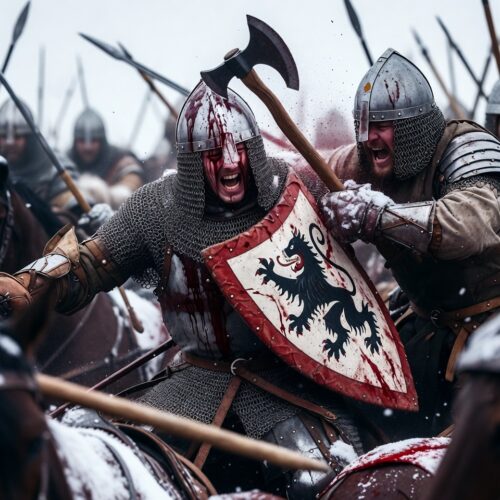 The carnage was immense. Danish sources lament the loss of nearly their entire force—thousands slain, including elite nobles. Erik's casualties were lighter, though significant. Legends elevate the drama: the Erik's Chronicle and later folklore claim Odin himself intervened. In one tale, the Allfather appeared as a one-eyed warrior, leading a final charge that broke the Danes. Riders reported seeing a spectral figure on an eight-legged steed (Sleipnir) amid the storm. This "Odin's Charge" became folklore, marking one of the last pagan echoes in Christianizing Sweden. Whether divine or not, the victory was decisive. Erik pursued the routed foe, capturing stragglers and securing Västergötland.
In the immediate aftermath, Erik consolidated power. By spring 1208, he was elected king at the assembly in Uppsala, taking the name Erik X. He married Ingeborg, daughter of a Norwegian noble, strengthening ties with his allies. Sverker, exiled in Denmark, plotted revenge. Valdemar II, furious at the loss of his kin (Ebbe was a close relative), prepared for retaliation. The Pope, Innocent III, intervened, urging reconciliation and even excommunicating Erik temporarily to pressure him into restoring Sverker. But Erik held firm, fortifying borders and rallying supporters.
The conflict didn't end at Lena. In 1210, Sverker returned with another Danish army, clashing at Gestilren in July. There, Sverker was slain—reportedly by a spear through the eye—sealing the House of Eric's ascendancy. Erik X ruled until 1216, when he died suddenly (possibly poisoned). His infant son, Johan I, succeeded briefly, but the dynasty faltered. By 1250, the Folkungar house, led by Birger Jarl, rose to prominence, unifying Sweden further and founding Stockholm.
The Battle of Lena's significance reverberates through history. It halted Danish expansion into Sweden, preserving Swedish autonomy during a critical period. Valdemar II shifted focus eastward, conquering Estonia instead. For Sweden, it exemplified the perils of foreign interference and the strength of native resolve. The dynastic wars it epitomized paved the way for a more centralized monarchy under the Folkungars, influencing Sweden's path toward nationhood. Culturally, the Odin legend bridged pagan past and Christian present, inspiring ballads and art. In broader European context, it mirrored similar struggles—like England's Barons' Wars or France's Capetian consolidations—where local nobles resisted external powers.
Diving deeper into the key players adds color. Sverker II, born around 1164, was a pious king, founding Alvastra Abbey and corresponding with popes. Yet, his reliance on Danes alienated many Swedes, who saw him as a puppet. Erik X, born circa 1180, embodied resilience; his exile forged him into a strategist. Ebbe Sunesen, the Danish commander, was from the influential Hvide clan, kin to archbishops and kings. His death at Lena was a blow to Danish prestige, mourned in sagas as a noble sacrifice.
Medieval warfare at Lena reflected the era's evolution. Gone were Viking longships; instead, feudal levies and knightly charges dominated. Armor included hauberks, nasal helmets, and kite shields. Weapons ranged from broadswords to crossbows, with tactics blending infantry holds and cavalry shocks. The winter setting was unusual—most battles occurred in summer—but necessity drove it, highlighting adaptability's role.
The battle's legacy endured in folklore. 14th-century chronicles romanticized it, and 19th-century nationalists revived it during Sweden's romantic era. Today, Kungslena hosts a memorial stone, and reenactments occasionally bring the clash to life. Archaeologically, few artifacts survive—scattered arrowheads and bones unearthed in the 19th century—but the site's church, built post-battle, stands as a silent witness.
The carnage was immense. Danish sources lament the loss of nearly their entire force—thousands slain, including elite nobles. Erik's casualties were lighter, though significant. Legends elevate the drama: the Erik's Chronicle and later folklore claim Odin himself intervened. In one tale, the Allfather appeared as a one-eyed warrior, leading a final charge that broke the Danes. Riders reported seeing a spectral figure on an eight-legged steed (Sleipnir) amid the storm. This "Odin's Charge" became folklore, marking one of the last pagan echoes in Christianizing Sweden. Whether divine or not, the victory was decisive. Erik pursued the routed foe, capturing stragglers and securing Västergötland.
In the immediate aftermath, Erik consolidated power. By spring 1208, he was elected king at the assembly in Uppsala, taking the name Erik X. He married Ingeborg, daughter of a Norwegian noble, strengthening ties with his allies. Sverker, exiled in Denmark, plotted revenge. Valdemar II, furious at the loss of his kin (Ebbe was a close relative), prepared for retaliation. The Pope, Innocent III, intervened, urging reconciliation and even excommunicating Erik temporarily to pressure him into restoring Sverker. But Erik held firm, fortifying borders and rallying supporters.
The conflict didn't end at Lena. In 1210, Sverker returned with another Danish army, clashing at Gestilren in July. There, Sverker was slain—reportedly by a spear through the eye—sealing the House of Eric's ascendancy. Erik X ruled until 1216, when he died suddenly (possibly poisoned). His infant son, Johan I, succeeded briefly, but the dynasty faltered. By 1250, the Folkungar house, led by Birger Jarl, rose to prominence, unifying Sweden further and founding Stockholm.
The Battle of Lena's significance reverberates through history. It halted Danish expansion into Sweden, preserving Swedish autonomy during a critical period. Valdemar II shifted focus eastward, conquering Estonia instead. For Sweden, it exemplified the perils of foreign interference and the strength of native resolve. The dynastic wars it epitomized paved the way for a more centralized monarchy under the Folkungars, influencing Sweden's path toward nationhood. Culturally, the Odin legend bridged pagan past and Christian present, inspiring ballads and art. In broader European context, it mirrored similar struggles—like England's Barons' Wars or France's Capetian consolidations—where local nobles resisted external powers.
Diving deeper into the key players adds color. Sverker II, born around 1164, was a pious king, founding Alvastra Abbey and corresponding with popes. Yet, his reliance on Danes alienated many Swedes, who saw him as a puppet. Erik X, born circa 1180, embodied resilience; his exile forged him into a strategist. Ebbe Sunesen, the Danish commander, was from the influential Hvide clan, kin to archbishops and kings. His death at Lena was a blow to Danish prestige, mourned in sagas as a noble sacrifice.
Medieval warfare at Lena reflected the era's evolution. Gone were Viking longships; instead, feudal levies and knightly charges dominated. Armor included hauberks, nasal helmets, and kite shields. Weapons ranged from broadswords to crossbows, with tactics blending infantry holds and cavalry shocks. The winter setting was unusual—most battles occurred in summer—but necessity drove it, highlighting adaptability's role.
The battle's legacy endured in folklore. 14th-century chronicles romanticized it, and 19th-century nationalists revived it during Sweden's romantic era. Today, Kungslena hosts a memorial stone, and reenactments occasionally bring the clash to life. Archaeologically, few artifacts survive—scattered arrowheads and bones unearthed in the 19th century—but the site's church, built post-battle, stands as a silent witness.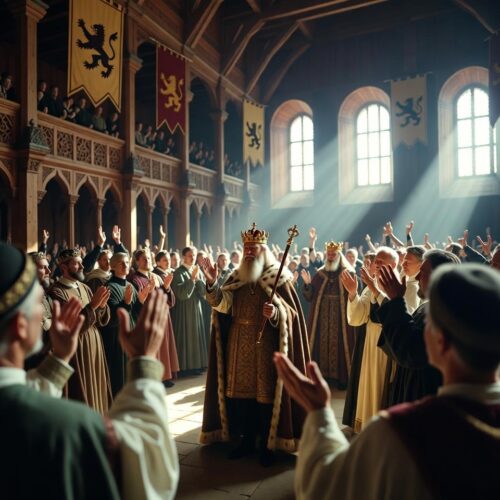 Shifting from the past's echoes, the Battle of Lena offers timeless inspiration. Erik's triumph wasn't mere luck; it stemmed from perseverance against odds, strategic alliances, and leveraging home advantages. In today's fast-paced world, where challenges like career setbacks, personal crises, or global uncertainties loom, we can draw from this medieval saga to build unyielding resilience. The outcome—overthrowing a fortified regime through grit—teaches that exile or defeat isn't the end; it's a forge for comeback. Here's how to apply this historical fact to your life, with specific bullet points and a step-by-step plan to channel Lena's spirit into modern victories.
- **Embrace Exile as Evolution**: Erik's flight to Norway wasn't defeat; it was a reset to gather strength. Today, view job loss or relationship endings as opportunities to upskill or network. For instance, if laid off, use the time to learn coding via free online courses, turning vulnerability into expertise.
- **Harness Home Terrain**: The Swedes used snow and familiarity to outmaneuver invaders. In your life, identify personal strengths—like creativity in a corporate job—and leverage them. If negotiating a raise, prepare data on your unique contributions, turning the "battlefield" to your advantage.
- **Build Strategic Alliances**: Erik's Norwegian backing flipped the script. Cultivate mentors or join professional groups; for example, attend industry meetups to form partnerships that amplify your efforts in launching a side hustle.
- **Adapt to Chaos**: The blizzard didn't deter Erik; it aided him. When plans derail—like a project failing—pivot quickly. If a fitness goal stalls due to injury, switch to yoga or swimming, maintaining momentum.
- **Invoke Inner Myth**: The Odin legend symbolizes tapping unseen forces. Foster a motivational mindset; visualize success daily, like athletes do, to boost confidence before big presentations.
- **Celebrate Small Routings**: Post-Lena, Erik secured regions incrementally. Break goals into wins; if aiming for debt freedom, pay off one card first, building psychological victories.
- **Learn from Foes' Hubris**: Sverker's overreliance on Danes led to downfall. Avoid complacency; regularly assess risks, like diversifying investments to weather economic storms.
- **Forge Legacy Through Action**: Lena's ripple led to Swedish unity. Act with purpose; volunteer in community causes to create lasting impact, enhancing personal fulfillment.
To implement this, follow this 30-day plan inspired by Lena's arc:
Shifting from the past's echoes, the Battle of Lena offers timeless inspiration. Erik's triumph wasn't mere luck; it stemmed from perseverance against odds, strategic alliances, and leveraging home advantages. In today's fast-paced world, where challenges like career setbacks, personal crises, or global uncertainties loom, we can draw from this medieval saga to build unyielding resilience. The outcome—overthrowing a fortified regime through grit—teaches that exile or defeat isn't the end; it's a forge for comeback. Here's how to apply this historical fact to your life, with specific bullet points and a step-by-step plan to channel Lena's spirit into modern victories.
- **Embrace Exile as Evolution**: Erik's flight to Norway wasn't defeat; it was a reset to gather strength. Today, view job loss or relationship endings as opportunities to upskill or network. For instance, if laid off, use the time to learn coding via free online courses, turning vulnerability into expertise.
- **Harness Home Terrain**: The Swedes used snow and familiarity to outmaneuver invaders. In your life, identify personal strengths—like creativity in a corporate job—and leverage them. If negotiating a raise, prepare data on your unique contributions, turning the "battlefield" to your advantage.
- **Build Strategic Alliances**: Erik's Norwegian backing flipped the script. Cultivate mentors or join professional groups; for example, attend industry meetups to form partnerships that amplify your efforts in launching a side hustle.
- **Adapt to Chaos**: The blizzard didn't deter Erik; it aided him. When plans derail—like a project failing—pivot quickly. If a fitness goal stalls due to injury, switch to yoga or swimming, maintaining momentum.
- **Invoke Inner Myth**: The Odin legend symbolizes tapping unseen forces. Foster a motivational mindset; visualize success daily, like athletes do, to boost confidence before big presentations.
- **Celebrate Small Routings**: Post-Lena, Erik secured regions incrementally. Break goals into wins; if aiming for debt freedom, pay off one card first, building psychological victories.
- **Learn from Foes' Hubris**: Sverker's overreliance on Danes led to downfall. Avoid complacency; regularly assess risks, like diversifying investments to weather economic storms.
- **Forge Legacy Through Action**: Lena's ripple led to Swedish unity. Act with purpose; volunteer in community causes to create lasting impact, enhancing personal fulfillment.
To implement this, follow this 30-day plan inspired by Lena's arc:
**Days 1-7: Assess and Exile Reflections** – Journal past "defeats" and extract lessons. Identify three strengths (your "terrain") and one alliance to pursue, like emailing a mentor.
**Days 8-14: Strategic Mobilization** – Set a bold goal, such as a career shift. Research tools (e.g., LinkedIn courses) and adapt plans for obstacles, mirroring winter tactics.
**Days 15-21: Charge Forward** – Take action: Apply for opportunities or start habits. Visualize success nightly, invoking your "Odin" inner drive.
**Days 22-28: Rout and Consolidate** – Track progress, celebrate wins, and adjust. Network actively, building your "army" of supporters.
**Days 29-30: Legacy Lock-In** – Reflect on growth, plan long-term, and share insights with others, turning personal victory into inspirational ripple.
By weaving Lena's lessons into daily life, you'll transform historical echoes into personal power—proving that even in modern "battles," resilience reigns supreme. The frozen fields of 1208 remind us: from the depths of winter comes the promise of spring's conquests.