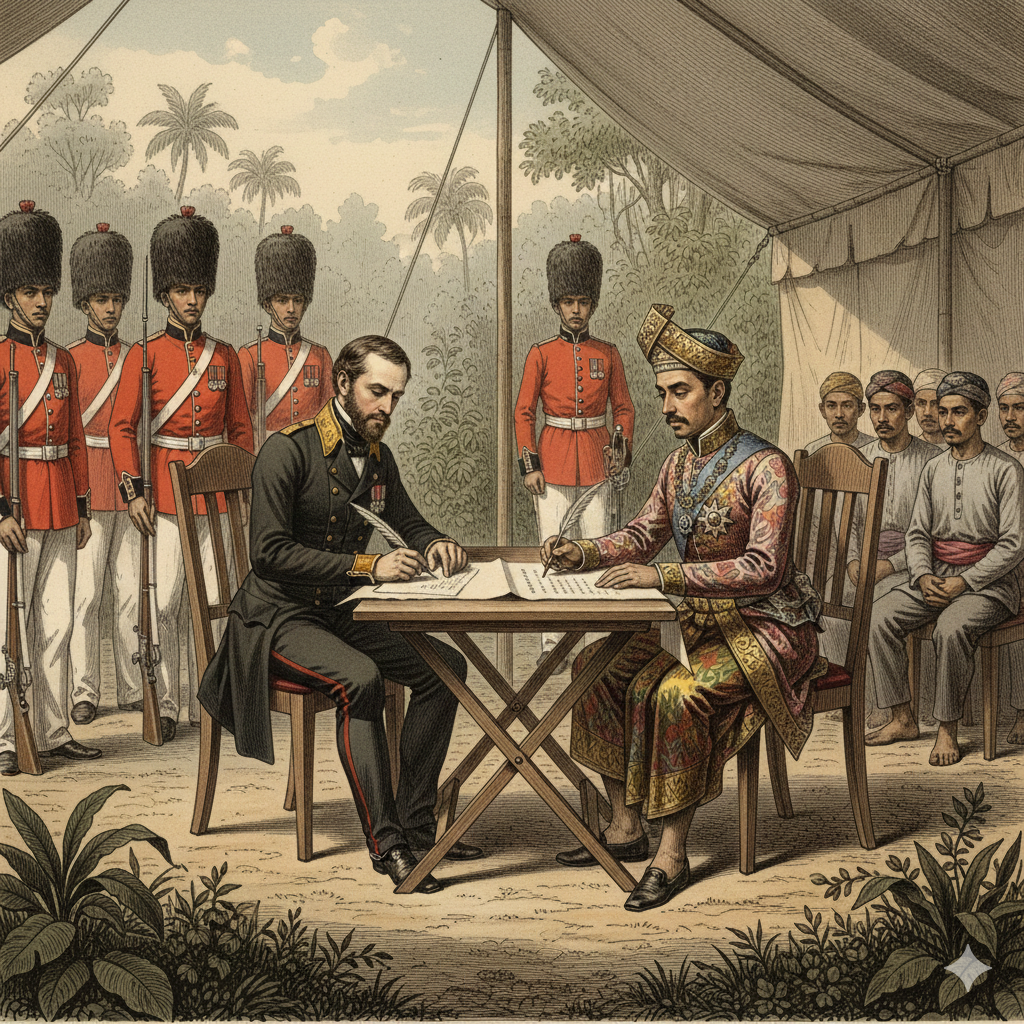
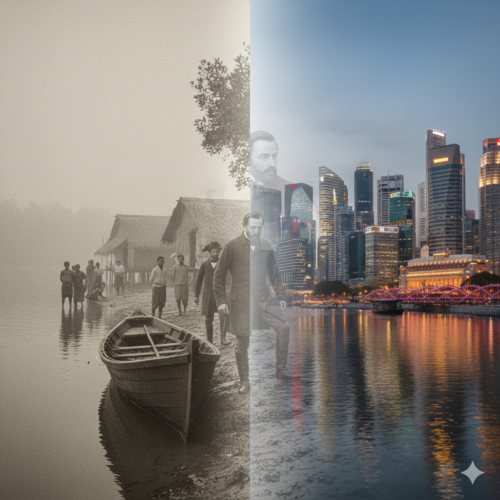
The morning of January 29, 1819, did not arrive with a fanfare of trumpets or the thunder of cannons. There was no social media to document the moment, and no global headlines were written that afternoon. Instead, there was only the rhythmic splash of oars in the humid air of the Malay Peninsula as a small party of British men stepped off a boat and onto the muddy banks of the Singapore River.
At the head of this party was Sir Thomas Stamford Raffles. He was a man with no official permission to be there, a man whose superiors had essentially told him to "sit down and be quiet," and a man who was about to pull off one of the greatest "rogue" maneuvers in the history of global commerce.
This is not just a story about the founding of a city; it is a masterclass in seeing what no one else sees, breaking the rules that deserve to be broken, and turning a "worthless" swamp into the richest intersection on the planet.
The Geography of a Monopoly
To understand the significance of January 29, you have to understand the world as it existed in 1819. The Dutch Empire held a suffocating, iron-clad monopoly over the spice trade in the East Indies. They controlled the Straits of Malacca, the primary "highway" for ships traveling between India and China.
If you were a merchant in 1819, you were playing a game where the Dutch owned the board, the dice, and the bank. They charged exorbitant fees, forced ships to stop only at Dutch-controlled ports, and essentially held the global economy hostage. The British, despite their naval power, were losing the commercial war because they lacked a "forward base"—a port in the south that could rival the Dutch stronghold.
Enter Stamford Raffles. At the time, Raffles was the Lieutenant-Governor of Bencoolen, a desolate, disease-ridden outpost on the coast of Sumatra. To the British East India Company, Bencoolen was a failure—a costly mistake. To Raffles, however, Bencoolen was a vantage point. He spent his days studying old Malay chronicles and ancient maps. He became obsessed with the legend of Temasek (Sea Town), a once-great trading city that had supposedly existed centuries earlier on a small island at the very tip of the Malay Peninsula. The Rogue Mission
Raffles knew that the "Committee" in London and the Governor-General in India were terrified of provoking the Dutch. They wanted peace at any cost, even if that cost was the slow strangulation of British trade.
But Raffles was a "History Habit" kind of man. He knew that history isn't made by those who follow the memo; it’s made by those who write a new one. He managed to secure a vague, lukewarm permission from Lord Hastings to "look for a southern port," but as soon as Raffles set sail, Hastings sent a second letter explicitly telling him to stop.
The Rogue Mission
Raffles knew that the "Committee" in London and the Governor-General in India were terrified of provoking the Dutch. They wanted peace at any cost, even if that cost was the slow strangulation of British trade.
But Raffles was a "History Habit" kind of man. He knew that history isn't made by those who follow the memo; it’s made by those who write a new one. He managed to secure a vague, lukewarm permission from Lord Hastings to "look for a southern port," but as soon as Raffles set sail, Hastings sent a second letter explicitly telling him to stop.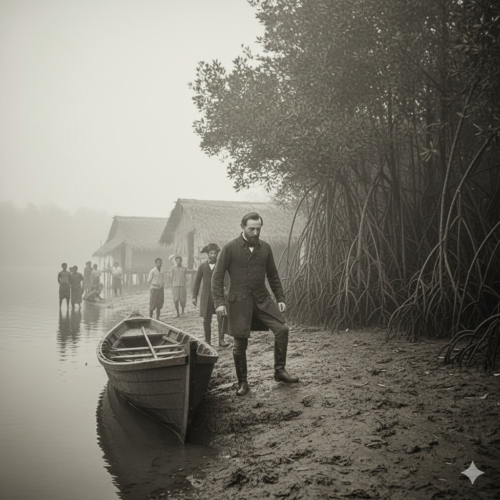 Raffles didn't wait for the second letter. He had already vanished into the archipelago.
On January 29, 1819, Raffles and his companion, Major William Farquhar, landed on the island of Singapore. What they found was not a city, but a sleepy fishing village of about 150 people and a few pirate hideouts. To any "rational" observer, it was a swampy, mosquito-infested jungle with zero value.
But Raffles didn't see a swamp. He saw a strategic choke point. He realized that every ship sailing between the Indian Ocean and the South China Sea had to pass this exact spot.
The "Grey Area" Diplomacy
The political situation on the island was a mess. The local chief, the Temenggung, was friendly but didn't have the authority to grant the British a permanent base. That power belonged to the Sultan of Johor. However, the Dutch-recognized Sultan was essentially a puppet.
Raffles executed a daring piece of political theater. He "discovered" that the puppet Sultan had an older brother, Hussein Shah, who had been bypassed for the throne and was living in exile. On January 29 and the days immediately following, Raffles smuggled Hussein onto the island, proclaimed him the rightful Sultan of Johor, and signed a treaty with him on the spot.
Raffles didn't wait for the second letter. He had already vanished into the archipelago.
On January 29, 1819, Raffles and his companion, Major William Farquhar, landed on the island of Singapore. What they found was not a city, but a sleepy fishing village of about 150 people and a few pirate hideouts. To any "rational" observer, it was a swampy, mosquito-infested jungle with zero value.
But Raffles didn't see a swamp. He saw a strategic choke point. He realized that every ship sailing between the Indian Ocean and the South China Sea had to pass this exact spot.
The "Grey Area" Diplomacy
The political situation on the island was a mess. The local chief, the Temenggung, was friendly but didn't have the authority to grant the British a permanent base. That power belonged to the Sultan of Johor. However, the Dutch-recognized Sultan was essentially a puppet.
Raffles executed a daring piece of political theater. He "discovered" that the puppet Sultan had an older brother, Hussein Shah, who had been bypassed for the throne and was living in exile. On January 29 and the days immediately following, Raffles smuggled Hussein onto the island, proclaimed him the rightful Sultan of Johor, and signed a treaty with him on the spot.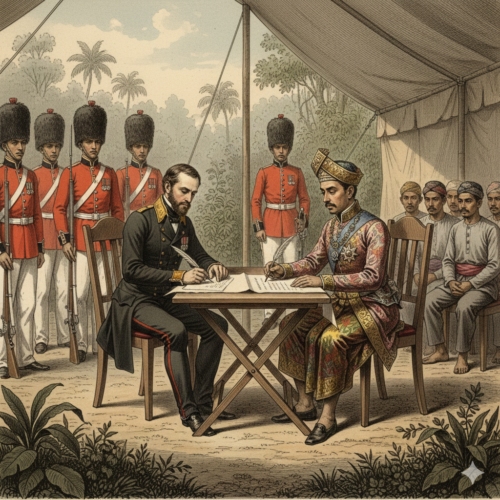 It was legally shaky. It was diplomatically "illegal" according to the Dutch. And it was absolutely brilliant.
Raffles didn't just build a fort; he declared Singapore a Free Port. In a world of monopolies and heavy taxes, Singapore became the only place where you could trade for free. The effect was like pouring gasoline on a fire. Within weeks, ships from all over Asia began diverting from Dutch ports to Singapore. The population exploded from 150 to 5,000 in months. By the time the British government found out what Raffles had done and the Dutch started screaming for his head, Singapore was already too successful to give back.
How to Apply the "Singapore Strategy" to Your Life Today
You might be wondering, "How does a 200-year-old landing in a swamp help me with my career or my goals?" Raffles’ success wasn't due to luck; it was due to a specific mindset. He found a "Blank Canvas" in a world of "Established Monopolies." Most people spend their lives trying to compete in "Dutch-controlled waters"—crowded industries, traditional paths, and rules set by people who already won.
It was legally shaky. It was diplomatically "illegal" according to the Dutch. And it was absolutely brilliant.
Raffles didn't just build a fort; he declared Singapore a Free Port. In a world of monopolies and heavy taxes, Singapore became the only place where you could trade for free. The effect was like pouring gasoline on a fire. Within weeks, ships from all over Asia began diverting from Dutch ports to Singapore. The population exploded from 150 to 5,000 in months. By the time the British government found out what Raffles had done and the Dutch started screaming for his head, Singapore was already too successful to give back.
How to Apply the "Singapore Strategy" to Your Life Today
You might be wondering, "How does a 200-year-old landing in a swamp help me with my career or my goals?" Raffles’ success wasn't due to luck; it was due to a specific mindset. He found a "Blank Canvas" in a world of "Established Monopolies." Most people spend their lives trying to compete in "Dutch-controlled waters"—crowded industries, traditional paths, and rules set by people who already won. Here is how you use the spirit of January 29 to revolutionize your own individual life.
Identify Your "Strategic Choke Point"
Raffles didn't look for the biggest island; he looked for the island where everyone had to pass.
The Lesson: Success isn't about being the "biggest" or the "loudest." It’s about being essential. * Action: Stop trying to be "good at everything." Find the one "choke point" in your industry—the one problem that everyone has but no one is solving efficiently. If you own that intersection, you own the market.
The Power of "Permissionless" Action
If Raffles had waited for the "Stop" order, Singapore would likely be a footnote in Dutch history today.
The Lesson: Permission is a stall tactic used by the status quo.
Action: Identify the project you’ve been "waiting for approval" on. Spend the next 30 days executing a "Micro-Landing." Build the prototype, launch the side hustle, or write the first chapter before you ask for the green light. Become a "fait accompli"—a reality so successful it cannot be ignored.
Declare Yourself a "Free Port"
Singapore won because it was the easiest place to do business.
The Lesson: In a world of friction, be the person who provides the most value with the least hassle.
Action: Look at your personal brand or service. Are you hard to work with? Do you have too many "fees" (bad attitude, slow response times, ego)? Remove the "tariffs" on your talent. Become the "Free Port" of your social or professional circle, and watch your "population" of opportunities explode.
Your 90-Day "Lion City" Growth Plan

To truly benefit from this historical fact, you must move from inspiration to occupation. Here is your specific, motivational roadmap:
Phase 1: The Scouting Phase (Days 1–20)
The Audit: Identify where you are currently "Bencoolen"—a place where you are working hard but getting nowhere.
The Search: Research one "niche" intersection of your skills that is currently underserved. This is your "Singapore."
Phase 2: The Secret Landing (Days 21–50)
The Deep Work: Spend 90 minutes every morning on your "Permissionless" project.
The Treaty: Connect with one "Sultan" (a mentor or leader) in your new niche. Offer them immense value for free to establish your presence.
Phase 3: Declaring Free Trade (Days 51–80)
The Launch: Put your work out into the world. Don't wait for it to be perfect; Raffles landed in a swamp, not a palace.
The Growth: Focus on building a "following" or a "client list" by being the most helpful person in that space.
Phase 4: Establishing the "Fait Accompli" (Days 81–90)
A Final Motivational Thought

When Stamford Raffles stood on that riverbank on January 29, 1819, he was technically a failure with a bad reputation and a direct order to stop. But he saw what was possible, not just what was permitted.

Today is the anniversary of that vision. The map of your life is not a fixed document; it is a "Blank Canvas" waiting for you to find your "Singapore." Stop sailing in Dutch waters. Land your boat.