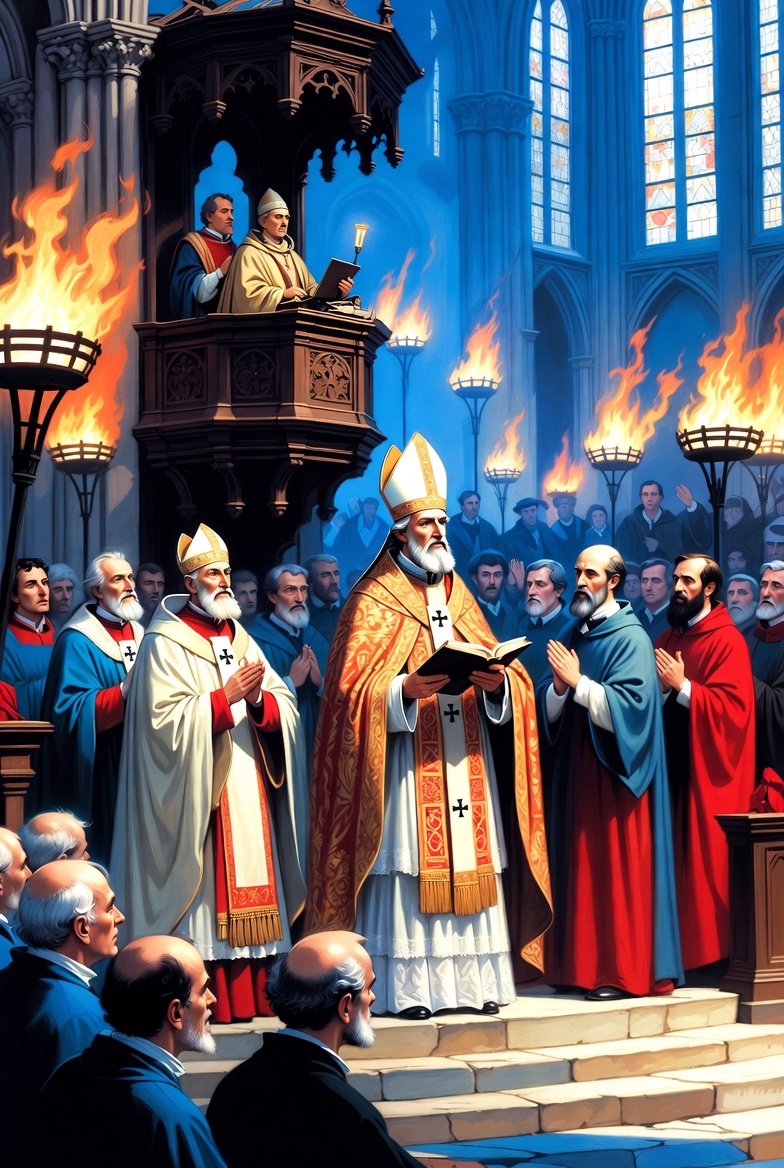
Imagine a world where the mightiest spiritual leader on Earth, clad in opulent robes and wielding influence over kings and emperors, suddenly finds himself sidelined by a gathering of determined clerics in a Swiss city. This isn't the plot of a medieval thriller—it's the real drama that unfolded on January 24, 1438, when the Council of Basel took the audacious step of suspending Pope Eugene IV. This event wasn't just a footnote in church history; it was a seismic clash between tradition and reform, authority and collective will, that echoed through centuries and helped pave the way for profound changes in how power was understood in Europe. Dive into this tale of intrigue, ambition, and ecclesiastical rebellion, and discover how a single day's decision rippled across history, challenging the very structure of the Catholic Church and influencing everything from royal politics to the seeds of the Protestant Reformation.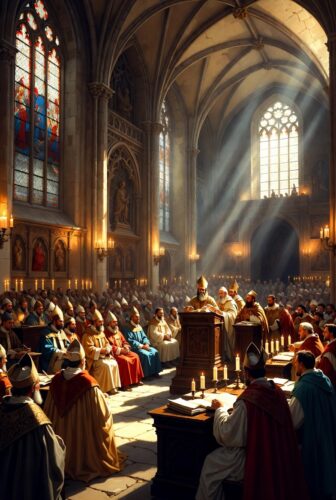 To truly grasp the gravity of that fateful January day, we need to rewind the clock to the turbulent early 15th century. Europe was a patchwork of kingdoms, principalities, and city-states, still reeling from the Black Death that had decimated populations just decades earlier. The Catholic Church, the unifying force across this fragmented continent, was itself in disarray. The Western Schism (1378–1417) had shattered the papacy's prestige: for nearly 40 years, rival popes in Rome and Avignon had claimed legitimacy, hurling excommunications at each other like thunderbolts while kings picked sides based on political expediency. This chaos eroded faith in the papal office, leading many to question whether one man in Rome could truly hold unchecked power over the universal church.
Enter the Conciliar Movement, a bold intellectual and political push to reform the church by asserting that general councils—assemblies of bishops, abbots, theologians, and even lay representatives—held supreme authority, even over the pope. This idea wasn't born in a vacuum. It drew from earlier thinkers like William of Ockham and Marsilius of Padua, who argued that the church was a community of the faithful, not a monarchy ruled by a divine-right pontiff. The Council of Constance (1414–1418) had put this theory into practice, ending the schism by deposing rival popes and electing Martin V as the undisputed leader. In its decree *Haec Sancta* (also known as *Sacrosancta*), Constance declared that a general council derived its power directly from Christ and that everyone, including the pope, must obey it in matters of faith, schism, and reform.
Martin V, grateful for his election but wary of curbing his own power, reluctantly agreed to convene future councils. Before his death in 1431, he summoned one to Basel (sometimes spelled Basle), a bustling trade hub on the Rhine River in what is now Switzerland. Basel was a strategic choice: neutral territory under the Holy Roman Empire, accessible to delegates from across Europe, and far from the papal court's intrigues in Italy. The council's mandate was ambitious—tackle heresy (especially the Hussites in Bohemia), pursue church reform to root out corruption like simony (selling church offices) and nepotism, and explore reunion with the Eastern Orthodox Church, which had split from Rome in the Great Schism of 1054.
To truly grasp the gravity of that fateful January day, we need to rewind the clock to the turbulent early 15th century. Europe was a patchwork of kingdoms, principalities, and city-states, still reeling from the Black Death that had decimated populations just decades earlier. The Catholic Church, the unifying force across this fragmented continent, was itself in disarray. The Western Schism (1378–1417) had shattered the papacy's prestige: for nearly 40 years, rival popes in Rome and Avignon had claimed legitimacy, hurling excommunications at each other like thunderbolts while kings picked sides based on political expediency. This chaos eroded faith in the papal office, leading many to question whether one man in Rome could truly hold unchecked power over the universal church.
Enter the Conciliar Movement, a bold intellectual and political push to reform the church by asserting that general councils—assemblies of bishops, abbots, theologians, and even lay representatives—held supreme authority, even over the pope. This idea wasn't born in a vacuum. It drew from earlier thinkers like William of Ockham and Marsilius of Padua, who argued that the church was a community of the faithful, not a monarchy ruled by a divine-right pontiff. The Council of Constance (1414–1418) had put this theory into practice, ending the schism by deposing rival popes and electing Martin V as the undisputed leader. In its decree *Haec Sancta* (also known as *Sacrosancta*), Constance declared that a general council derived its power directly from Christ and that everyone, including the pope, must obey it in matters of faith, schism, and reform.
Martin V, grateful for his election but wary of curbing his own power, reluctantly agreed to convene future councils. Before his death in 1431, he summoned one to Basel (sometimes spelled Basle), a bustling trade hub on the Rhine River in what is now Switzerland. Basel was a strategic choice: neutral territory under the Holy Roman Empire, accessible to delegates from across Europe, and far from the papal court's intrigues in Italy. The council's mandate was ambitious—tackle heresy (especially the Hussites in Bohemia), pursue church reform to root out corruption like simony (selling church offices) and nepotism, and explore reunion with the Eastern Orthodox Church, which had split from Rome in the Great Schism of 1054.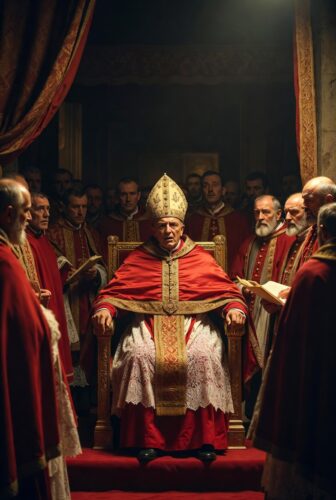 Martin's successor, Eugene IV (born Gabriele Condulmer, a Venetian nobleman elected in 1431), inherited this council but viewed it with suspicion. Eugene was a reformer at heart—he lived ascetically, promoted monastic orders, and sought to curb abuses—but he was also a staunch defender of papal supremacy. He feared the council might become a platform for radical conciliarists to undermine the papacy further. Attendance at Basel started slow; when Cardinal Giuliano Cesarini, the papal legate and president, arrived in September 1431, only a handful of prelates were present. But as word spread, delegates trickled in: bishops from France, Germany, Spain, and beyond, along with abbots, university theologians, and ambassadors from secular rulers.
Eugene's unease grew. In December 1431, citing low attendance, the threat of Hussite wars in Bohemia, and the need for a council closer to the Byzantine Greeks for reunion talks, he issued the bull *Quoniam alto* to dissolve the Basel assembly and reconvene it in Bologna, Italy, after 18 months. This move backfired spectacularly. The council fathers, invoking *Sacrosancta*, refused to disband. In their second session on February 15, 1432, they boldly reaffirmed conciliar superiority, declaring that no one, not even the pope, could dissolve them without their consent. They excommunicated anyone who obstructed the council and appealed to secular princes for support.
Martin's successor, Eugene IV (born Gabriele Condulmer, a Venetian nobleman elected in 1431), inherited this council but viewed it with suspicion. Eugene was a reformer at heart—he lived ascetically, promoted monastic orders, and sought to curb abuses—but he was also a staunch defender of papal supremacy. He feared the council might become a platform for radical conciliarists to undermine the papacy further. Attendance at Basel started slow; when Cardinal Giuliano Cesarini, the papal legate and president, arrived in September 1431, only a handful of prelates were present. But as word spread, delegates trickled in: bishops from France, Germany, Spain, and beyond, along with abbots, university theologians, and ambassadors from secular rulers.
Eugene's unease grew. In December 1431, citing low attendance, the threat of Hussite wars in Bohemia, and the need for a council closer to the Byzantine Greeks for reunion talks, he issued the bull *Quoniam alto* to dissolve the Basel assembly and reconvene it in Bologna, Italy, after 18 months. This move backfired spectacularly. The council fathers, invoking *Sacrosancta*, refused to disband. In their second session on February 15, 1432, they boldly reaffirmed conciliar superiority, declaring that no one, not even the pope, could dissolve them without their consent. They excommunicated anyone who obstructed the council and appealed to secular princes for support.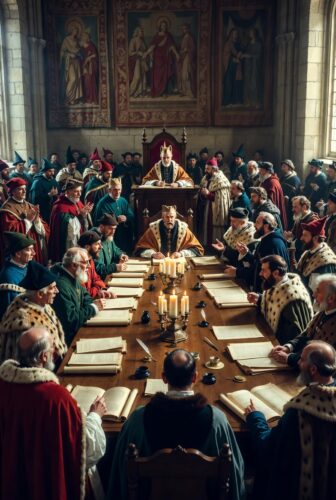 The standoff escalated into a full-blown crisis. Eugene, isolated in Rome amid rebellions and financial woes (he had to pawn his tiara to pay debts), faced pressure from emperors, kings, and even his own cardinals. Holy Roman Emperor Sigismund, eager for peace with the Hussites to secure his Bohemian crown, backed Basel. French King Charles VII, nursing grudges against papal interference, did the same. By April 1432, 38 prelates were at Basel, and numbers swelled. Eugene tried to negotiate, appointing five legates, but the council demanded he revoke his dissolution outright.
In a humiliating climbdown, Eugene issued the bull *Dudum sacrum* on December 15, 1433, acknowledging the council's legitimacy and allowing it to continue. On February 5, 1434, in the 16th session, the council accepted this with pomp, but tensions simmered. The assembly organized itself democratically, dividing into four "deputations" (faith, reform, peace, and general affairs) where votes were equal regardless of rank—a radical departure from hierarchical norms. Lay experts and lower clergy had a voice, making Basel one of the most inclusive councils in history.
The council's achievements in its early years were impressive and showcased its reformist zeal. On the heresy front, they negotiated with the Hussites, Bohemian followers of Jan Hus, who had been burned at the stake in 1415 despite a safe-conduct from Emperor Sigismund. The Hussites demanded communion under both kinds (bread and wine for laity), clerical poverty, free preaching, and punishment of mortal sins. After intense debates and military setbacks (Hussite armies had repelled multiple crusades), the council granted the Compactata of Prague in November 1436, allowing communion in both kinds in Bohemia—a pragmatic compromise that brought temporary peace.
Reform efforts were equally vigorous. The council decreed against simony, limited papal reservations of benefices (appointing to church offices), and curbed "annates" (first-year revenues from benefices paid to the pope). In 1435, they abolished annates entirely, a direct hit to papal finances. They also promoted education, urging universities to teach theology and canon law more rigorously, and addressed moral lapses like concubinage among clergy.
But the Greek reunion became the flashpoint. The Byzantine Empire, besieged by Ottoman Turks, desperately sought Western military aid, which required healing the East-West schism. Emperor John VIII Palaeologus and Patriarch Joseph II of Constantinople sent envoys to Basel in 1434. The council agreed to host a union council, offering to fund the Greeks' travel. Eugene, however, pursued parallel negotiations, preferring an Italian venue closer to Byzantine ships and under his control.
The divide widened. In 1436, the council issued a plenary indulgence for the union council but insisted on Basel, Avignon, or Savoy—locations the Greeks rejected as too far and insecure. Eugene, in Bologna after fleeing Rome's unrest, vetoed this. The council split: a minority favored Italian sites per the Greek treaty, while the majority clung to Basel's authority. On May 7, 1437, amid chaos, both factions promulgated conflicting decrees in the same hall—the majority for Basel/Avignon, the minority for Italy.
Eugene seized the minority decree, issuing *Salvatoris nostri* to confirm Udine or another Italian city. Then, on September 18, 1437, he transferred the council to Ferrara with *Doctoris gentium*, citing better access for Greeks and safety from plague and war. He excommunicated Basel holdouts. But the Basel faction, now a rump but still claiming legitimacy, refused. Led by figures like Cardinal Louis Aleman (a staunch conciliarist) and supported by France and parts of Germany, they pressed on.
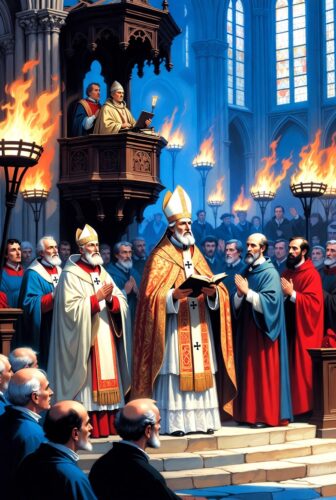
This brings us to January 24, 1438—the pivotal moment. In a session attended by key prelates (though numbers had dwindled), the council declared Eugene suspended from all spiritual and temporal powers. They accused him of contumacy (obstinate disobedience), heresy for denying conciliar supremacy, and schism for dividing the church. The decree stripped him of administrative rights, barring him from appointing cardinals or granting benefices. It was a stunning reversal: a council, meant to advise the pope, now claimed to judge him.
The suspension wasn't immediate deposition—that came later—but it paralyzed Eugene's papacy. He responded furiously, excommunicating the Basel leaders on June 25, 1438. Yet, the council doubled down. On May 16, 1439, they declared conciliar superiority a "truth of Catholic faith," binding on all Christians. Then, on June 25, 1439, they deposed Eugene as a heretic and schismatic. In November, they elected Amadeus VIII, Duke of Savoy—a pious layman who had retired to a hermitage—as antipope Felix V.
The standoff escalated into a full-blown crisis. Eugene, isolated in Rome amid rebellions and financial woes (he had to pawn his tiara to pay debts), faced pressure from emperors, kings, and even his own cardinals. Holy Roman Emperor Sigismund, eager for peace with the Hussites to secure his Bohemian crown, backed Basel. French King Charles VII, nursing grudges against papal interference, did the same. By April 1432, 38 prelates were at Basel, and numbers swelled. Eugene tried to negotiate, appointing five legates, but the council demanded he revoke his dissolution outright.
In a humiliating climbdown, Eugene issued the bull *Dudum sacrum* on December 15, 1433, acknowledging the council's legitimacy and allowing it to continue. On February 5, 1434, in the 16th session, the council accepted this with pomp, but tensions simmered. The assembly organized itself democratically, dividing into four "deputations" (faith, reform, peace, and general affairs) where votes were equal regardless of rank—a radical departure from hierarchical norms. Lay experts and lower clergy had a voice, making Basel one of the most inclusive councils in history.
The council's achievements in its early years were impressive and showcased its reformist zeal. On the heresy front, they negotiated with the Hussites, Bohemian followers of Jan Hus, who had been burned at the stake in 1415 despite a safe-conduct from Emperor Sigismund. The Hussites demanded communion under both kinds (bread and wine for laity), clerical poverty, free preaching, and punishment of mortal sins. After intense debates and military setbacks (Hussite armies had repelled multiple crusades), the council granted the Compactata of Prague in November 1436, allowing communion in both kinds in Bohemia—a pragmatic compromise that brought temporary peace.
Reform efforts were equally vigorous. The council decreed against simony, limited papal reservations of benefices (appointing to church offices), and curbed "annates" (first-year revenues from benefices paid to the pope). In 1435, they abolished annates entirely, a direct hit to papal finances. They also promoted education, urging universities to teach theology and canon law more rigorously, and addressed moral lapses like concubinage among clergy.
But the Greek reunion became the flashpoint. The Byzantine Empire, besieged by Ottoman Turks, desperately sought Western military aid, which required healing the East-West schism. Emperor John VIII Palaeologus and Patriarch Joseph II of Constantinople sent envoys to Basel in 1434. The council agreed to host a union council, offering to fund the Greeks' travel. Eugene, however, pursued parallel negotiations, preferring an Italian venue closer to Byzantine ships and under his control.
The divide widened. In 1436, the council issued a plenary indulgence for the union council but insisted on Basel, Avignon, or Savoy—locations the Greeks rejected as too far and insecure. Eugene, in Bologna after fleeing Rome's unrest, vetoed this. The council split: a minority favored Italian sites per the Greek treaty, while the majority clung to Basel's authority. On May 7, 1437, amid chaos, both factions promulgated conflicting decrees in the same hall—the majority for Basel/Avignon, the minority for Italy.
Eugene seized the minority decree, issuing *Salvatoris nostri* to confirm Udine or another Italian city. Then, on September 18, 1437, he transferred the council to Ferrara with *Doctoris gentium*, citing better access for Greeks and safety from plague and war. He excommunicated Basel holdouts. But the Basel faction, now a rump but still claiming legitimacy, refused. Led by figures like Cardinal Louis Aleman (a staunch conciliarist) and supported by France and parts of Germany, they pressed on.
This brings us to January 24, 1438—the pivotal moment. In a session attended by key prelates (though numbers had dwindled), the council declared Eugene suspended from all spiritual and temporal powers. They accused him of contumacy (obstinate disobedience), heresy for denying conciliar supremacy, and schism for dividing the church. The decree stripped him of administrative rights, barring him from appointing cardinals or granting benefices. It was a stunning reversal: a council, meant to advise the pope, now claimed to judge him.
The suspension wasn't immediate deposition—that came later—but it paralyzed Eugene's papacy. He responded furiously, excommunicating the Basel leaders on June 25, 1438. Yet, the council doubled down. On May 16, 1439, they declared conciliar superiority a "truth of Catholic faith," binding on all Christians. Then, on June 25, 1439, they deposed Eugene as a heretic and schismatic. In November, they elected Amadeus VIII, Duke of Savoy—a pious layman who had retired to a hermitage—as antipope Felix V.
 The schism redux divided Europe. France, under Charles VII, adopted the Pragmatic Sanction of Bourges (July 7, 1438), incorporating Basel's reforms and limiting papal appeals, taxes, and appointments—birth of Gallicanism, asserting national church autonomy. The Holy Roman Empire wavered; Emperor Frederick III initially neutral but later backed Eugene. Spain and England leaned papal. The Byzantine delegation, arriving in Ferrara in 1438, proceeded with Eugene's council, leading to the short-lived Union of Florence (1439), where Eastern Orthodox accepted papal primacy and Latin doctrines like purgatory and filioque, in exchange for crusade aid (which never materialized, as Constantinople fell to Ottomans in 1453).
Basel's rump council lingered, but support eroded. Secular rulers used it to negotiate concessions but feared prolonged division. Eugene, bolstered by Florence's success (though union failed in practice), regained ground. After Eugene's death in 1447, his successor Nicholas V offered olive branches. Felix V abdicated in 1449, and the Basel assembly dissolved itself on April 25, 1449, after "electing" Nicholas V— a face-saving end.
The council's legacy is profound. It represented the zenith of conciliarism, demonstrating that collective governance could challenge absolutism. Though papal monarchy triumphed (affirmed at the Fifth Lateran Council, 1512–1517), Basel's ideas influenced the Reformation: Martin Luther and others drew on conciliar arguments to question papal infallibility. It accelerated national churches' independence, weakening the medieval universal church. Reforms like curbing annates foreshadowed Counter-Reformation efforts at Trent (1545–1563). Politically, it empowered princes, contributing to the rise of absolutist states.
Humorously, Basel's democratic experiments—equal voting, lay input—feel almost modern, like a medieval parliament squabbling over Zoom. Yet, the drama was deadly serious: excommunications flew, armies mobilized (Eugene called a crusade against Basel, though it fizzled), and souls hung in the balance. Figures like Cesarini, who defected to Eugene, embodied the torn loyalties; Aleman, exiled but later sainted, symbolized unyielding reformism.
In the end, January 24, 1438, marked not just a suspension but a turning point where the church confronted its own power structures. It was a fun, chaotic episode of ecclesiastical Game of Thrones—full of plot twists, betrayals, and high-stakes diplomacy—that educated Europe on the limits of authority and the potential for collective action.
The schism redux divided Europe. France, under Charles VII, adopted the Pragmatic Sanction of Bourges (July 7, 1438), incorporating Basel's reforms and limiting papal appeals, taxes, and appointments—birth of Gallicanism, asserting national church autonomy. The Holy Roman Empire wavered; Emperor Frederick III initially neutral but later backed Eugene. Spain and England leaned papal. The Byzantine delegation, arriving in Ferrara in 1438, proceeded with Eugene's council, leading to the short-lived Union of Florence (1439), where Eastern Orthodox accepted papal primacy and Latin doctrines like purgatory and filioque, in exchange for crusade aid (which never materialized, as Constantinople fell to Ottomans in 1453).
Basel's rump council lingered, but support eroded. Secular rulers used it to negotiate concessions but feared prolonged division. Eugene, bolstered by Florence's success (though union failed in practice), regained ground. After Eugene's death in 1447, his successor Nicholas V offered olive branches. Felix V abdicated in 1449, and the Basel assembly dissolved itself on April 25, 1449, after "electing" Nicholas V— a face-saving end.
The council's legacy is profound. It represented the zenith of conciliarism, demonstrating that collective governance could challenge absolutism. Though papal monarchy triumphed (affirmed at the Fifth Lateran Council, 1512–1517), Basel's ideas influenced the Reformation: Martin Luther and others drew on conciliar arguments to question papal infallibility. It accelerated national churches' independence, weakening the medieval universal church. Reforms like curbing annates foreshadowed Counter-Reformation efforts at Trent (1545–1563). Politically, it empowered princes, contributing to the rise of absolutist states.
Humorously, Basel's democratic experiments—equal voting, lay input—feel almost modern, like a medieval parliament squabbling over Zoom. Yet, the drama was deadly serious: excommunications flew, armies mobilized (Eugene called a crusade against Basel, though it fizzled), and souls hung in the balance. Figures like Cesarini, who defected to Eugene, embodied the torn loyalties; Aleman, exiled but later sainted, symbolized unyielding reformism.
In the end, January 24, 1438, marked not just a suspension but a turning point where the church confronted its own power structures. It was a fun, chaotic episode of ecclesiastical Game of Thrones—full of plot twists, betrayals, and high-stakes diplomacy—that educated Europe on the limits of authority and the potential for collective action. Now, fast-forward to today: what can this historical showdown teach us about our own lives? The Council of Basel's bold challenge to entrenched power reminds us that sometimes, shaking up the status quo is essential for growth. Just as the council suspended a pope to push for reform, you can "suspend" outdated habits, toxic relationships, or self-limiting beliefs that hold you back. This isn't about rebellion for its own sake but about asserting your personal authority to create positive change. By applying Basel's lessons, you gain the motivation to reform your life, leading to greater fulfillment, resilience, and success.
Here are specific ways this historical fact benefits you today:
- **Challenge Authority Wisely in Your Career**: Like the council questioning papal supremacy, evaluate if your boss or company culture stifles your potential. If a policy feels outdated, propose reforms—perhaps by gathering colleagues for a "council" meeting to discuss improvements, leading to promotions or better work-life balance.
- **Reform Personal Habits for Health**: The Basel reformers targeted corruption; target yours. Suspend sedentary routines by committing to daily walks, mirroring the council's persistence—start small, like 15 minutes, and build to transform your physical and mental well-being.
- **Foster Unity in Relationships**: Basel sought church union; apply this by bridging divides with family or friends. Suspend grudges through open dialogue, strengthening bonds and reducing stress.
- **Pursue Lifelong Learning**: The council's inclusive debates highlight education's power. Suspend procrastination by enrolling in an online course, expanding your skills and opening new opportunities.
- **Build Financial Independence**: Just as Basel curbed papal taxes, suspend impulsive spending. Track expenses like the council's deputations, saving for goals like travel or retirement.
- **Cultivate Resilience Amid Setbacks**: Eugene's comebacks show persistence pays. When facing failure, suspend self-doubt and regroup, turning obstacles into stepping stones.
- **Embrace Collective Support**: Basel thrived on collaboration; surround yourself with a "council" of mentors or peers for advice, accelerating personal growth.
- **Advocate for Social Change**: Inspired by conciliarism's push against absolutism, suspend apathy—volunteer or speak up on issues like environmental reform, finding purpose in contribution.
To make this transformative, follow this step-by-step plan:
Now, fast-forward to today: what can this historical showdown teach us about our own lives? The Council of Basel's bold challenge to entrenched power reminds us that sometimes, shaking up the status quo is essential for growth. Just as the council suspended a pope to push for reform, you can "suspend" outdated habits, toxic relationships, or self-limiting beliefs that hold you back. This isn't about rebellion for its own sake but about asserting your personal authority to create positive change. By applying Basel's lessons, you gain the motivation to reform your life, leading to greater fulfillment, resilience, and success.
Here are specific ways this historical fact benefits you today:
- **Challenge Authority Wisely in Your Career**: Like the council questioning papal supremacy, evaluate if your boss or company culture stifles your potential. If a policy feels outdated, propose reforms—perhaps by gathering colleagues for a "council" meeting to discuss improvements, leading to promotions or better work-life balance.
- **Reform Personal Habits for Health**: The Basel reformers targeted corruption; target yours. Suspend sedentary routines by committing to daily walks, mirroring the council's persistence—start small, like 15 minutes, and build to transform your physical and mental well-being.
- **Foster Unity in Relationships**: Basel sought church union; apply this by bridging divides with family or friends. Suspend grudges through open dialogue, strengthening bonds and reducing stress.
- **Pursue Lifelong Learning**: The council's inclusive debates highlight education's power. Suspend procrastination by enrolling in an online course, expanding your skills and opening new opportunities.
- **Build Financial Independence**: Just as Basel curbed papal taxes, suspend impulsive spending. Track expenses like the council's deputations, saving for goals like travel or retirement.
- **Cultivate Resilience Amid Setbacks**: Eugene's comebacks show persistence pays. When facing failure, suspend self-doubt and regroup, turning obstacles into stepping stones.
- **Embrace Collective Support**: Basel thrived on collaboration; surround yourself with a "council" of mentors or peers for advice, accelerating personal growth.
- **Advocate for Social Change**: Inspired by conciliarism's push against absolutism, suspend apathy—volunteer or speak up on issues like environmental reform, finding purpose in contribution.
To make this transformative, follow this step-by-step plan:
**Reflect and Identify**: Spend 30 minutes journaling about areas in your life where "papal" authority (habits, people, or systems) limits you. List three specific "suspensions" needed, like suspending late-night scrolling for better sleep.
**Gather Your Council**: Assemble a support network—friends, family, or online communities—to discuss your reforms. Share goals and get feedback, just as Basel delegates debated.
**Declare Your Decree**: Write a personal manifesto outlining changes, with timelines. For example, "By week's end, I suspend junk food and start meal prepping."
**Implement Reforms**: Take action daily. Track progress in a journal, celebrating small wins to stay motivated, echoing Basel's incremental achievements.
**Evaluate and Adjust**: After a month, review outcomes. If something falters, reconvene your "council" and refine, ensuring sustained growth.
**Celebrate Unity**: Once reforms stick, reward yourself—perhaps a day trip—and reflect on how asserting your authority has empowered you.
By channeling Basel's spirit, you'll not only honor this distant event but ignite a personal renaissance, proving history isn't just facts—it's fuel for an extraordinary life.