Part I: The Historical Crucible
The Cold Morning of January 20, 1265
On the morning of January 20, 1265, the wind howling across the Thames was bitingly cold, carrying the scent of woodsmoke, wet stone, and the stagnant mud of medieval London. Inside the Great Hall of Westminster, a man named Simon de Montfort was committing an act of treason so profound it would eventually become the foundation of every democracy on Earth.
But it wasn't a violent coup. It was a procedural one. On this day, for the first time in the history of the Western world, "ordinary" people—representatives from the towns and boroughs—were summoned to sit alongside the high-ranking Barons and Bishops.
This was the birth of the House of Commons. Before this date, power was a vertical monolith: God, the King, and the Nobles. After this date, power became a horizontal network. This historical pivot is the secret to moving your life from a state of "Subject" (being ruled by circumstances) to a state of "Sovereign" (ruling your environment).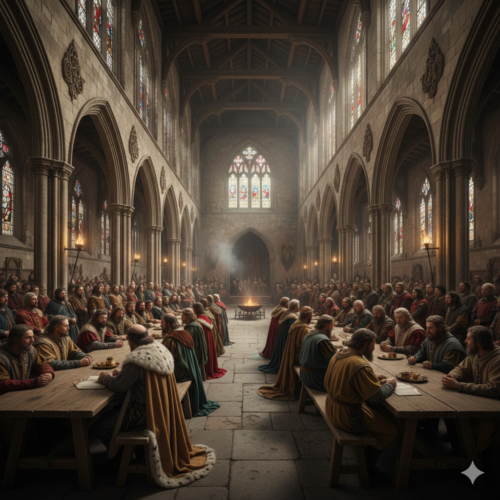 The Landscape of 1265: A Kingdom in Turmoil
To understand why January 20th changed the trajectory of Western civilization, we have to look at the sheer chaos of 13th-century England. King Henry III was a man who believed in the "Divine Right" of kings. He spent lavishly on cathedrals and foreign wars, treating the English treasury like his personal silk-lined pocket.
By the 1260s, the Barons—the high-ranking nobles—had enough. They were tired of paying for the King's mistakes. Led by Simon de Montfort, a man who was both a brilliant tactician and a religious zealot, the Barons rose in rebellion. They forced the King to sign the Provisions of Oxford, which essentially stripped him of his absolute power.
However, Montfort knew something the other nobles didn't. He knew that if he only relied on the Barons, he would eventually lose. The Barons were fickle; they changed sides based on who offered the most land. To survive, Montfort needed a new base of power. He needed the Middle Class.
The Radical Innovation of the January 20th Parliament
Before 1265, "Parliament" was just a fancy word for a meeting of the King’s wealthy friends. On January 20th, at Westminster, Montfort did something that made the aristocracy’s blood run cold.
He issued writs (formal orders) not just to the Earls and Bishops, but to the shires and the boroughs. He demanded that each county send two knights, and each city or "burgh" send two of its most prominent citizens—the burgesses.
The Landscape of 1265: A Kingdom in Turmoil
To understand why January 20th changed the trajectory of Western civilization, we have to look at the sheer chaos of 13th-century England. King Henry III was a man who believed in the "Divine Right" of kings. He spent lavishly on cathedrals and foreign wars, treating the English treasury like his personal silk-lined pocket.
By the 1260s, the Barons—the high-ranking nobles—had enough. They were tired of paying for the King's mistakes. Led by Simon de Montfort, a man who was both a brilliant tactician and a religious zealot, the Barons rose in rebellion. They forced the King to sign the Provisions of Oxford, which essentially stripped him of his absolute power.
However, Montfort knew something the other nobles didn't. He knew that if he only relied on the Barons, he would eventually lose. The Barons were fickle; they changed sides based on who offered the most land. To survive, Montfort needed a new base of power. He needed the Middle Class.
The Radical Innovation of the January 20th Parliament
Before 1265, "Parliament" was just a fancy word for a meeting of the King’s wealthy friends. On January 20th, at Westminster, Montfort did something that made the aristocracy’s blood run cold.
He issued writs (formal orders) not just to the Earls and Bishops, but to the shires and the boroughs. He demanded that each county send two knights, and each city or "burgh" send two of its most prominent citizens—the burgesses.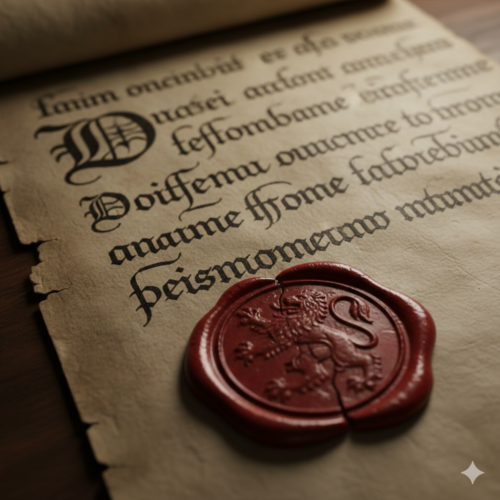 This was the first time in history that the "Common Man" was recognized as a political entity. These weren't men with titles inherited from the Norman Conquest. These were men who worked, men who traded, and men who managed local affairs. By bringing them to London, Montfort wasn't just being "nice"—he was weaponizing the collective intelligence of the nation.
Imagine the scene at Westminster. You have the high-born nobility in their ermine-trimmed robes, and for the first time, they are forced to share the hall with merchants who smelled of the docks and wool-traders with dirt under their fingernails. This was the birth of the House of Commons. It was a recognition that a kingdom (or any organization) cannot thrive if the people doing the work have no say in how the resources are spent.
The "System of the Three Keys"
The Parliament of 1265 functioned on a proto-version of "Accountability." Montfort knew that the burgesses wouldn't just give him money for free. They wanted "Redress of Grievances."
This created a "Market for Power."
This was the first time in history that the "Common Man" was recognized as a political entity. These weren't men with titles inherited from the Norman Conquest. These were men who worked, men who traded, and men who managed local affairs. By bringing them to London, Montfort wasn't just being "nice"—he was weaponizing the collective intelligence of the nation.
Imagine the scene at Westminster. You have the high-born nobility in their ermine-trimmed robes, and for the first time, they are forced to share the hall with merchants who smelled of the docks and wool-traders with dirt under their fingernails. This was the birth of the House of Commons. It was a recognition that a kingdom (or any organization) cannot thrive if the people doing the work have no say in how the resources are spent.
The "System of the Three Keys"
The Parliament of 1265 functioned on a proto-version of "Accountability." Montfort knew that the burgesses wouldn't just give him money for free. They wanted "Redress of Grievances."
This created a "Market for Power."
The King/Leader needed resources.
The Barons needed protection.
The Commoners needed stability and law.
On January 20th, the "Market" opened. For the first time, the "little guy" had leverage. He could say, "I will pay the tax, but only if you stop the King’s men from seizing my wool without payment." This was the transition from Force to Negotiation.

The Battle of Evesham and the "Failure" that Won

The January 20th Parliament only lasted a few months. By August 1265, the royalist forces had regrouped. At the Battle of Evesham, Simon de Montfort was killed, his body was brutally dismembered, and King Henry III was restored to full power.

On the surface, it looked like January 20th was a failure. The "Commoners" were sent back to their shops. But the genie was out of the bottle. Henry III and his son, the future Edward I, realized they could never go back to the old way. They saw that the burgesses were the ones with the money. To tax the country effectively, they needed the consent of the people they were taxing.

The precedent set on that cold January day in 1265 became the foundation of every democracy on Earth. It proved that inclusion is more powerful than isolation.

Part II: The Psychology of the "Commoner's Coup"

History is often told as a series of names belonging to kings, but the real power lies in the Metabolism of the System. In 1265, the system was "King-Centric." After January 20th, it became "Data-Centric." The King finally had to listen to the people who knew how much the wool actually cost.

Most people today are living like a pre-1265 kingdom. They have a "King" (their Ego or their Ambition) that makes grand demands, but they have no "Commons" (the actual habits and resources) to back it up. They make promises they can't keep because they haven't "summoned their shires."

If you want to win in 2026, you must stop being a "Subject" to your own whims and start being the "Speaker of the House" for your own life.

Part III: The 1265 Motivational Plan – Your Personal Parliament

We are now going to apply the "De Montfort Strategy" to your life with a level of specificity that will move you from a "State of Siege" to a "State of Sovereignty."
Identify Your "Burgesses" (The Hidden Voices)
In 1265, the burgesses were the people who actually drove the economy but had no power. In your life, your "burgesses" are the small, unglamorous habits that you usually ignore in favor of "big" goals.
The Action: Perform a "Commoner Audit."
The Plan: Identify three "low-level" habits that you have been ignoring. Is it drinking enough water? Is it getting 7 hours of sleep? Is it tracking your spending?
The Specifics: For the next 30 days, these three habits are "Summoned to Westminster." They have a seat at the table. You cannot make a "King’s Decision" (starting a new business, buying a car) until these three "Commoners" are satisfied.
The Motivation: Your "Big Dreams" (the Barons) cannot survive without these "Small Realities" (the Commoners).
The "Writ of Summoning" (Mandatory Audits)
Montfort didn't ask the burgesses to come; he ordered them. He made their presence a requirement for the state's survival.
The Action: Establish your "Sunday Summoning."
The Plan: Every Sunday at 6:00 PM, you must hold a formal meeting with yourself. You are the Speaker of the House.
The Specifics: You must review two "Books":
The Ledger: Where did my money go this week?
The Calendar: Where did my time go?
The Motivation: Just as the 1265 Parliament reviewed the King's spending, you must review your own energy expenditure. If you are "spending" too much time on social media, your "Commons" must veto that behavior.
Demand "Consent for Taxation" of Your Time
The 1265 Parliament was about one thing: The King cannot take our money without our consent.
The Action: Apply the "Consent Clause" to every notification.
The Plan: Every time someone asks for a "quick favor" or an app sends you a "ping," ask: "Does this have the consent of my Internal Commons?"
The Specifics: If it doesn't serve your base-level stability and your long-term health, exercise your Parliamentary Veto.
The Motivation: Sovereignty isn't about doing whatever you want; it's about not doing what you don't want.
The "Redress of Grievances" Protocol
The burgesses wouldn't pay until the King fixed their problems. Your "Energy" won't flow until you fix your "Grievances."
The Action: Fix one "Internal Leak" per week.
The Plan: Write down three things that "piss you off" about your daily life. Is it your cluttered desk? Is it your slow computer? Is it your lack of clear goals?
The Specifics: You are prohibited from working on "Big Goals" until you address one "Grievance." This is the Price of Power. Spend today "negotiating" with yourself to fix one small, irritating problem.
The "Evesham Resilience" Clause
Montfort died, but his idea lived. Your first attempt at a new system might "die" too. You might fail at your diet or miss a deadline.
The Action: Build "Institutional Memory."
The Plan: When a plan fails, don't look at it as a defeat; look at it as a precedent.
The Specifics: Analyze why the system broke. Was the King (your ego) too demanding? Were the Barons (your distractions) too powerful? Adjust the "Provisions" and start again.
The Motivation: In history, the "Idea" is always more important than the first "Battle."
Part IV: Your 12-Month "Great Summoning" Roadmap
Months 1-3: The Assembly. Focus solely on your "Internal Commons." Master the basics of sleep, water, and movement. Do not look for "Grand Expansion" yet.
Months 4-6: The Negotiation. Start asking for "Redress" from your career. Use your "Commoner" strengths (consistency, reliability) to negotiate for more autonomy.
Months 7-9: The New Charter. Write your "Personal Magna Carta"—a list of 10 rules that even your "King" (your ego) cannot break.
Months 10-12: The Sovereign State. By the end of 2026, you will realize that you don't need a "King" to save you. You have built a system of self-governance that is resilient to any crisis.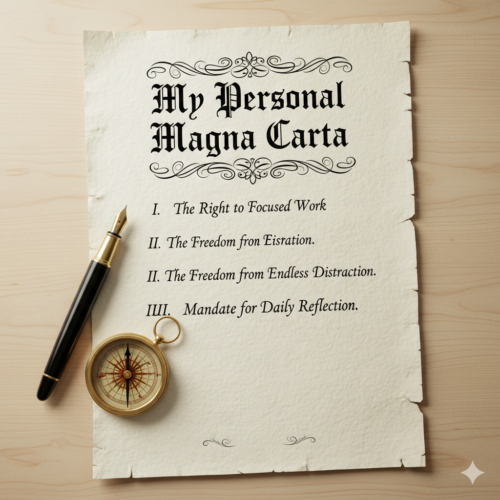
Final Motivational Charge

Simon de Montfort was an imperfect man, but on January 20, 1265, he did something perfect: He realized that inclusion is the highest form of technology.

You don't need more "Willpower" (The King). You need more "Systems" (The Commons). Stop trying to rule your life with a sword and start ruling it with a Summons. Bring all your parts to the table—your fears, your small habits, your ignored talents—and give them a vote.

The Great Hall of your life is waiting. The Writ is signed. Take your seat.