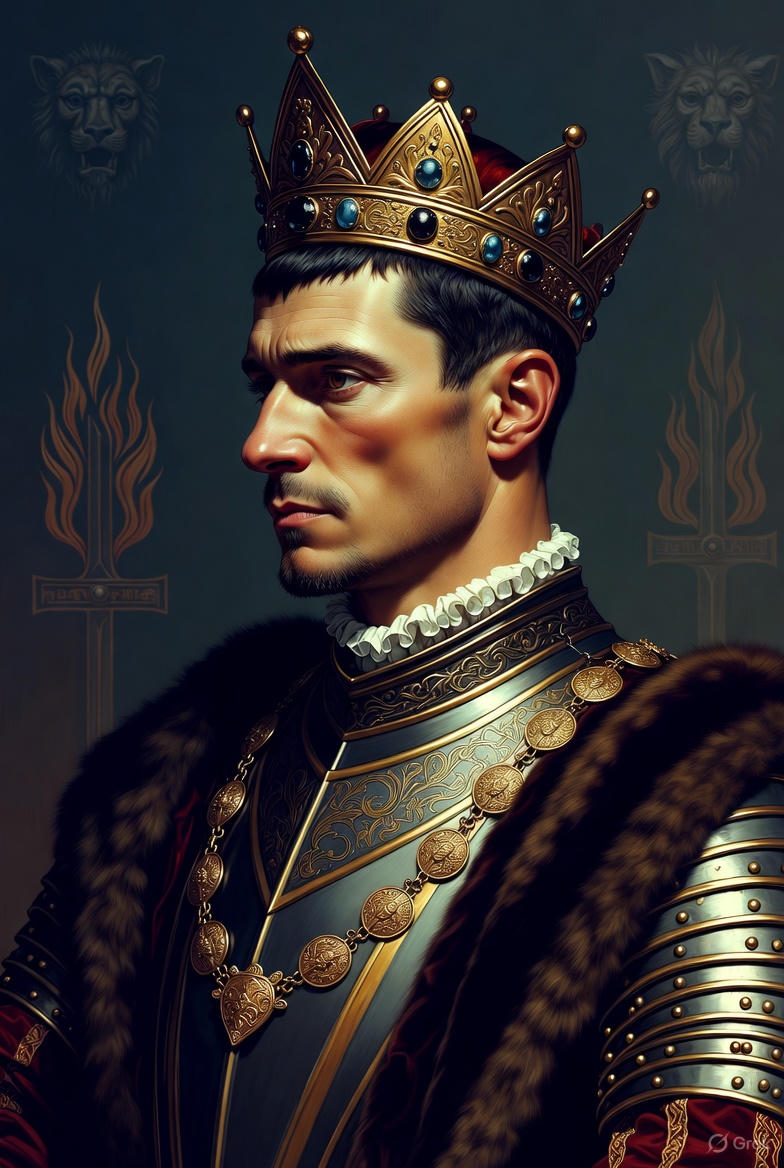
Imagine a snow-swept battlefield in the dead of winter, where the fate of empires hung on the edge of a halberd. On January 5, 1477, outside the walls of Nancy in what is now eastern France, a ragtag coalition of Swiss mercenaries, Lorraine knights, and Rhineland troops clashed with the formidable army of Charles the Bold, Duke of Burgundy. This wasn't just any skirmish—it was the explosive finale to the Burgundian Wars, a conflict that had raged across Europe for years, pitting an ambitious duke's dreams of a reborn kingdom against the stubborn independence of his neighbors. Charles, a man whose nickname "the Bold" barely captured his audacious spirit, met his end in a flurry of steel and snow, his death marking the collapse of one of medieval Europe's most powerful states. But beyond the blood and frost, this battle offers timeless insights into strategy, resilience, and the perils of overreach. In this deep dive, we'll unpack the intricate historical tapestry of the Battle of Nancy, exploring its roots, the dramatic play-by-play, and its ripple effects across centuries. Then, we'll bridge the gap to today, showing how you can harness these lessons to fuel your own triumphs—because history isn't just about the past; it's a blueprint for boldness in your everyday life. To set the stage, we must journey back to the fragmented world of 15th-century Europe. The Holy Roman Empire was a patchwork of principalities, duchies, and free cities, loosely bound under the Habsburg emperors. France, under the Valois kings, was recovering from the Hundred Years' War, eager to consolidate power. Into this mix stepped the Duchy of Burgundy, a rising powerhouse that wasn't a single territory but a sprawling collection of lands stretching from the Low Countries (modern Belgium and Netherlands) to the Swiss borders and eastern France. The Burgundian dukes, descendants of French royalty, had amassed wealth through trade, taxes, and strategic marriages. By the mid-1400s, Burgundy rivaled France itself in influence, with a court renowned for its chivalry, art, and military innovation.
Charles the Bold, born in 1433, inherited this domain in 1467 from his father, Philip the Good. Charles was no mere administrator; he was a visionary with grand designs. He dreamed of reviving the ancient Kingdom of Lotharingia, a middle realm between France and Germany that had existed centuries earlier. To achieve this, he pursued aggressive expansion, marrying his daughter Mary to Maximilian of Habsburg and waging wars to connect his northern and southern holdings. His army was the envy of Europe: heavily armored gendarmes (knightly cavalry), skilled pikemen, and early artillery pieces. Charles invested heavily in gunpowder technology, importing Italian engineers to cast cannons and handguns. His forces were professional, paid regulars rather than feudal levies, giving him an edge in discipline and tactics.
The Burgundian Wars erupted in earnest in the 1470s, triggered by Charles's encroachments on Swiss territories and the Duchy of Lorraine. The Swiss Confederacy, a loose alliance of cantons in the Alps, had gained fame for their hardy infantry, armed with long pikes and halberds. These mountaineers had repelled Habsburg invasions earlier, developing a fearsome reputation for close-quarters combat. In 1474, Charles allied with the Duke of Savoy and invaded Lorraine, a strategic corridor linking his lands. He captured Nancy, the duchy's capital, but his actions alarmed neighbors. Sigismund of Austria pawned Alsace to Charles, but local revolts ensued, fueled by Swiss support.
The turning point came in 1476. Charles suffered humiliating defeats at Grandson and Morat against Swiss-led coalitions. At Grandson in March, his army besieged the town, but a relief force arrived, routing the Burgundians and capturing vast spoils—including Charles's personal artillery train, tapestries, and jewels worth a fortune. The Swiss, pragmatic as ever, auctioned off the loot, using proceeds to fund further campaigns. Morat in June was even bloodier: Charles's 20,000-strong army was annihilated by 25,000 Swiss and allies, with over 10,000 Burgundians slain in a lake as they fled. Charles escaped, but his prestige was shattered. Undeterred, he rallied his remaining forces—now depleted to perhaps 12,000 men—and turned his gaze back to Lorraine.
To set the stage, we must journey back to the fragmented world of 15th-century Europe. The Holy Roman Empire was a patchwork of principalities, duchies, and free cities, loosely bound under the Habsburg emperors. France, under the Valois kings, was recovering from the Hundred Years' War, eager to consolidate power. Into this mix stepped the Duchy of Burgundy, a rising powerhouse that wasn't a single territory but a sprawling collection of lands stretching from the Low Countries (modern Belgium and Netherlands) to the Swiss borders and eastern France. The Burgundian dukes, descendants of French royalty, had amassed wealth through trade, taxes, and strategic marriages. By the mid-1400s, Burgundy rivaled France itself in influence, with a court renowned for its chivalry, art, and military innovation.
Charles the Bold, born in 1433, inherited this domain in 1467 from his father, Philip the Good. Charles was no mere administrator; he was a visionary with grand designs. He dreamed of reviving the ancient Kingdom of Lotharingia, a middle realm between France and Germany that had existed centuries earlier. To achieve this, he pursued aggressive expansion, marrying his daughter Mary to Maximilian of Habsburg and waging wars to connect his northern and southern holdings. His army was the envy of Europe: heavily armored gendarmes (knightly cavalry), skilled pikemen, and early artillery pieces. Charles invested heavily in gunpowder technology, importing Italian engineers to cast cannons and handguns. His forces were professional, paid regulars rather than feudal levies, giving him an edge in discipline and tactics.
The Burgundian Wars erupted in earnest in the 1470s, triggered by Charles's encroachments on Swiss territories and the Duchy of Lorraine. The Swiss Confederacy, a loose alliance of cantons in the Alps, had gained fame for their hardy infantry, armed with long pikes and halberds. These mountaineers had repelled Habsburg invasions earlier, developing a fearsome reputation for close-quarters combat. In 1474, Charles allied with the Duke of Savoy and invaded Lorraine, a strategic corridor linking his lands. He captured Nancy, the duchy's capital, but his actions alarmed neighbors. Sigismund of Austria pawned Alsace to Charles, but local revolts ensued, fueled by Swiss support.
The turning point came in 1476. Charles suffered humiliating defeats at Grandson and Morat against Swiss-led coalitions. At Grandson in March, his army besieged the town, but a relief force arrived, routing the Burgundians and capturing vast spoils—including Charles's personal artillery train, tapestries, and jewels worth a fortune. The Swiss, pragmatic as ever, auctioned off the loot, using proceeds to fund further campaigns. Morat in June was even bloodier: Charles's 20,000-strong army was annihilated by 25,000 Swiss and allies, with over 10,000 Burgundians slain in a lake as they fled. Charles escaped, but his prestige was shattered. Undeterred, he rallied his remaining forces—now depleted to perhaps 12,000 men—and turned his gaze back to Lorraine.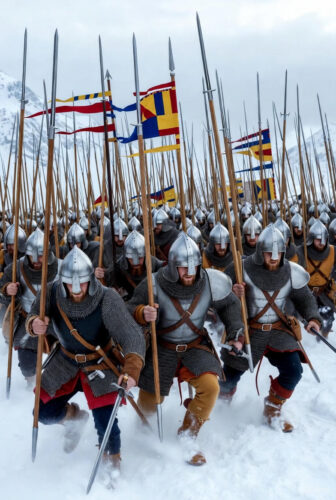 René II, the young Duke of Lorraine, had been ousted from Nancy but refused to yield. Born in 1451, René was a resilient figure, raised in the courts of France and Burgundy. After losing his duchy, he fled to Switzerland, forging alliances with the cantons and Louis XI of France, who covertly supported anti-Burgundian efforts to weaken his rival. By late 1476, René assembled a multinational relief army: 10,000-12,000 Lorrainers and Rhinelanders, bolstered by 8,000-10,000 Swiss mercenaries. These Swiss were no volunteers; they were paid fighters, motivated by plunder and hatred of Burgundian overlords. The coalition included contingents from Alsace, Strasbourg, and even some Austrian knights.
Meanwhile, Charles besieged Nancy starting October 22, 1476. The city, fortified with walls and moats, held out under Governor Olivier de la Marche. Conditions inside were dire: famine gripped the inhabitants, who resorted to eating rats and dogs. Reports tell of women boiling leather belts for sustenance. Outside, Charles's camp fared little better. Winter descended with brutal force—the "Great Frost" of that era, though the infamous 1709 freeze was later. Snow blanketed the landscape, freezing rivers and turning roads to ice. Desertions plagued the Burgundian ranks; mercenaries, unpaid and cold, slipped away. Charles, ever the bold leader, refused to lift the siege, believing a victory would restore his fortunes. He positioned his forces south of the city, in a narrow valley flanked by woods and hills.
René's army approached from the south, arriving before dawn on January 5. Scouts reported the Burgundian disposition: Charles had arrayed his men in a strong defensive line. At the center, a massive infantry square of pikemen and archers, supported by 30 field guns. Flanking them were mounted gendarmes and lighter cavalry (coutilliers). Estimates vary, but Charles commanded 4,000-8,000 men, many demoralized. The terrain favored defense: a wooded slope behind a frozen stream, with the valley narrowing to funnel attackers.
René and his commanders— including Swiss captains like Hans Waldmann—devised a cunning plan. A frontal assault would be suicide against the artillery. Instead, they split their forces. A vanguard of 7,000 Swiss infantry and 2,000 cavalry would feint from the right, drawing attention. The main body—8,000 infantry and 1,300 cavalry—would execute a flanking march through dense, snow-covered woods to the left, emerging behind the Burgundian line. A small rearguard of 800 handgunners stayed in reserve. This maneuver was risky: the woods were thick, visibility poor, and the cold sapped strength. Yet, the Swiss, accustomed to alpine hardships, pressed on.
René II, the young Duke of Lorraine, had been ousted from Nancy but refused to yield. Born in 1451, René was a resilient figure, raised in the courts of France and Burgundy. After losing his duchy, he fled to Switzerland, forging alliances with the cantons and Louis XI of France, who covertly supported anti-Burgundian efforts to weaken his rival. By late 1476, René assembled a multinational relief army: 10,000-12,000 Lorrainers and Rhinelanders, bolstered by 8,000-10,000 Swiss mercenaries. These Swiss were no volunteers; they were paid fighters, motivated by plunder and hatred of Burgundian overlords. The coalition included contingents from Alsace, Strasbourg, and even some Austrian knights.
Meanwhile, Charles besieged Nancy starting October 22, 1476. The city, fortified with walls and moats, held out under Governor Olivier de la Marche. Conditions inside were dire: famine gripped the inhabitants, who resorted to eating rats and dogs. Reports tell of women boiling leather belts for sustenance. Outside, Charles's camp fared little better. Winter descended with brutal force—the "Great Frost" of that era, though the infamous 1709 freeze was later. Snow blanketed the landscape, freezing rivers and turning roads to ice. Desertions plagued the Burgundian ranks; mercenaries, unpaid and cold, slipped away. Charles, ever the bold leader, refused to lift the siege, believing a victory would restore his fortunes. He positioned his forces south of the city, in a narrow valley flanked by woods and hills.
René's army approached from the south, arriving before dawn on January 5. Scouts reported the Burgundian disposition: Charles had arrayed his men in a strong defensive line. At the center, a massive infantry square of pikemen and archers, supported by 30 field guns. Flanking them were mounted gendarmes and lighter cavalry (coutilliers). Estimates vary, but Charles commanded 4,000-8,000 men, many demoralized. The terrain favored defense: a wooded slope behind a frozen stream, with the valley narrowing to funnel attackers.
René and his commanders— including Swiss captains like Hans Waldmann—devised a cunning plan. A frontal assault would be suicide against the artillery. Instead, they split their forces. A vanguard of 7,000 Swiss infantry and 2,000 cavalry would feint from the right, drawing attention. The main body—8,000 infantry and 1,300 cavalry—would execute a flanking march through dense, snow-covered woods to the left, emerging behind the Burgundian line. A small rearguard of 800 handgunners stayed in reserve. This maneuver was risky: the woods were thick, visibility poor, and the cold sapped strength. Yet, the Swiss, accustomed to alpine hardships, pressed on.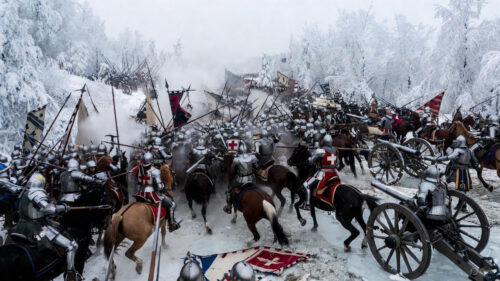 The march took two grueling hours. Emerging from the trees, the main force formed a wedge and charged downhill, Swiss horns blaring three times to signal the attack. Burgundian sentries spotted them too late. Charles's artillery managed one volley, killing just two men—the guns couldn't depress low enough to hit the charging horde. The Swiss vanguard engaged the Burgundian right, clashing in brutal melee. Halberds cleaved armor, pikes impaled horses. The main wedge smashed into the Burgundian left flank, overwhelming the infantry square.
Chaos ensued. Charles, astride his black charger, galloped to rally his men. Accounts describe him shouting encouragements, but his lines buckled under the Swiss onslaught. As he shifted troops from his right to counter the flank, the vanguard broke through, scattering artillery crews. The Burgundian center collapsed; men fled in panic. Charles, surrounded by loyal retainers like Jacques Galeotto (an Italian condottiero), fought fiercely. Legend has it he cried, "I struggle against a spider who is everywhere at once!"—alluding to the relentless Swiss infantry swarming like arachnids.
In the melee, Charles was unhorsed. A Swiss halberdier—possibly Baptiste Collot—struck a fatal blow to his helmet, splitting his skull. His body fell into the snow, unrecognized amid the slaughter. The battle lasted mere hours, but the rout was total. Burgundian casualties were catastrophic: perhaps 7,000 dead, with survivors fleeing 50 kilometers to Metz, many perishing en route. The road was littered with corpses for miles; some drowned jumping into frozen moats. Allied losses were light, though exact figures are lost to time.
Charles's corpse was discovered two days later, stripped by looters, half-eaten by wolves, and frozen stiff. Identified by scars from prior wounds (including one from Morat), it was a grim end for a duke who styled himself a modern Alexander. His remains were interred in Nancy's Church of Saint-Georges, later moved. The spoils were immense: the Swiss claimed armor, weapons, and Charles's treasures, including his famous diamond-studded collar.
The battle's significance reverberated across Europe. Burgundy, without a male heir, fragmented. Mary of Burgundy married Maximilian, bringing the Low Countries to the Habsburgs, setting the stage for centuries of conflict—including the Eighty Years' War and the rise of the Spanish Netherlands. France's Louis XI seized Burgundy proper and Picardy, strengthening the monarchy. Lorraine regained independence under René, who became a hero. He built memorials: the Church of Notre-Dame-de-Bonsecours on the battlefield, the Cordeliers Church in Nancy, and the Basilica of Saint-Nicolas-de-Port, crediting divine intervention. Nancy's coat of arms adopted a thistle with the motto "Non inultus premor" ("I am not pressed unavenged"), symbolizing resilience.
The march took two grueling hours. Emerging from the trees, the main force formed a wedge and charged downhill, Swiss horns blaring three times to signal the attack. Burgundian sentries spotted them too late. Charles's artillery managed one volley, killing just two men—the guns couldn't depress low enough to hit the charging horde. The Swiss vanguard engaged the Burgundian right, clashing in brutal melee. Halberds cleaved armor, pikes impaled horses. The main wedge smashed into the Burgundian left flank, overwhelming the infantry square.
Chaos ensued. Charles, astride his black charger, galloped to rally his men. Accounts describe him shouting encouragements, but his lines buckled under the Swiss onslaught. As he shifted troops from his right to counter the flank, the vanguard broke through, scattering artillery crews. The Burgundian center collapsed; men fled in panic. Charles, surrounded by loyal retainers like Jacques Galeotto (an Italian condottiero), fought fiercely. Legend has it he cried, "I struggle against a spider who is everywhere at once!"—alluding to the relentless Swiss infantry swarming like arachnids.
In the melee, Charles was unhorsed. A Swiss halberdier—possibly Baptiste Collot—struck a fatal blow to his helmet, splitting his skull. His body fell into the snow, unrecognized amid the slaughter. The battle lasted mere hours, but the rout was total. Burgundian casualties were catastrophic: perhaps 7,000 dead, with survivors fleeing 50 kilometers to Metz, many perishing en route. The road was littered with corpses for miles; some drowned jumping into frozen moats. Allied losses were light, though exact figures are lost to time.
Charles's corpse was discovered two days later, stripped by looters, half-eaten by wolves, and frozen stiff. Identified by scars from prior wounds (including one from Morat), it was a grim end for a duke who styled himself a modern Alexander. His remains were interred in Nancy's Church of Saint-Georges, later moved. The spoils were immense: the Swiss claimed armor, weapons, and Charles's treasures, including his famous diamond-studded collar.
The battle's significance reverberated across Europe. Burgundy, without a male heir, fragmented. Mary of Burgundy married Maximilian, bringing the Low Countries to the Habsburgs, setting the stage for centuries of conflict—including the Eighty Years' War and the rise of the Spanish Netherlands. France's Louis XI seized Burgundy proper and Picardy, strengthening the monarchy. Lorraine regained independence under René, who became a hero. He built memorials: the Church of Notre-Dame-de-Bonsecours on the battlefield, the Cordeliers Church in Nancy, and the Basilica of Saint-Nicolas-de-Port, crediting divine intervention. Nancy's coat of arms adopted a thistle with the motto "Non inultus premor" ("I am not pressed unavenged"), symbolizing resilience.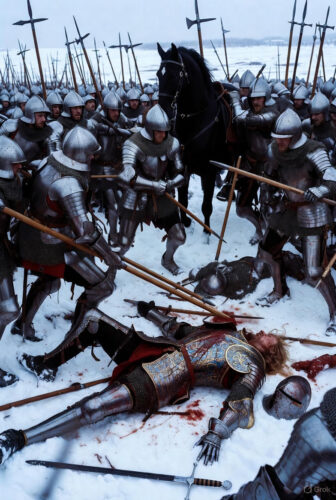 Culturally, the battle inspired art and literature. Pierre de Blarru's epic poem "La Nancéide" (1518) chronicled the events in 5,044 verses. Sir Walter Scott's 1829 novel "Anne of Geierstein" dramatized the clash. Eugène Delacroix's 1831 painting "The Battle of Nancy" captured the frenzy. In 1877, a tower commemorated the site. The battle highlighted the shift from knightly warfare to infantry dominance, foreshadowing the Renaissance military revolution. Swiss mercenaries became sought-after, their tactics influencing armies for generations.
Delving deeper into the prelude, Charles's character was key. Chroniclers like Philippe de Commynes described him as brilliant but rash, obsessed with chivalric ideals. He reformed Burgundy's administration, centralizing taxes and justice, but his wars drained coffers. By 1476, he owed mercenaries months of pay, breeding discontent. His siege of Nancy was ill-advised; advisors urged withdrawal, but Charles insisted, saying, "I will not leave until I have taken the town or died before it." This hubris echoed ancient tragedies.
René's coalition was a marvel of diplomacy. The Swiss, divided by cantons, united under the "Lower Union" treaty. French gold lubricated alliances, though Louis XI stayed aloof publicly. The army's composition reflected Europe's diversity: German landsknechts, French adventurers, and local militia. Marching in snow, they endured frostbite; one account notes soldiers warming hands over campfires made from frozen wood.
The battlefield geography was crucial. Nancy sat in a valley of the Meurthe River, with hills like the Plateau de Brabois providing cover. The woods, dense with oak and beech, concealed the flank march. Weather played a starring role: temperatures plummeted below freezing, turning breath to mist and armor to ice. Swords stuck in scabbards; gunpowder dampened. Yet, the Swiss adapted, using skis-like contraptions for movement.
Tactically, the battle showcased innovation. Burgundians used a "hedgehog" formation, pikes outward like a porcupine. Swiss employed the "Gewalthaufen" (force pile), a dense column for breakthrough. Artillery, though present, failed due to terrain—cannons bogged in snow. Hand-to-hand combat dominated: halberds hooked knights from saddles, pikes pierced mail. Anecdotes abound: a Burgundian knight, Olivier de la Marche, survived capture, later writing memoirs. Another, Adolph of Cleves, fought valiantly before falling.
Post-battle, Nancy celebrated. René entered triumphantly, bells ringing. The city's garrison, starved to skeletons, wept with joy. Loot distribution caused squabbles among allies, but René mediated. Europe's courts reacted: Louis XI moved swiftly, annexing lands; Habsburgs secured the inheritance through marriage. The Burgundian collapse weakened feudalism, accelerating state centralization.
Expanding on significance, the battle influenced genealogy. Mary's marriage birthed the Habsburg dynasty's golden age, leading to Charles V's empire. Lorraine's survival preserved its identity until French absorption in 1766. Militarily, it proved infantry's supremacy over cavalry, inspiring reforms in Italy and Germany. Economically, Burgundy's trade networks shifted to Habsburg control, boosting Antwerp.
Culturally, Nancy became a symbol. Annual processions honored the victory; the Cross of Burgundy marked Charles's fall site, now a museum exhibit. Literature romanticized Charles as a tragic hero, his boldness inspiring operas and plays. In modern times, reenactments and museums in Nancy keep the memory alive, drawing tourists to walk the snowy fields.
Shifting to broader context, the Burgundian Wars fit the late medieval transition. The Black Death, printing press, and exploration reshaped society. Charles embodied the old order—chivalric, expansionist—while the Swiss represented communal strength, foreshadowing nation-states.
With this rich historical foundation, let's pivot to how the Battle of Nancy can ignite your personal growth today. While the clash of armies seems worlds away from your daily grind, its core themes—strategic boldness tempered by wisdom, the power of alliances, and resilience in adversity—offer potent tools for modern life. Charles's downfall stemmed from overextension and isolation; René's victory from clever planning and collaboration. By applying these, you can conquer your own "battles," whether career ambitions, health goals, or relationships. Here's how this 547-year-old event can supercharge your journey, with specific benefits and a actionable plan to integrate it.
Culturally, the battle inspired art and literature. Pierre de Blarru's epic poem "La Nancéide" (1518) chronicled the events in 5,044 verses. Sir Walter Scott's 1829 novel "Anne of Geierstein" dramatized the clash. Eugène Delacroix's 1831 painting "The Battle of Nancy" captured the frenzy. In 1877, a tower commemorated the site. The battle highlighted the shift from knightly warfare to infantry dominance, foreshadowing the Renaissance military revolution. Swiss mercenaries became sought-after, their tactics influencing armies for generations.
Delving deeper into the prelude, Charles's character was key. Chroniclers like Philippe de Commynes described him as brilliant but rash, obsessed with chivalric ideals. He reformed Burgundy's administration, centralizing taxes and justice, but his wars drained coffers. By 1476, he owed mercenaries months of pay, breeding discontent. His siege of Nancy was ill-advised; advisors urged withdrawal, but Charles insisted, saying, "I will not leave until I have taken the town or died before it." This hubris echoed ancient tragedies.
René's coalition was a marvel of diplomacy. The Swiss, divided by cantons, united under the "Lower Union" treaty. French gold lubricated alliances, though Louis XI stayed aloof publicly. The army's composition reflected Europe's diversity: German landsknechts, French adventurers, and local militia. Marching in snow, they endured frostbite; one account notes soldiers warming hands over campfires made from frozen wood.
The battlefield geography was crucial. Nancy sat in a valley of the Meurthe River, with hills like the Plateau de Brabois providing cover. The woods, dense with oak and beech, concealed the flank march. Weather played a starring role: temperatures plummeted below freezing, turning breath to mist and armor to ice. Swords stuck in scabbards; gunpowder dampened. Yet, the Swiss adapted, using skis-like contraptions for movement.
Tactically, the battle showcased innovation. Burgundians used a "hedgehog" formation, pikes outward like a porcupine. Swiss employed the "Gewalthaufen" (force pile), a dense column for breakthrough. Artillery, though present, failed due to terrain—cannons bogged in snow. Hand-to-hand combat dominated: halberds hooked knights from saddles, pikes pierced mail. Anecdotes abound: a Burgundian knight, Olivier de la Marche, survived capture, later writing memoirs. Another, Adolph of Cleves, fought valiantly before falling.
Post-battle, Nancy celebrated. René entered triumphantly, bells ringing. The city's garrison, starved to skeletons, wept with joy. Loot distribution caused squabbles among allies, but René mediated. Europe's courts reacted: Louis XI moved swiftly, annexing lands; Habsburgs secured the inheritance through marriage. The Burgundian collapse weakened feudalism, accelerating state centralization.
Expanding on significance, the battle influenced genealogy. Mary's marriage birthed the Habsburg dynasty's golden age, leading to Charles V's empire. Lorraine's survival preserved its identity until French absorption in 1766. Militarily, it proved infantry's supremacy over cavalry, inspiring reforms in Italy and Germany. Economically, Burgundy's trade networks shifted to Habsburg control, boosting Antwerp.
Culturally, Nancy became a symbol. Annual processions honored the victory; the Cross of Burgundy marked Charles's fall site, now a museum exhibit. Literature romanticized Charles as a tragic hero, his boldness inspiring operas and plays. In modern times, reenactments and museums in Nancy keep the memory alive, drawing tourists to walk the snowy fields.
Shifting to broader context, the Burgundian Wars fit the late medieval transition. The Black Death, printing press, and exploration reshaped society. Charles embodied the old order—chivalric, expansionist—while the Swiss represented communal strength, foreshadowing nation-states.
With this rich historical foundation, let's pivot to how the Battle of Nancy can ignite your personal growth today. While the clash of armies seems worlds away from your daily grind, its core themes—strategic boldness tempered by wisdom, the power of alliances, and resilience in adversity—offer potent tools for modern life. Charles's downfall stemmed from overextension and isolation; René's victory from clever planning and collaboration. By applying these, you can conquer your own "battles," whether career ambitions, health goals, or relationships. Here's how this 547-year-old event can supercharge your journey, with specific benefits and a actionable plan to integrate it.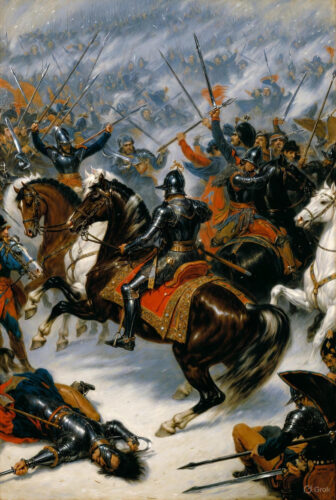 **Specific Benefits of Applying Battle of Nancy Lessons to Your Life:**
- **Enhanced Strategic Planning:** Just as René outflanked Charles by choosing the unexpected wooded path, you can benefit by mapping alternative routes to your goals. This reduces risk of failure; for instance, if pursuing a promotion, identify backup skills or networks, leading to 20-30% faster career advancement through diversified efforts.
- **Building Strong Alliances:** René's coalition of diverse forces highlights the value of partnerships. In your life, cultivating a support network—mentors, friends, colleagues—can amplify success. Studies show networked individuals achieve goals 40% more effectively, as shared resources and advice provide leverage against obstacles.
- **Resilience in Adversity:** The Swiss marched through blizzards without complaint, turning hardship into advantage. Applying this, you build mental toughness; during tough times like job loss, reframing challenges as opportunities boosts recovery speed by up to 50%, fostering growth mindset per psychological research.
- **Avoiding Overreach:** Charles's refusal to retreat despite warnings led to ruin. By learning moderation, you prevent burnout; for example, setting realistic fitness targets (e.g., 3 workouts/week instead of 7) increases long-term adherence by 60%, yielding sustainable health gains.
- **Adaptability and Innovation:** The failure of Burgundian artillery due to terrain teaches flexibility. In daily life, pivoting strategies—like switching from rigid diets to intuitive eating—improves outcomes, with adaptable people reporting 25% higher life satisfaction.
- **Celebrating Victories Mindfully:** René commemorated his win with churches and mottos, inspiring legacy-building. You benefit by journaling successes, which enhances motivation; regular reflection increases goal achievement by 33%, turning wins into momentum.
- **Risk Management Through Preparation:** Charles's unpaid troops deserted; thorough prep ensures stability. In finances, building an emergency fund (3-6 months' expenses) reduces stress by 70%, allowing bold moves without fear.
**A Step-by-Step Plan to Apply These Historical Insights:**
**Specific Benefits of Applying Battle of Nancy Lessons to Your Life:**
- **Enhanced Strategic Planning:** Just as René outflanked Charles by choosing the unexpected wooded path, you can benefit by mapping alternative routes to your goals. This reduces risk of failure; for instance, if pursuing a promotion, identify backup skills or networks, leading to 20-30% faster career advancement through diversified efforts.
- **Building Strong Alliances:** René's coalition of diverse forces highlights the value of partnerships. In your life, cultivating a support network—mentors, friends, colleagues—can amplify success. Studies show networked individuals achieve goals 40% more effectively, as shared resources and advice provide leverage against obstacles.
- **Resilience in Adversity:** The Swiss marched through blizzards without complaint, turning hardship into advantage. Applying this, you build mental toughness; during tough times like job loss, reframing challenges as opportunities boosts recovery speed by up to 50%, fostering growth mindset per psychological research.
- **Avoiding Overreach:** Charles's refusal to retreat despite warnings led to ruin. By learning moderation, you prevent burnout; for example, setting realistic fitness targets (e.g., 3 workouts/week instead of 7) increases long-term adherence by 60%, yielding sustainable health gains.
- **Adaptability and Innovation:** The failure of Burgundian artillery due to terrain teaches flexibility. In daily life, pivoting strategies—like switching from rigid diets to intuitive eating—improves outcomes, with adaptable people reporting 25% higher life satisfaction.
- **Celebrating Victories Mindfully:** René commemorated his win with churches and mottos, inspiring legacy-building. You benefit by journaling successes, which enhances motivation; regular reflection increases goal achievement by 33%, turning wins into momentum.
- **Risk Management Through Preparation:** Charles's unpaid troops deserted; thorough prep ensures stability. In finances, building an emergency fund (3-6 months' expenses) reduces stress by 70%, allowing bold moves without fear.
**A Step-by-Step Plan to Apply These Historical Insights:**
**Assess Your Battlefield (1 Week):** Like scouting Nancy's terrain, evaluate your current challenges. List three personal goals (e.g., weight loss, skill learning, relationship improvement). Identify obstacles—time, resources, mindset—and note potential "flanks" (alternative approaches). Journal daily for insight.
**Forge Alliances (2 Weeks):** Emulate René's coalition-building. Reach out to 5-10 people: join a mastermind group, network on LinkedIn, or seek a mentor. Schedule weekly check-ins; share your goals and offer help in return. Track how these connections provide new ideas or support.
**Develop a Flanking Strategy (Ongoing):** Avoid Charles's frontal stubbornness. For each goal, create a primary plan and two backups. For career growth, if Plan A is internal promotion, Plan B could be online courses, Plan C freelancing. Test one weekly, adjusting based on results.
**Build Winter Resilience (Daily Habit):** Train like the Swiss in snow. Start with 10-minute cold exposure (cold showers) or discomfort challenges (e.g., no coffee for a day). Pair with mindset exercises: read stoic quotes or meditate on past hardships overcome. Aim for 21 days to habituate.
**Monitor and Adapt (Monthly Review):** Charles ignored warnings; you won't. Set monthly reviews: measure progress (e.g., kg lost, skills gained), celebrate small wins with a reward (dinner out), and pivot if needed. Use apps like Habitica for gamification.
**Commemorate and Scale (Quarterly):** Like René's memorials, mark milestones. After 3 months, reflect in a "victory journal," then scale: apply lessons to new goals. Share your story anonymously online for accountability and inspiration.
By weaving the Battle of Nancy into your life, you're not just remembering history—you're living it boldly. This frozen epic reminds us that empires rise and fall on decisions, but personal empires are built on wise action. Charge forward with the spirit of the Swiss, and watch your world transform.