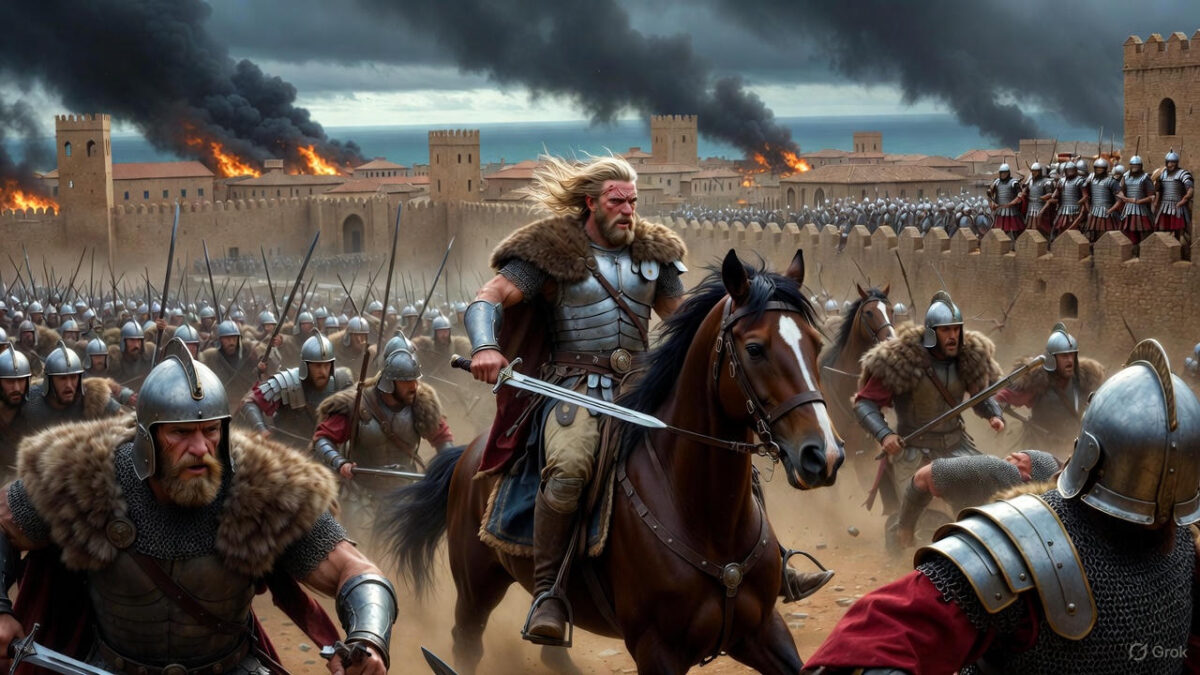
In the swirling mists of history, where empires crumble like sandcastles under relentless waves, December 27 stands as a quiet sentinel marking pivotal turns in the human saga. But on this date in 456 AD, amid the crumbling remnants of the Western Roman Empire, a dramatic execution unfolded that echoed through the ages. It wasn't a grand battle with clashing legions or a triumphant coronation in marble halls; it was the swift, brutal end of a king whose ambitions clashed with the inexorable tide of barbarian migrations. This is the story of King Rechiar of the Suebi, captured and executed by the Visigoths near the port city of Portus Cale—today's Porto, Portugal. A tale of alliances forged and shattered, of kingdoms rising from Roman ruins, and of the raw power plays that defined the chaotic 5th century. As we dive into this forgotten chapter, we'll uncover the intricate web of events that led to that fateful day, exploring the personalities, the politics, and the warfare that reshaped Europe. And then, we'll bridge the chasm of time to see how this ancient drama offers potent lessons for our modern lives—fueling motivation to navigate our own turbulent worlds with wisdom and grit.
To set the stage, we must rewind to the twilight of the Roman Empire, a colossus that once spanned from the misty isles of Britain to the sun-baked sands of North Africa. By the mid-5th century, the Western Roman Empire was a shadow of its former self, riddled with internal strife, economic collapse, and incessant invasions by Germanic tribes. The year 410 AD had seen the unthinkable: Alaric's Visigoths sacked Rome itself, sending shockwaves through the civilized world. Emperors came and went like fleeting storms—puppets manipulated by powerful generals or barbarian warlords. It was an era of "foederati," where Rome outsourced its defense to allied barbarian groups, granting them lands in exchange for military service. But these alliances were fragile, often dissolving into betrayal as the tribes vied for dominance in the power vacuum.
Enter the Suebi, a Germanic people originating from the Elbe River region in modern-day Germany. They were part of the great Völkerwanderung—the Migration Period—that saw waves of tribes pouring across Roman borders in search of fertile lands and security from the Hunnic hordes led by Attila. The Suebi, under various leaders, crossed the Rhine in 406 AD alongside the Vandals and Alans, rampaging through Gaul (modern France) before pushing into the Iberian Peninsula in 409 AD. Hispania, as the Romans called it, was a prize: rich in mines, agriculture, and strategic ports. The Suebi settled in the northwest, establishing a kingdom in Gallaecia (roughly modern Galicia and northern Portugal), with their capital at Bracara Augusta, today's Braga.
Rechiar ascended to the Suebian throne around 448 AD, succeeding his father, Rechila. He was no ordinary barbarian chieftain; Rechiar was a convert to Catholicism, making him one of the first Germanic kings to embrace the faith of the Roman populace rather than the Arian Christianity favored by many tribes like the Visigoths. This conversion wasn't just spiritual—it was strategic. By aligning with the Catholic Hispano-Roman elites, Rechiar sought to legitimize his rule and consolidate power over a mixed population of Germanic warriors and Roman locals. His reign began with aggression: he expanded Suebian territory southward, raiding into Lusitania and Baetica, capturing cities like Emerita Augusta (Mérida) and even sacking Seville. These campaigns brought wealth and slaves, bolstering his kingdom's economy, which relied on plunder as much as on farming the fertile Galician valleys.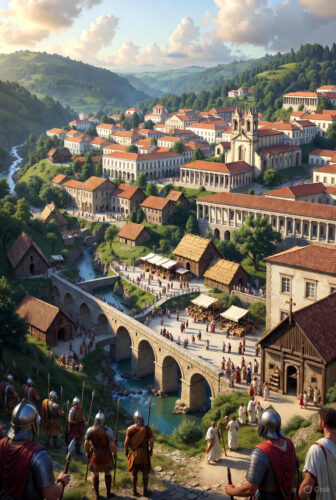 But Rechiar's ambitions clashed with the Visigoths, another Germanic powerhouse. The Visigoths, descendants of the sackers of Rome, had been granted Aquitaine in southern Gaul by the Romans in 418 AD as foederati. Under King Theodoric I, they fought alongside Romans against Attila at the Battle of the Catalaunian Plains in 451 AD, a massive clash that halted the Hunnic advance into Western Europe. After Theodoric I's death in that battle, his son Theodoric II took the throne in 451 AD. Theodoric II was a shrewd operator, educated in Roman ways and eager to expand Visigothic influence. He maintained close ties with the Western Roman Emperor Avitus, who ascended in 455 AD with Visigothic support.
The stage for conflict was set in Hispania, where the Suebi, Visigoths, and remaining Roman authorities jostled for control. The Suebi's raids threatened Visigothic interests, especially as the Visigoths eyed expansion into Iberia. Tensions boiled over in 456 AD when Rechiar, perhaps emboldened by his Catholic alliances or seeking to exploit Roman weakness, launched a major offensive. He invaded Tarraconensis, the last Roman-held province in northeast Hispania, aiming to seize Cartagena and other key ports. This was a direct challenge to Roman authority—and by extension, to their Visigothic allies.
Emperor Avitus, desperate to maintain order, dispatched Theodoric II to intervene. The Visigoths, with Roman sanction, marched into Hispania in the autumn of 456 AD. This campaign is often called the Second Gothic War in Spain, distinguishing it from earlier Visigothic incursions. Theodoric II's army, a mix of Gothic warriors—fierce horsemen clad in chainmail, wielding long swords and lances—and Roman auxiliaries, advanced swiftly. They met Rechiar's Suebi at the Battle of the Órbigo River near Asturica Augusta (modern Astorga) on October 5, 456 AD. The battle was a slaughter. Sources like the chronicler Hydatius, a contemporary bishop from Gallaecia, describe how the Visigoths overwhelmed the Suebi, killing thousands and capturing many more. Rechiar himself was wounded but escaped, fleeing westward toward his core territories.
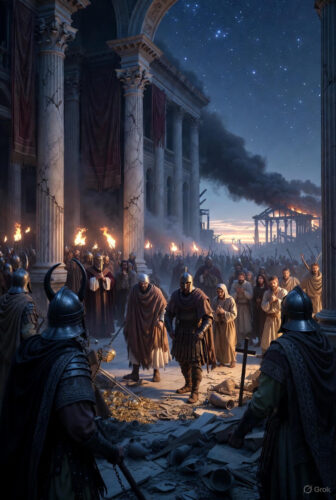
The Visigoths didn't stop there. They pursued, sacking Bracara Augusta in late October. The city, a former Roman provincial capital with grand basilicas and aqueducts, was looted mercilessly. Hydatius laments the destruction: churches desecrated, civilians enslaved, and the Suebian kingdom's heart ripped out. Rechiar, now a fugitive king, attempted to flee by sea from Portus Cale, a bustling port at the mouth of the Douro River. This location was strategic—its harbors facilitated trade with Gaul and Britain, and its fortifications offered a last bastion. But fate, or perhaps betrayal by locals weary of war, caught up with him.
On December 27, 456 AD, a Visigothic advance party captured Rechiar near the port. Dragged before Theodoric II, who had set up camp in the region, Rechiar faced judgment. The execution was swift and unceremonious—a beheading, likely, as was common for defeated kings in Germanic custom. Theodoric II appointed Aioulf, one of his own retainers, as the new Suebian king, aiming to turn the Suebi into Visigothic vassals. This act marked a turning point: the Visigoths now dominated much of Hispania, paving the way for their eventual establishment of the Visigothic Kingdom of Toledo, which would endure until the Muslim conquest in 711 AD.
But Rechiar's ambitions clashed with the Visigoths, another Germanic powerhouse. The Visigoths, descendants of the sackers of Rome, had been granted Aquitaine in southern Gaul by the Romans in 418 AD as foederati. Under King Theodoric I, they fought alongside Romans against Attila at the Battle of the Catalaunian Plains in 451 AD, a massive clash that halted the Hunnic advance into Western Europe. After Theodoric I's death in that battle, his son Theodoric II took the throne in 451 AD. Theodoric II was a shrewd operator, educated in Roman ways and eager to expand Visigothic influence. He maintained close ties with the Western Roman Emperor Avitus, who ascended in 455 AD with Visigothic support.
The stage for conflict was set in Hispania, where the Suebi, Visigoths, and remaining Roman authorities jostled for control. The Suebi's raids threatened Visigothic interests, especially as the Visigoths eyed expansion into Iberia. Tensions boiled over in 456 AD when Rechiar, perhaps emboldened by his Catholic alliances or seeking to exploit Roman weakness, launched a major offensive. He invaded Tarraconensis, the last Roman-held province in northeast Hispania, aiming to seize Cartagena and other key ports. This was a direct challenge to Roman authority—and by extension, to their Visigothic allies.
Emperor Avitus, desperate to maintain order, dispatched Theodoric II to intervene. The Visigoths, with Roman sanction, marched into Hispania in the autumn of 456 AD. This campaign is often called the Second Gothic War in Spain, distinguishing it from earlier Visigothic incursions. Theodoric II's army, a mix of Gothic warriors—fierce horsemen clad in chainmail, wielding long swords and lances—and Roman auxiliaries, advanced swiftly. They met Rechiar's Suebi at the Battle of the Órbigo River near Asturica Augusta (modern Astorga) on October 5, 456 AD. The battle was a slaughter. Sources like the chronicler Hydatius, a contemporary bishop from Gallaecia, describe how the Visigoths overwhelmed the Suebi, killing thousands and capturing many more. Rechiar himself was wounded but escaped, fleeing westward toward his core territories.
The Visigoths didn't stop there. They pursued, sacking Bracara Augusta in late October. The city, a former Roman provincial capital with grand basilicas and aqueducts, was looted mercilessly. Hydatius laments the destruction: churches desecrated, civilians enslaved, and the Suebian kingdom's heart ripped out. Rechiar, now a fugitive king, attempted to flee by sea from Portus Cale, a bustling port at the mouth of the Douro River. This location was strategic—its harbors facilitated trade with Gaul and Britain, and its fortifications offered a last bastion. But fate, or perhaps betrayal by locals weary of war, caught up with him.
On December 27, 456 AD, a Visigothic advance party captured Rechiar near the port. Dragged before Theodoric II, who had set up camp in the region, Rechiar faced judgment. The execution was swift and unceremonious—a beheading, likely, as was common for defeated kings in Germanic custom. Theodoric II appointed Aioulf, one of his own retainers, as the new Suebian king, aiming to turn the Suebi into Visigothic vassals. This act marked a turning point: the Visigoths now dominated much of Hispania, paving the way for their eventual establishment of the Visigothic Kingdom of Toledo, which would endure until the Muslim conquest in 711 AD. But the story doesn't end with Rechiar's head on a pike. Aioulf's appointment sparked internal Suebian strife. Rival factions emerged, leading to a civil war. By 457 AD, Aioulf was killed, and the Suebi splintered under kings like Remismund and Frumar. They regained some independence, but never the expansive power Rechiar had wielded. The Visigoths, meanwhile, faced their own challenges. Back in Gaul, news of Avitus's overthrow by Ricimer, a powerful Roman general of Germanic descent, reached Theodoric II. Avitus was deposed and killed in late 456 AD, just months after the Spanish campaign. Theodoric II navigated this shift by allying with the new emperor, Majorian, continuing Visigothic influence in Roman politics.
Hydatius's Chronicle, our primary source, paints a vivid picture of the era's chaos. Written from his bishopric in Aquae Flaviae (Chaves, Portugal), Hydatius describes comets, earthquakes, and famines as omens accompanying the wars—superstitions that reflected the terror of the times. Archaeological evidence supports this: excavations at Bracara Augusta reveal burn layers from the 456 sack, with Visigothic artifacts mixed among Roman ruins. Coins minted under Rechiar, bearing his name in Latin script, show his attempt to mimic Roman imperial style, blending barbarian vigor with civilized trappings.
Zooming out, Rechiar's fall exemplifies the Migration Period's dynamics. Tribes like the Suebi and Visigoths weren't mere destroyers; they were adapters, absorbing Roman culture while imposing their own. Rechiar's Catholicism, for instance, foreshadowed the eventual conversion of other Germanic kings, easing integration with local populations. The events of 456 AD accelerated the fragmentation of the Western Empire, which formally ended in 476 AD with the deposition of Romulus Augustulus. Hispania became a mosaic of kingdoms, setting the stage for medieval Europe.
Yet, this wasn't just geopolitics; it was human drama. Imagine Rechiar: a warrior-king in his 30s, scarred from battles, his hall filled with Roman tapestries and Germanic mead horns. His conversion might have stemmed from genuine faith or cynical calculation—perhaps influenced by Roman wives or bishops. Theodoric II, in contrast, was a Romanized Goth, fluent in Latin, who dined with emperors. Their clash was a microcosm of cultural fusion and friction.
But the story doesn't end with Rechiar's head on a pike. Aioulf's appointment sparked internal Suebian strife. Rival factions emerged, leading to a civil war. By 457 AD, Aioulf was killed, and the Suebi splintered under kings like Remismund and Frumar. They regained some independence, but never the expansive power Rechiar had wielded. The Visigoths, meanwhile, faced their own challenges. Back in Gaul, news of Avitus's overthrow by Ricimer, a powerful Roman general of Germanic descent, reached Theodoric II. Avitus was deposed and killed in late 456 AD, just months after the Spanish campaign. Theodoric II navigated this shift by allying with the new emperor, Majorian, continuing Visigothic influence in Roman politics.
Hydatius's Chronicle, our primary source, paints a vivid picture of the era's chaos. Written from his bishopric in Aquae Flaviae (Chaves, Portugal), Hydatius describes comets, earthquakes, and famines as omens accompanying the wars—superstitions that reflected the terror of the times. Archaeological evidence supports this: excavations at Bracara Augusta reveal burn layers from the 456 sack, with Visigothic artifacts mixed among Roman ruins. Coins minted under Rechiar, bearing his name in Latin script, show his attempt to mimic Roman imperial style, blending barbarian vigor with civilized trappings.
Zooming out, Rechiar's fall exemplifies the Migration Period's dynamics. Tribes like the Suebi and Visigoths weren't mere destroyers; they were adapters, absorbing Roman culture while imposing their own. Rechiar's Catholicism, for instance, foreshadowed the eventual conversion of other Germanic kings, easing integration with local populations. The events of 456 AD accelerated the fragmentation of the Western Empire, which formally ended in 476 AD with the deposition of Romulus Augustulus. Hispania became a mosaic of kingdoms, setting the stage for medieval Europe.
Yet, this wasn't just geopolitics; it was human drama. Imagine Rechiar: a warrior-king in his 30s, scarred from battles, his hall filled with Roman tapestries and Germanic mead horns. His conversion might have stemmed from genuine faith or cynical calculation—perhaps influenced by Roman wives or bishops. Theodoric II, in contrast, was a Romanized Goth, fluent in Latin, who dined with emperors. Their clash was a microcosm of cultural fusion and friction. The aftermath rippled far. The weakened Suebi allowed the Visigoths to focus northward, influencing Frankish and Burgundian affairs. Portus Cale, the execution site, evolved into Porto, birthing Portugal centuries later. The Douro Valley's wines, famed today, trace roots to Roman vineyards that survived the turmoil.
This episode, buried in chronicles, highlights history's undercurrents. While Attila's hordes or Constantine's conversions grab headlines, it's these granular moments—like a king's desperate flight to sea—that reveal the human cost of empire's end. The 5th century wasn't apocalyptic; it was transitional, birthing the medieval world from Roman ashes.
Shifting gears, what can we glean from this ancient intrigue to ignite our lives today? Rechiar's tale teaches resilience amid upheaval, the perils of overreach, and the power of strategic alliances. In our fast-paced world of career shifts, economic uncertainties, and personal challenges, these lessons are gold. Here's how applying them can supercharge your individual journey, turning historical wisdom into personal triumph.
The aftermath rippled far. The weakened Suebi allowed the Visigoths to focus northward, influencing Frankish and Burgundian affairs. Portus Cale, the execution site, evolved into Porto, birthing Portugal centuries later. The Douro Valley's wines, famed today, trace roots to Roman vineyards that survived the turmoil.
This episode, buried in chronicles, highlights history's undercurrents. While Attila's hordes or Constantine's conversions grab headlines, it's these granular moments—like a king's desperate flight to sea—that reveal the human cost of empire's end. The 5th century wasn't apocalyptic; it was transitional, birthing the medieval world from Roman ashes.
Shifting gears, what can we glean from this ancient intrigue to ignite our lives today? Rechiar's tale teaches resilience amid upheaval, the perils of overreach, and the power of strategic alliances. In our fast-paced world of career shifts, economic uncertainties, and personal challenges, these lessons are gold. Here's how applying them can supercharge your individual journey, turning historical wisdom into personal triumph.
 - **Cultivate Adaptable Alliances Like Theodoric II's Roman Ties**: Rechiar's isolation led to his downfall; he alienated potential allies by raiding indiscriminately. Today, build a network of mentors and peers who complement your strengths. For instance, if you're in tech, connect with marketers via LinkedIn events—not just for jobs, but for collaborative projects that expand your skill set.
- **Avoid Overambitious Expansion Without Backup Plans**: Rechiar's push into Roman territories stretched his resources thin, inviting disaster. In your career, don't chase every promotion without assessing risks. If aiming for a management role, first shadow a leader for three months to gauge fit, ensuring you're not overextending like the Suebian raids.
- **Embrace Cultural Fusion for Personal Growth**: Rechiar's Catholic conversion was innovative, blending traditions. Apply this by learning from diverse perspectives—enroll in an online course on a foreign culture while pursuing your hobby, like mixing Japanese minimalism with your home organization routine to boost productivity and creativity.
- **Prepare for Setbacks with Escape Routes, But Face Them Head-On**: Rechiar fled to Portus Cale but was caught without a solid plan. In life, always have a "Plan B"—if your startup idea flops, have savings for six months and freelance gigs lined up. Yet, confront issues directly: journal weekly about challenges to build mental fortitude.
- **Learn from Defeat to Rebuild Stronger**: The Suebi fragmented post-Rechiar but endured. After a personal failure, like a failed relationship, analyze it objectively—list three lessons, then act on one immediately, such as joining a support group to foster emotional resilience.
- **Cultivate Adaptable Alliances Like Theodoric II's Roman Ties**: Rechiar's isolation led to his downfall; he alienated potential allies by raiding indiscriminately. Today, build a network of mentors and peers who complement your strengths. For instance, if you're in tech, connect with marketers via LinkedIn events—not just for jobs, but for collaborative projects that expand your skill set.
- **Avoid Overambitious Expansion Without Backup Plans**: Rechiar's push into Roman territories stretched his resources thin, inviting disaster. In your career, don't chase every promotion without assessing risks. If aiming for a management role, first shadow a leader for three months to gauge fit, ensuring you're not overextending like the Suebian raids.
- **Embrace Cultural Fusion for Personal Growth**: Rechiar's Catholic conversion was innovative, blending traditions. Apply this by learning from diverse perspectives—enroll in an online course on a foreign culture while pursuing your hobby, like mixing Japanese minimalism with your home organization routine to boost productivity and creativity.
- **Prepare for Setbacks with Escape Routes, But Face Them Head-On**: Rechiar fled to Portus Cale but was caught without a solid plan. In life, always have a "Plan B"—if your startup idea flops, have savings for six months and freelance gigs lined up. Yet, confront issues directly: journal weekly about challenges to build mental fortitude.
- **Learn from Defeat to Rebuild Stronger**: The Suebi fragmented post-Rechiar but endured. After a personal failure, like a failed relationship, analyze it objectively—list three lessons, then act on one immediately, such as joining a support group to foster emotional resilience. Now, a concrete plan to integrate these insights into your daily life over the next month, transforming history into habit:
**Week 1: Assess Your Current "Kingdom"**: Map your personal and professional landscape. List assets (skills, networks) and threats (weaknesses, competitors). Draw inspiration from Rechiar's territorial grabs—identify one area to expand, like learning a new software tool via free tutorials, dedicating 30 minutes daily.
**Week 2: Forge Strategic Alliances**: Reach out to three people outside your circle. Schedule coffee chats or virtual meets. Channel Theodoric II's diplomacy—offer value first, like sharing an article relevant to their interests, to build mutual benefit.
**Week 3: Simulate a "Battle" and Plan Retreats**: Tackle a challenge, such as negotiating a raise. Prepare arguments, but outline alternatives (e.g., side hustle ideas). Practice with a friend, reflecting on Rechiar's failed escape to emphasize preparedness.
**Week 4: Reflect and Rebuild**: Review the month. Celebrate wins, dissect losses. Like the post-456 Suebi, adapt—adjust your goals based on insights. End with a motivational ritual: read a history book excerpt aloud, affirming your growth.
By weaving these threads from 456 AD into your tapestry, you'll not only honor the past but propel yourself forward. History isn't dusty relics; it's rocket fuel for the soul. Let Rechiar's echo remind you: in chaos lies opportunity. Seize it, and watch your life transform.