Welcome to a journey through time that lights up the darkest corners of history with a story of defiance, strategy, and an improbable miracle. December brings with it the chill of winter, but it also ignites the Festival of Lights—Hanukkah—a celebration rooted in a real historical event that unfolded over 2,000 years ago. We're diving deep into the Maccabean Revolt, a pivotal uprising in 167-160 BCE that saw a small band of Jewish rebels take on one of the mightiest empires of the ancient world. This isn't just a tale from dusty scrolls; it's a saga drawn directly from the pages of the Bible, specifically the Books of Maccabees (found in the Apocrypha of many Bibles) and echoed in the New Testament's Gospel of John. We'll unpack the gritty details of this conflict, from political intrigue to battlefield heroics, and then bridge it to today with practical ways you can channel its energy into your own life. Get ready for an educational rollercoaster that's equal parts history lesson and motivational fuel—because who knew ancient rebellions could be this fun?
Let's set the stage in the ancient Near East, where empires rose and fell like tides. The story begins in the shadow of Alexander the Great's conquests. By 323 BCE, Alexander had swept through the region, spreading Greek culture—Hellenism—far and wide. His army marched from Greece to India, conquering Persia along the way, and introducing Greek philosophy, art, and governance to conquered lands. In Judea, this meant exposure to gymnasia, theaters, and polytheistic worship. After his death at 32, his vast empire splintered into successor states fought over by his generals, the Diadochi. Judea was caught between the Ptolemaic Kingdom in Egypt, ruled by Ptolemy I Soter, and the Seleucid Empire in Syria, founded by Seleucus I Nicator. For nearly a century, under Ptolemaic rule, Jews enjoyed relative autonomy. The high priest held significant power, and the Torah was translated into Greek—the Septuagint—in Alexandria, blending cultures peacefully.
But in 198 BCE, at the Battle of Panium near the Jordan River's sources, Antiochus III the Great of the Seleucids defeated the Ptolemies, bringing Judea under Seleucid control. Antiochus III, a skilled general who had expanded his empire eastward, was somewhat tolerant. He issued a decree confirming Jewish religious rights, allowing them to live according to their ancestral laws and exempting Temple officials from taxes. This policy aimed to secure loyalty in a strategically important region bordering Egypt. However, internal Seleucid politics were turbulent; Antiochus III died in 187 BCE while campaigning in the east, leaving a debt-ridden kingdom to his son Seleucus IV Philopator, who tried to raid the Temple treasury but was assassinated in 175 BCE.
Enter Antiochus IV Epiphanes, Seleucus's brother, who seized the throne with Roman backing. This king was a flamboyant figure, known for eccentric acts like mingling with commoners in baths or throwing money in streets. Styling himself as a god incarnate—"Epiphanes" means "God Manifest"—his subjects mockingly called him "Epimanes," or "the Madman." Facing financial woes from wars, tribute to Rome (after the humiliating Treaty of Apamea in 188 BCE following defeat at Magnesia), and internal rebellions, Antiochus IV eyed the wealth of Jerusalem's Temple, estimated at vast sums from donations and tithes. But his agenda went beyond loot; he aimed to unify his fracturing empire through aggressive Hellenization, imposing Greek customs, language, and religion on diverse populations to foster loyalty and cultural homogeneity.
In Judea, this created a divide. Many urban Jews, especially the elite Tobiad and Oniad families, embraced Hellenism. They built a gymnasium in Jerusalem where young men exercised naked, a practice abhorrent to traditional Jewish modesty, and some even underwent painful surgeries to reverse circumcision to fit in at games. They adopted Greek names, philosophy, and festivals. The high priesthood became politicized; Jason (a Hellenized name for Joshua) bribed Antiochus to replace the traditionalist high priest Onias III, introducing Greek institutions. But Jason was outbid by Menelaus, who wasn't even from the priestly line, escalating corruption.
The flashpoint came in 169 BCE. Antiochus IV, invading Egypt to exploit Ptolemaic weakness, was halted by Roman envoy Popillius Laenas, who famously drew a circle in the sand around the king, demanding withdrawal before stepping out. Humiliated, Antiochus returned via Jerusalem, plundering the Temple of sacred vessels, gold altar horns, and treasures worth 1,800 talents (about 50 tons of silver). This act, detailed in 1 Maccabees 1:20-24, sparked riots, which were brutally suppressed, killing thousands.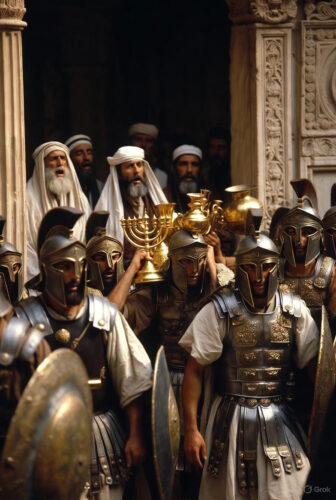 Two years later, in 167 BCE, misinformed by Menelaus about a revolt, Antiochus escalated his assault on Jewish identity. He issued edicts banning circumcision, Sabbath observance, Torah study, and dietary laws—core elements of Jewish covenant with God. Greek altars were erected in towns, and pigs were sacrificed on them, forcing Jews to partake or die. The Temple was rededicated to Zeus Olympios, with a statue (likely of Antiochus) placed on the altar—the "Abomination of Desolation" prophesied in Daniel 11:31. Prostitutes allegedly operated in sacred precincts, and monthly birthdays of the king were celebrated with forced revelry. Enforcers roamed villages, executing resisters; 2 Maccabees 6 tells of two women thrown from walls with their circumcised babies, and Eleazar, an elderly scribe, martyred for refusing pork.
This persecution aimed at cultural genocide, similar to Antiochus's suppression of Persian customs in the east. But it backfired, galvanizing resistance.
It was in the village of Modiin, about 17 miles northwest of Jerusalem, that the spark ignited. An elderly priest named Mattathias, from the Hasmonean family (descendants of Joarib, a priestly course), was ordered by royal official Apelles to sacrifice to Greek gods. Mattathias refused, and when a fellow Jew complied, he slew both in zeal, then destroyed the altar. Echoing Phinehas's act in Numbers 25 against idolatry, he cried, "Whoever is for the Lord, follow me!" as recounted in 1 Maccabees 2:27. With his five sons—John Gaddi, Simon Thassi, Judas Maccabeus, Eleazar Avaran, and Jonathan Apphus—he fled to the Judean wilderness, living in caves and eating wild food. They gathered Hasideans (pious ones) and others, forming a resistance movement. They circumcised boys forcibly, tore down altars, and ambushed enforcers.
Two years later, in 167 BCE, misinformed by Menelaus about a revolt, Antiochus escalated his assault on Jewish identity. He issued edicts banning circumcision, Sabbath observance, Torah study, and dietary laws—core elements of Jewish covenant with God. Greek altars were erected in towns, and pigs were sacrificed on them, forcing Jews to partake or die. The Temple was rededicated to Zeus Olympios, with a statue (likely of Antiochus) placed on the altar—the "Abomination of Desolation" prophesied in Daniel 11:31. Prostitutes allegedly operated in sacred precincts, and monthly birthdays of the king were celebrated with forced revelry. Enforcers roamed villages, executing resisters; 2 Maccabees 6 tells of two women thrown from walls with their circumcised babies, and Eleazar, an elderly scribe, martyred for refusing pork.
This persecution aimed at cultural genocide, similar to Antiochus's suppression of Persian customs in the east. But it backfired, galvanizing resistance.
It was in the village of Modiin, about 17 miles northwest of Jerusalem, that the spark ignited. An elderly priest named Mattathias, from the Hasmonean family (descendants of Joarib, a priestly course), was ordered by royal official Apelles to sacrifice to Greek gods. Mattathias refused, and when a fellow Jew complied, he slew both in zeal, then destroyed the altar. Echoing Phinehas's act in Numbers 25 against idolatry, he cried, "Whoever is for the Lord, follow me!" as recounted in 1 Maccabees 2:27. With his five sons—John Gaddi, Simon Thassi, Judas Maccabeus, Eleazar Avaran, and Jonathan Apphus—he fled to the Judean wilderness, living in caves and eating wild food. They gathered Hasideans (pious ones) and others, forming a resistance movement. They circumcised boys forcibly, tore down altars, and ambushed enforcers. Mattathias died in 166 BCE, urging his sons to fight for the law. Leadership passed to Judas Maccabeus, "the Hammer," a brilliant guerrilla tactician compared to David or Joshua.
The rebels started small, with hit-and-run raids. Their first major victory came at the Battle of Beth Horon in 166 BCE. Apollonius, Seleucid governor of Samaria, marched with a mixed force of infantry, cavalry, and mercenaries. Judas, with perhaps 600 men, used the narrow pass's terrain. As the enemy climbed, the Jews attacked from flanks, routing them and killing Apollonius. Judas claimed his sword, a symbol of divine favor, and used it thereafter.
Emboldened, Judas faced Seron at another Beth Horon pass in 165 BCE. Seron, commander of Coele-Syria forces, led 4,000 men. Judas's troops, fasting and praying, feigned retreat, drawing the enemy into an ambush. Seron's army was shattered, his body left unburied.
Antiochus, campaigning east to collect taxes and fight Parthians, delegated suppression to viceroy Lysias.
Lysias sent 40,000 infantry and 7,000 cavalry under Ptolemy, Nicanor, and Gorgias. Camped at Emmaus, Gorgias planned a night raid on Judas's Mizpah camp. But Judas, informed by scouts, evacuated and marched 10 miles overnight to attack the main camp at dawn. They torched tents, causing panic; slaves and merchants fleeing added chaos. When Gorgias returned, he saw smoke and fled to Marisa. The Jews captured spoils—gold, silver, blue silk, sea purple—arming them better. This Battle of Emmaus showcased Judas's mobility and intelligence.
Mattathias died in 166 BCE, urging his sons to fight for the law. Leadership passed to Judas Maccabeus, "the Hammer," a brilliant guerrilla tactician compared to David or Joshua.
The rebels started small, with hit-and-run raids. Their first major victory came at the Battle of Beth Horon in 166 BCE. Apollonius, Seleucid governor of Samaria, marched with a mixed force of infantry, cavalry, and mercenaries. Judas, with perhaps 600 men, used the narrow pass's terrain. As the enemy climbed, the Jews attacked from flanks, routing them and killing Apollonius. Judas claimed his sword, a symbol of divine favor, and used it thereafter.
Emboldened, Judas faced Seron at another Beth Horon pass in 165 BCE. Seron, commander of Coele-Syria forces, led 4,000 men. Judas's troops, fasting and praying, feigned retreat, drawing the enemy into an ambush. Seron's army was shattered, his body left unburied.
Antiochus, campaigning east to collect taxes and fight Parthians, delegated suppression to viceroy Lysias.
Lysias sent 40,000 infantry and 7,000 cavalry under Ptolemy, Nicanor, and Gorgias. Camped at Emmaus, Gorgias planned a night raid on Judas's Mizpah camp. But Judas, informed by scouts, evacuated and marched 10 miles overnight to attack the main camp at dawn. They torched tents, causing panic; slaves and merchants fleeing added chaos. When Gorgias returned, he saw smoke and fled to Marisa. The Jews captured spoils—gold, silver, blue silk, sea purple—arming them better. This Battle of Emmaus showcased Judas's mobility and intelligence. Next, Lysias led 60,000 south in 165 BCE, camping at Beth Zur. Judas, with 10,000, prayed and attacked. The Seleucids used war elephants, towers on their backs with archers, fueled by grape juice to enrage them. Eleazar spotted a royally adorned elephant, thinking it Lysias's, and stabbed it from below; it fell, crushing him—a heroic but tragic act. The confusion allowed Judas to break lines, forcing Lysias's retreat to Antioch. This victory opened Jerusalem.
Entering the city, they found the Temple desecrated—gates burned, shrubs growing, priests' chambers ruined. Weeping, they cleansed it: selected unpolluted priests, demolished the pagan altar, stored stones in a hill (awaiting a prophet), built a new altar of unhewn stones (per Exodus 20:25), restored furniture, hung curtains, and placed bread on the table.
On 25 Kislev 165 BCE (December), three years after desecration, they rededicated with sacrifices, music, and joy for eight days. Judas fortified Mount Zion. The miracle: one day's oil burned eight, per Talmud; Maccabees emphasizes human triumph, but the spiritual element endured.
Next, Lysias led 60,000 south in 165 BCE, camping at Beth Zur. Judas, with 10,000, prayed and attacked. The Seleucids used war elephants, towers on their backs with archers, fueled by grape juice to enrage them. Eleazar spotted a royally adorned elephant, thinking it Lysias's, and stabbed it from below; it fell, crushing him—a heroic but tragic act. The confusion allowed Judas to break lines, forcing Lysias's retreat to Antioch. This victory opened Jerusalem.
Entering the city, they found the Temple desecrated—gates burned, shrubs growing, priests' chambers ruined. Weeping, they cleansed it: selected unpolluted priests, demolished the pagan altar, stored stones in a hill (awaiting a prophet), built a new altar of unhewn stones (per Exodus 20:25), restored furniture, hung curtains, and placed bread on the table.
On 25 Kislev 165 BCE (December), three years after desecration, they rededicated with sacrifices, music, and joy for eight days. Judas fortified Mount Zion. The miracle: one day's oil burned eight, per Talmud; Maccabees emphasizes human triumph, but the spiritual element endured.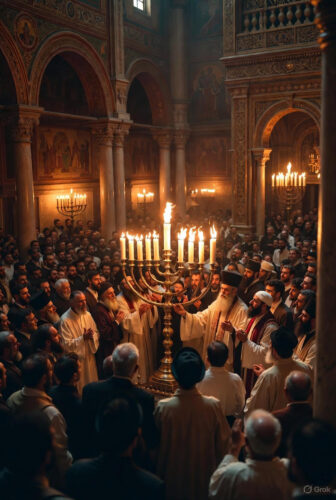 Antiochus IV died in 164 BCE in Persia, delirious, regretting his acts (2 Maccabees 9 describes gruesome illness). His son Antiochus V Eupator, a child, ruled with Lysias.
They granted amnesty, but the Acra fortress remained. Judas besieged it, but Lysias returned with 100,000 infantry, 20,000 cavalry, 32 elephants at Beth Zachariah in 163 BCE. The Jews fought elephants with spears; one was killed. Outnumbered, they retreated to Jerusalem. Lysias besieged, but Philippine rebellion in Antioch forced peace, confirming freedom.
Hellenists persisted. Demetrius I sent Bacchides and Alcimus in 161 BCE. At Beroea, Judas won, but at Elasa, with 800 vs 20,000, he fell fighting. His brothers buried him at Modiin.
Jonathan led, using Seleucid civil war (Demetrius vs Alexander Balas). In 152 BCE, Balas appointed Jonathan high priest, merging power. Jonathan fortified Jerusalem, allied with Rome and Sparta.
Simon succeeded in 142 BCE, expelling Acra garrison in 141 BCE, achieving independence when Demetrius II waived tribute. Simon minted coins—first Jewish since exile—with "Simon the High Priest" and symbols like palm trees.
The dynasty expanded: John Hyrcanus conquered Idumea (forcing conversions), Samaria (destroying Gerizim temple), Galilee. But Pharisee-Sadducee divides grew. Aristobulus I (104 BCE) crowned king, conquering Iturea. Alexander Jannaeus (103-76 BCE) was tyrannical, crucifying 800 Pharisees. Queen Salome Alexandra (76-67 BCE) brought peace, but sons Hyrcanus II and Aristobulus II fought, inviting Roman Pompey in 63 BCE, ending independence.
Archaeologically, Tel Kedesh seals show Seleucid administration; Beth Zur excavations reveal fortifications; coins confirm dates. Dead Sea Scrolls, from this era, include Daniel copies with revolt allusions.
Josephus adds details: Antiochus's deathbed repentance, festival lights called "Lights."
Culturally, revolt birthed Hanukkah customs: menorah lighting, adding one nightly; dreidel (sevivon in Hebrew), letters for "great miracle happened there"; foods fried in oil like latkes, sufganiyot. Games, gifts, songs like "Ma'oz Tzur."
In John 10:22, Jesus at Dedication feast debates, tying to "light of the world."
Rabbinic tradition shifted focus to miracle post-70 CE, deemphasizing militarism.
Modern Hanukkah blends: in Israel, torch from Modiin to Jerusalem; US, with Christmas proximity, gift-giving.
The saga's influence: inspired Zionism, Israeli army units named Maccabi.
Now, for application—though history dominates, these lessons pack punch.
Antiochus IV died in 164 BCE in Persia, delirious, regretting his acts (2 Maccabees 9 describes gruesome illness). His son Antiochus V Eupator, a child, ruled with Lysias.
They granted amnesty, but the Acra fortress remained. Judas besieged it, but Lysias returned with 100,000 infantry, 20,000 cavalry, 32 elephants at Beth Zachariah in 163 BCE. The Jews fought elephants with spears; one was killed. Outnumbered, they retreated to Jerusalem. Lysias besieged, but Philippine rebellion in Antioch forced peace, confirming freedom.
Hellenists persisted. Demetrius I sent Bacchides and Alcimus in 161 BCE. At Beroea, Judas won, but at Elasa, with 800 vs 20,000, he fell fighting. His brothers buried him at Modiin.
Jonathan led, using Seleucid civil war (Demetrius vs Alexander Balas). In 152 BCE, Balas appointed Jonathan high priest, merging power. Jonathan fortified Jerusalem, allied with Rome and Sparta.
Simon succeeded in 142 BCE, expelling Acra garrison in 141 BCE, achieving independence when Demetrius II waived tribute. Simon minted coins—first Jewish since exile—with "Simon the High Priest" and symbols like palm trees.
The dynasty expanded: John Hyrcanus conquered Idumea (forcing conversions), Samaria (destroying Gerizim temple), Galilee. But Pharisee-Sadducee divides grew. Aristobulus I (104 BCE) crowned king, conquering Iturea. Alexander Jannaeus (103-76 BCE) was tyrannical, crucifying 800 Pharisees. Queen Salome Alexandra (76-67 BCE) brought peace, but sons Hyrcanus II and Aristobulus II fought, inviting Roman Pompey in 63 BCE, ending independence.
Archaeologically, Tel Kedesh seals show Seleucid administration; Beth Zur excavations reveal fortifications; coins confirm dates. Dead Sea Scrolls, from this era, include Daniel copies with revolt allusions.
Josephus adds details: Antiochus's deathbed repentance, festival lights called "Lights."
Culturally, revolt birthed Hanukkah customs: menorah lighting, adding one nightly; dreidel (sevivon in Hebrew), letters for "great miracle happened there"; foods fried in oil like latkes, sufganiyot. Games, gifts, songs like "Ma'oz Tzur."
In John 10:22, Jesus at Dedication feast debates, tying to "light of the world."
Rabbinic tradition shifted focus to miracle post-70 CE, deemphasizing militarism.
Modern Hanukkah blends: in Israel, torch from Modiin to Jerusalem; US, with Christmas proximity, gift-giving.
The saga's influence: inspired Zionism, Israeli army units named Maccabi.
Now, for application—though history dominates, these lessons pack punch.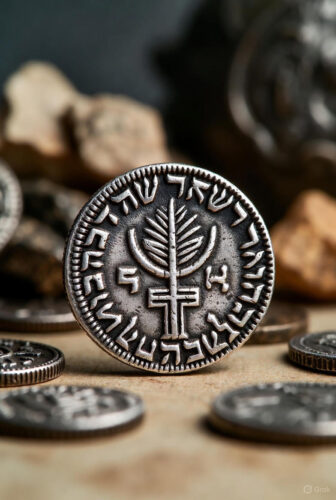 Benefits:
- **Cultivating Courage in Uncertainty**: Like Mattathias's stand, you'd gain confidence by speaking up in meetings, leading to career advancements.
- **Building Strategic Patience**: Judas's ambushes teach waiting for opportunities, like saving for investments, yielding financial stability.
- **Fostering Spiritual Depth**: The oil miracle encourages daily reflection, reducing stress via meditation apps.
- **Enhancing Community Leadership**: Hasmonean unity inspires organizing events, strengthening networks for support.
- **Promoting Cultural Preservation**: Resisting assimilation means honoring traditions, enriching family life with stories.
Plan:
Benefits:
- **Cultivating Courage in Uncertainty**: Like Mattathias's stand, you'd gain confidence by speaking up in meetings, leading to career advancements.
- **Building Strategic Patience**: Judas's ambushes teach waiting for opportunities, like saving for investments, yielding financial stability.
- **Fostering Spiritual Depth**: The oil miracle encourages daily reflection, reducing stress via meditation apps.
- **Enhancing Community Leadership**: Hasmonean unity inspires organizing events, strengthening networks for support.
- **Promoting Cultural Preservation**: Resisting assimilation means honoring traditions, enriching family life with stories.
Plan:
**Identify Your Battles**: Weekly, list three "oppressors" like procrastination, prioritize one.
**Gather Allies**: Connect with mentors or groups for accountability.
**Execute Tactics**: Break goals into ambushes—short bursts of effort.
**Celebrate Dedications**: Upon milestones, ritualize with lights or journals.
**Sustain the Flame**: Monthly review, adjust, share progress.
This historical epic shows how past flames ignite present paths.