**Historical Overview**

On a frigid December day in 218 BC, Carthaginian general Hannibal Barca orchestrated a masterful ambush against Roman forces at the Trebia River in northern Italy. Fresh from his legendary crossing of the Alps, Hannibal lured the overeager Roman consul Tiberius Sempronius Longus into battle, using the icy river and hidden troops to turn the tide. The result was a crushing Carthaginian win, with Roman losses estimated at over 20,000, setting the stage for Hannibal's prolonged campaign in Italy.

**Key Modern Benefits**

Drawing from this ancient clash, individuals today can benefit by adopting proactive strategies in daily life, such as anticipating setbacks and turning disadvantages into opportunities, much like Hannibal did with the harsh winter conditions.

**Quick Application Tips**

- Focus on preparation: Just as Hannibal fed and rested his troops while denying the Romans breakfast, prioritize self-care before tackling big tasks to maintain peak performance.

- Embrace adaptability: Hannibal's use of terrain teaches us to pivot when plans change, helping in dynamic situations like job markets or personal projects.
In the annals of ancient warfare, few events capture the imagination quite like the Battle of the Trebia, a pivotal confrontation that unfolded in the icy grip of December 218 BC along the banks of the Trebia River in what is now northern Italy. This clash, the first major land battle of the Second Punic War, pitted the audacious Carthaginian general Hannibal Barca against the Roman Republic's forces under the command of Consul Tiberius Sempronius Longus. While the exact date is debated among historians—some pinpoint it to December 18, aligning with traditional accounts, while others suggest around the winter solstice on December 22 or 23—the battle's impact resonates through history as a testament to strategic genius over sheer numbers. What makes this event so compelling isn't just the drama of elephants charging through snow or cavalry clashing in the fog of war; it's the intricate web of preparation, deception, and human psychology that Hannibal wove to secure victory. As we delve into this story, we'll uncover layers of historical detail—from the geopolitical tensions that ignited the war to the minute-by-minute chaos of the fight—before exploring how these ancient lessons can fuel your personal journey today. Buckle up; this isn't your dry textbook recap. It's a thrilling ride through history, packed with underdog triumphs, brutal realities, and motivational gold.
To truly appreciate the Battle of the Trebia, we must first step back to the broader canvas of the Punic Wars, a series of epic struggles between two Mediterranean superpowers: Rome and Carthage. The First Punic War (264–241 BC) had been a grueling affair, primarily naval, fought over control of Sicily and its surrounding seas. Rome emerged victorious, but at a tremendous cost, annexing Sicily and imposing heavy indemnities on Carthage. This defeat left a bitter taste in Carthaginian mouths, particularly for the Barca family, who vowed revenge. Hamilcar Barca, Hannibal's father and a brilliant general from the first war, shifted Carthage's focus to Iberia (modern Spain and Portugal) after 237 BC. There, he built a new empire, exploiting rich silver mines, fertile lands, and local alliances to rebuild Carthage's wealth and military might. Hamilcar governed semi-independently, expanding territories and raising an army that included Iberian mercenaries, Numidian cavalry from North Africa, and even Celtic warriors from Gaul.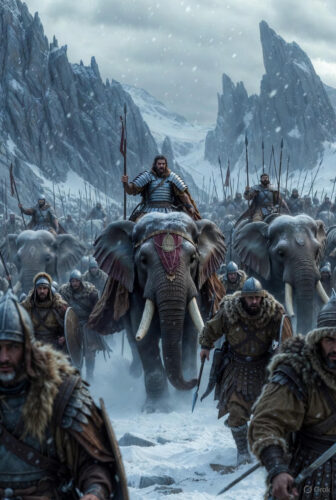 Hamilcar died in battle in 228 BC, succeeded by his son-in-law Hasdrubal the Fair, who continued the expansion until his assassination in 221 BC. Enter Hannibal, then just 26 years old, a prodigy groomed for command. Legend has it that as a boy, Hannibal swore an oath to his father to never be a friend to Rome—a promise that would define his life. By 219 BC, Hannibal laid siege to Saguntum, a city south of the Ebro River allied with Rome. Despite Roman demands to cease, Hannibal sacked it after eight months, providing Rome with a casus belli. War was declared in the spring of 218 BC, marking the start of the Second Punic War, a conflict that would span 17 years and reshape the ancient world.
Rome's strategy was twofold: invade Iberia to cut off Carthaginian resources and launch an expedition to Africa to strike at Carthage itself. Consuls Publius Cornelius Scipio and Tiberius Sempronius Longus were assigned these tasks. Scipio headed to Iberia with his brother Gnaeus, while Sempronius prepared for Africa from Sicily. But Hannibal, ever the disruptor, had other plans. In late spring 218 BC, he departed New Carthage (modern Cartagena) with a massive force: estimates vary, but around 90,000 infantry, 12,000 cavalry, and 37 war elephants. His audacious move? March overland through Gaul and cross the Alps into Italy, bypassing Roman naval superiority and bringing the war to Rome's doorstep.
The Alpine crossing is the stuff of legends—and nightmares. Hannibal's army faced treacherous terrain, avalanches, hostile tribes, and brutal weather. Elephants slipped on ice, men froze in blizzards, and supplies dwindled. By the time they descended into the Po Valley in October 218 BC, Hannibal had lost half his men: about 20,000 infantry, 6,000 cavalry, and most elephants survived. Yet, this ragtag force was battle-hardened and loyal. Hannibal quickly subdued the Taurini tribe near modern Turin, securing supplies and intimidating local Gauls into alliance. The Gauls, resentful of recent Roman colonization in Cisalpine Gaul (northern Italy), saw Hannibal as a liberator. Tribes like the Boii and Insubres flocked to his banner, swelling his ranks.
Hamilcar died in battle in 228 BC, succeeded by his son-in-law Hasdrubal the Fair, who continued the expansion until his assassination in 221 BC. Enter Hannibal, then just 26 years old, a prodigy groomed for command. Legend has it that as a boy, Hannibal swore an oath to his father to never be a friend to Rome—a promise that would define his life. By 219 BC, Hannibal laid siege to Saguntum, a city south of the Ebro River allied with Rome. Despite Roman demands to cease, Hannibal sacked it after eight months, providing Rome with a casus belli. War was declared in the spring of 218 BC, marking the start of the Second Punic War, a conflict that would span 17 years and reshape the ancient world.
Rome's strategy was twofold: invade Iberia to cut off Carthaginian resources and launch an expedition to Africa to strike at Carthage itself. Consuls Publius Cornelius Scipio and Tiberius Sempronius Longus were assigned these tasks. Scipio headed to Iberia with his brother Gnaeus, while Sempronius prepared for Africa from Sicily. But Hannibal, ever the disruptor, had other plans. In late spring 218 BC, he departed New Carthage (modern Cartagena) with a massive force: estimates vary, but around 90,000 infantry, 12,000 cavalry, and 37 war elephants. His audacious move? March overland through Gaul and cross the Alps into Italy, bypassing Roman naval superiority and bringing the war to Rome's doorstep.
The Alpine crossing is the stuff of legends—and nightmares. Hannibal's army faced treacherous terrain, avalanches, hostile tribes, and brutal weather. Elephants slipped on ice, men froze in blizzards, and supplies dwindled. By the time they descended into the Po Valley in October 218 BC, Hannibal had lost half his men: about 20,000 infantry, 6,000 cavalry, and most elephants survived. Yet, this ragtag force was battle-hardened and loyal. Hannibal quickly subdued the Taurini tribe near modern Turin, securing supplies and intimidating local Gauls into alliance. The Gauls, resentful of recent Roman colonization in Cisalpine Gaul (northern Italy), saw Hannibal as a liberator. Tribes like the Boii and Insubres flocked to his banner, swelling his ranks.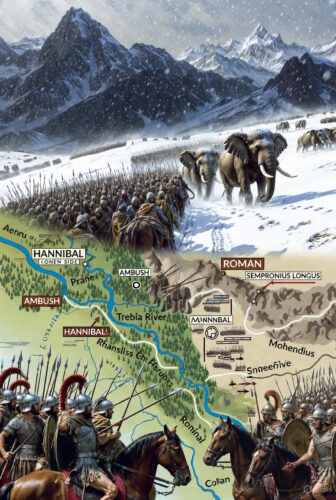 Meanwhile, Publius Scipio, delayed by Gallic revolts, confronted Hannibal at the Ticinus River in November. A cavalry skirmish ensued: Hannibal's Numidian horsemen, light and agile, outmaneuvered the heavier Roman cavalry. Scipio was wounded—saved, reportedly, by his teenage son (the future Scipio Africanus)—and retreated to Placentia (modern Piacenza), fortifying a camp on the Trebia River's east bank. Sempronius, recalled from Sicily, marched north with reinforcements, arriving in early December. The combined Roman force now totaled around 40,000: 16,000 Roman infantry, 20,000 allied Italians (including some Gauls), and 4,000 cavalry. Organized into legions, they featured heavy infantry (hastati, principes, triarii) armed with shields, short swords, and pila (javelins), plus light velites for skirmishing.
Hannibal's army matched in size but excelled in diversity and cavalry: 29,000 infantry (Africans, Iberians, Gauls), 11,000 cavalry (Numidians for hit-and-run, heavier Africans and Gauls for shock), about 30 surviving elephants, and Balearic slingers renowned for their accuracy. Hannibal camped on the west bank, 8 kilometers away, probing Roman defenses with raids. One such raid on Roman allies at Clastidium netted vital grain supplies when the garrison defected. Skirmishes followed, with Sempronius claiming minor victories, boosting his confidence. Scipio, still recovering, urged caution—wait for spring, train the troops, let the Gauls desert Hannibal in winter. But Sempronius, ambitious and facing the end of his consular term, craved glory. Roman tradition alternated command daily between consuls; the battle fell on Sempronius's day.
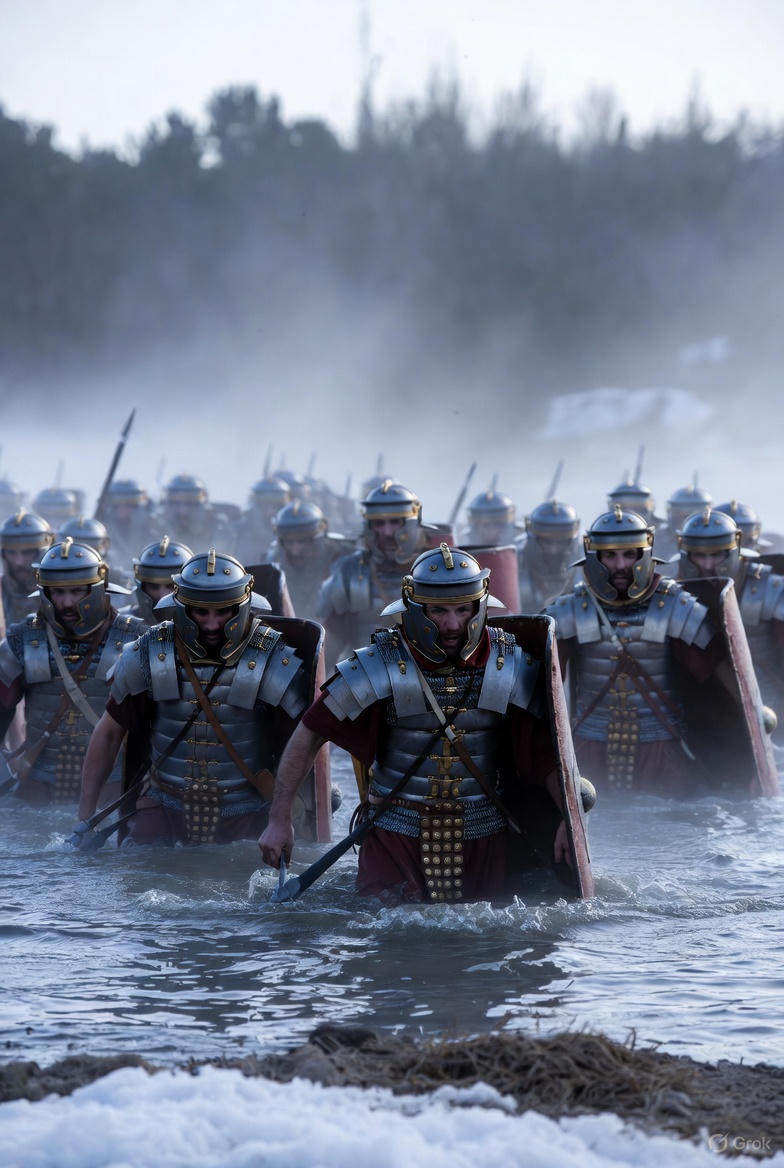
Hannibal, a master psychologist, exploited this. Spies informed him of Sempronius's eagerness. The night before the battle, Hannibal fed his men hot meals and had them rub oil to ward off the cold. He hid 2,000 elite troops—1,000 cavalry and 1,000 infantry—under his brother Mago in a concealed ravine overgrown with reeds, south of the battlefield. At dawn, in sleet and snow, Hannibal sent Numidian cavalry across the swollen, icy Trebia to harass Roman pickets and lure them out. Sempronius bit hard: he ordered his 4,000 cavalry to pursue, then 6,000 velites, and finally the entire army—unfed, half-asleep, wading chest-deep through freezing waters. By the time they formed up on the west bank, the Romans were shivering, exhausted, and hungry.
Meanwhile, Publius Scipio, delayed by Gallic revolts, confronted Hannibal at the Ticinus River in November. A cavalry skirmish ensued: Hannibal's Numidian horsemen, light and agile, outmaneuvered the heavier Roman cavalry. Scipio was wounded—saved, reportedly, by his teenage son (the future Scipio Africanus)—and retreated to Placentia (modern Piacenza), fortifying a camp on the Trebia River's east bank. Sempronius, recalled from Sicily, marched north with reinforcements, arriving in early December. The combined Roman force now totaled around 40,000: 16,000 Roman infantry, 20,000 allied Italians (including some Gauls), and 4,000 cavalry. Organized into legions, they featured heavy infantry (hastati, principes, triarii) armed with shields, short swords, and pila (javelins), plus light velites for skirmishing.
Hannibal's army matched in size but excelled in diversity and cavalry: 29,000 infantry (Africans, Iberians, Gauls), 11,000 cavalry (Numidians for hit-and-run, heavier Africans and Gauls for shock), about 30 surviving elephants, and Balearic slingers renowned for their accuracy. Hannibal camped on the west bank, 8 kilometers away, probing Roman defenses with raids. One such raid on Roman allies at Clastidium netted vital grain supplies when the garrison defected. Skirmishes followed, with Sempronius claiming minor victories, boosting his confidence. Scipio, still recovering, urged caution—wait for spring, train the troops, let the Gauls desert Hannibal in winter. But Sempronius, ambitious and facing the end of his consular term, craved glory. Roman tradition alternated command daily between consuls; the battle fell on Sempronius's day.
Hannibal, a master psychologist, exploited this. Spies informed him of Sempronius's eagerness. The night before the battle, Hannibal fed his men hot meals and had them rub oil to ward off the cold. He hid 2,000 elite troops—1,000 cavalry and 1,000 infantry—under his brother Mago in a concealed ravine overgrown with reeds, south of the battlefield. At dawn, in sleet and snow, Hannibal sent Numidian cavalry across the swollen, icy Trebia to harass Roman pickets and lure them out. Sempronius bit hard: he ordered his 4,000 cavalry to pursue, then 6,000 velites, and finally the entire army—unfed, half-asleep, wading chest-deep through freezing waters. By the time they formed up on the west bank, the Romans were shivering, exhausted, and hungry. The battlefield was a flat floodplain, ideal for Hannibal's cavalry. He arrayed his forces symmetrically: 8,000 Gauls in the center (thinned to match Roman depth), flanked by 10,000 Africans and Iberians, elephants on the wings, and cavalry split—Numidians on the right, heavier forces on the left. Light infantry (slingers, javelinmen) screened ahead. The Romans formed in standard triplex acies: heavy infantry center, allies on flanks, cavalry on wings, velites in rear. As battle commenced, Carthaginian skirmishers pelted the Romans with stones and javelins, outranging the depleted velites who had expended ammo crossing the river.
Cavalry engaged first: Roman wings, outnumbered 11,000 to 4,000, crumbled under Numidian feints and heavy charges. The victors pursued, leaving Roman infantry exposed. Elephants charged the flanks, trampling and terrifying, while slingers harassed. The Roman center pushed forward, breaking the Gallic line—many Gauls fought naked or lightly armored, fueled by war cries but buckling under Roman discipline. But as the Romans advanced, Mago's ambush sprang: emerging from the fog, they struck the Roman rear and left flank. Chaos ensued. Carthaginian cavalry wheeled back, hitting the rear. Roman flanks collapsed; velites were massacred by the river.
In the melee, Sempronius rallied 10,000 heavy infantry, punching through the Carthaginian center and escaping to Placentia. The rest were slaughtered or captured as the Trebia ran red. Roman casualties: 20,000–30,000 dead or prisoner, including most cavalry; survivors scattered. Carthaginians lost 4,000–5,000, mostly Gauls, plus several elephants to cold. Hannibal's victory was total, though he lamented the elephant losses—they'd been key in intimidating foes.
Aftermath rippled far. Rome reeled; Sempronius downplayed it as weather-related, but the Senate raised new legions. Hannibal wintered in Gaul, gaining 14,000 recruits, his army swelling to 60,000. Gauls defected en masse, seeing Rome vulnerable. This set up Hannibal's next triumphs: Lake Trasimene (217 BC), where he ambushed and killed Consul Flaminius, and Cannae (216 BC), Rome's worst defeat, with 50,000 dead. The war dragged on; Hannibal roamed Italy 15 years, but Rome's resilience—refusing peace, raising armies—prevailed. Scipio Africanus invaded Africa in 204 BC, defeating Hannibal at Zama in 202 BC. Carthage sued for peace, ceding territories and paying reparations.
The battlefield was a flat floodplain, ideal for Hannibal's cavalry. He arrayed his forces symmetrically: 8,000 Gauls in the center (thinned to match Roman depth), flanked by 10,000 Africans and Iberians, elephants on the wings, and cavalry split—Numidians on the right, heavier forces on the left. Light infantry (slingers, javelinmen) screened ahead. The Romans formed in standard triplex acies: heavy infantry center, allies on flanks, cavalry on wings, velites in rear. As battle commenced, Carthaginian skirmishers pelted the Romans with stones and javelins, outranging the depleted velites who had expended ammo crossing the river.
Cavalry engaged first: Roman wings, outnumbered 11,000 to 4,000, crumbled under Numidian feints and heavy charges. The victors pursued, leaving Roman infantry exposed. Elephants charged the flanks, trampling and terrifying, while slingers harassed. The Roman center pushed forward, breaking the Gallic line—many Gauls fought naked or lightly armored, fueled by war cries but buckling under Roman discipline. But as the Romans advanced, Mago's ambush sprang: emerging from the fog, they struck the Roman rear and left flank. Chaos ensued. Carthaginian cavalry wheeled back, hitting the rear. Roman flanks collapsed; velites were massacred by the river.
In the melee, Sempronius rallied 10,000 heavy infantry, punching through the Carthaginian center and escaping to Placentia. The rest were slaughtered or captured as the Trebia ran red. Roman casualties: 20,000–30,000 dead or prisoner, including most cavalry; survivors scattered. Carthaginians lost 4,000–5,000, mostly Gauls, plus several elephants to cold. Hannibal's victory was total, though he lamented the elephant losses—they'd been key in intimidating foes.
Aftermath rippled far. Rome reeled; Sempronius downplayed it as weather-related, but the Senate raised new legions. Hannibal wintered in Gaul, gaining 14,000 recruits, his army swelling to 60,000. Gauls defected en masse, seeing Rome vulnerable. This set up Hannibal's next triumphs: Lake Trasimene (217 BC), where he ambushed and killed Consul Flaminius, and Cannae (216 BC), Rome's worst defeat, with 50,000 dead. The war dragged on; Hannibal roamed Italy 15 years, but Rome's resilience—refusing peace, raising armies—prevailed. Scipio Africanus invaded Africa in 204 BC, defeating Hannibal at Zama in 202 BC. Carthage sued for peace, ceding territories and paying reparations.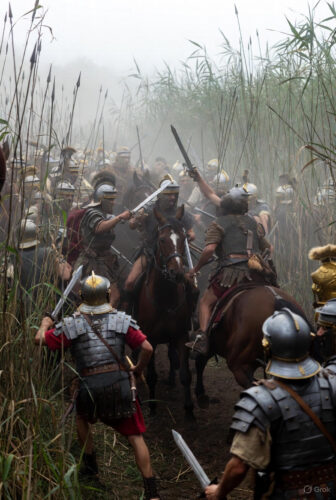 Hannibal's legacy endures: a tactical wizard who nearly toppled Rome with inferior resources. At Trebia, he demonstrated environmental mastery—the cold river sapped Roman strength while his oiled troops stayed warm. His intelligence gathering, via spies and locals, was unparalleled. Elephants, though few survived, symbolized exotic terror. Gallic allies, motivated by anti-Roman sentiment, proved crucial but volatile—many deserted later. Roman errors: Sempronius's hubris, ignoring Scipio's counsel, and poor logistics (no breakfast!) highlighted command flaws. The battle underscored Rome's infantry strength but cavalry weakness, prompting reforms.
Fun fact: Imagine the scene—snow swirling, war horns blaring, elephants trumpeting as they charge through mist. Hannibal, mounted, directing with calm precision amid panic. It's like a Hollywood epic, but real, with stakes higher than any movie. Historians like Polybius and Livy, writing centuries later, drew from eyewitnesses, painting vivid pictures: Romans slipping on ice, Gauls roaring battle songs, Numidians darting like shadows. Polybius, a Greek hostage in Rome, admired Hannibal's ingenuity, noting how he turned the Trebia's floodplains into a killing ground.
Hannibal's legacy endures: a tactical wizard who nearly toppled Rome with inferior resources. At Trebia, he demonstrated environmental mastery—the cold river sapped Roman strength while his oiled troops stayed warm. His intelligence gathering, via spies and locals, was unparalleled. Elephants, though few survived, symbolized exotic terror. Gallic allies, motivated by anti-Roman sentiment, proved crucial but volatile—many deserted later. Roman errors: Sempronius's hubris, ignoring Scipio's counsel, and poor logistics (no breakfast!) highlighted command flaws. The battle underscored Rome's infantry strength but cavalry weakness, prompting reforms.
Fun fact: Imagine the scene—snow swirling, war horns blaring, elephants trumpeting as they charge through mist. Hannibal, mounted, directing with calm precision amid panic. It's like a Hollywood epic, but real, with stakes higher than any movie. Historians like Polybius and Livy, writing centuries later, drew from eyewitnesses, painting vivid pictures: Romans slipping on ice, Gauls roaring battle songs, Numidians darting like shadows. Polybius, a Greek hostage in Rome, admired Hannibal's ingenuity, noting how he turned the Trebia's floodplains into a killing ground.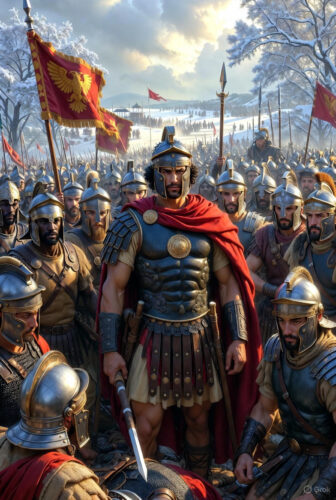 Shifting gears, while the historical tapestry of Trebia is rich and vast—spanning geopolitical maneuvers, logistical feats, and brutal combat—its true power lies in its applicability to our lives today. Hannibal didn't just win a battle; he embodied principles that can transform how we navigate modern challenges. In a world of uncertainty, from career pivots to personal hurdles, Trebia's lessons scream motivation: prepare relentlessly, adapt boldly, and outthink obstacles. Let's break this down with specific ways you can benefit, followed by a concrete plan to integrate these into your routine.
**Specific Benefits from Applying Trebia's Lessons to Your Life**
- **Enhanced Strategic Planning in Career Advancement**: Like Hannibal scouting terrain and enemy weaknesses, assess your professional landscape—research competitors, identify skill gaps, and plan moves accordingly. This could mean preparing for job interviews by anticipating questions, leading to better offers and faster promotions.
- **Improved Resilience Against Setbacks**: Hannibal lost half his army crossing the Alps yet pressed on; apply this by viewing failures (e.g., a rejected project) as temporary, regrouping with new strategies, fostering mental toughness that reduces stress and boosts long-term success.
- **Better Decision-Making Under Pressure**: Sempronius's hasty action without breakfast mirrors impulsive choices; benefit by pausing to "feed" your mind—gather info, rest—before big decisions, like negotiating a raise, resulting in more favorable outcomes.
- **Leveraging Unexpected Advantages in Relationships**: Hannibal used the cold to his favor; in personal ties, turn "disadvantages" like a disagreement into growth opportunities by listening actively, strengthening bonds and reducing conflicts.
- **Boosted Leadership and Team Motivation**: By bribing Clastidium for supplies and inspiring Gauls, Hannibal built alliances; emulate this in group settings, like work teams, by recognizing contributions, increasing collaboration and productivity.
- **Greater Adaptability in Health and Fitness Goals**: The ambush tactic teaches surprise elements; incorporate variety in routines (e.g., switch workouts) to avoid plateaus, leading to sustained progress and enjoyment.
- **Financial Prudence Through Foresight**: Hannibal's resource management post-Alps prevented starvation; apply by budgeting with buffers for emergencies, building wealth steadily without rash spending.
- **Creative Problem-Solving in Daily Tasks**: Using elephants innovatively? Channel that by rethinking chores—automate bills or batch errands—to free time for passions, enhancing overall life satisfaction.
**A Step-by-Step Plan to Apply Trebia's Historical Lessons Today**
Shifting gears, while the historical tapestry of Trebia is rich and vast—spanning geopolitical maneuvers, logistical feats, and brutal combat—its true power lies in its applicability to our lives today. Hannibal didn't just win a battle; he embodied principles that can transform how we navigate modern challenges. In a world of uncertainty, from career pivots to personal hurdles, Trebia's lessons scream motivation: prepare relentlessly, adapt boldly, and outthink obstacles. Let's break this down with specific ways you can benefit, followed by a concrete plan to integrate these into your routine.
**Specific Benefits from Applying Trebia's Lessons to Your Life**
- **Enhanced Strategic Planning in Career Advancement**: Like Hannibal scouting terrain and enemy weaknesses, assess your professional landscape—research competitors, identify skill gaps, and plan moves accordingly. This could mean preparing for job interviews by anticipating questions, leading to better offers and faster promotions.
- **Improved Resilience Against Setbacks**: Hannibal lost half his army crossing the Alps yet pressed on; apply this by viewing failures (e.g., a rejected project) as temporary, regrouping with new strategies, fostering mental toughness that reduces stress and boosts long-term success.
- **Better Decision-Making Under Pressure**: Sempronius's hasty action without breakfast mirrors impulsive choices; benefit by pausing to "feed" your mind—gather info, rest—before big decisions, like negotiating a raise, resulting in more favorable outcomes.
- **Leveraging Unexpected Advantages in Relationships**: Hannibal used the cold to his favor; in personal ties, turn "disadvantages" like a disagreement into growth opportunities by listening actively, strengthening bonds and reducing conflicts.
- **Boosted Leadership and Team Motivation**: By bribing Clastidium for supplies and inspiring Gauls, Hannibal built alliances; emulate this in group settings, like work teams, by recognizing contributions, increasing collaboration and productivity.
- **Greater Adaptability in Health and Fitness Goals**: The ambush tactic teaches surprise elements; incorporate variety in routines (e.g., switch workouts) to avoid plateaus, leading to sustained progress and enjoyment.
- **Financial Prudence Through Foresight**: Hannibal's resource management post-Alps prevented starvation; apply by budgeting with buffers for emergencies, building wealth steadily without rash spending.
- **Creative Problem-Solving in Daily Tasks**: Using elephants innovatively? Channel that by rethinking chores—automate bills or batch errands—to free time for passions, enhancing overall life satisfaction.
**A Step-by-Step Plan to Apply Trebia's Historical Lessons Today**
**Assess Your Battlefield (Week 1)**: Identify a personal goal, like advancing in your job or improving health. Map out "terrain"—strengths, weaknesses, opportunities, threats (SWOT analysis). Research like Hannibal: read books on your field or consult mentors.
**Prepare Relentlessly (Weeks 2-3)**: Build your "army"—gather resources. For career, update your resume, network on LinkedIn; for fitness, stock healthy foods and schedule workouts. Mimic Hannibal's oil rub: prioritize self-care, like sleep and nutrition, to stay sharp.
**Set the Lure and Ambush (Weeks 4-6)**: Create a plan with built-in surprises. If negotiating a promotion, prepare data on your achievements (the "lure") and have a backup ask (the "ambush"). Execute boldly but adapt— if feedback is negative, pivot like Hannibal after losses.
**Engage and Adapt (Ongoing, Months 1-3)**: Take action, monitoring progress. Face "cold rivers" (obstacles) with resilience—journal setbacks and lessons. Celebrate small wins to motivate, as Hannibal did with Gallic recruits.
**Review and Reinforce (Quarterly)**: After three months, evaluate outcomes. What worked? Adjust tactics. Build alliances—join communities or accountability groups—for sustained support.
**Scale Up (Long-Term)**: Apply to bigger goals, like starting a side hustle. Remember Trebia's aftermath: persistence pays; Hannibal's early win led to years of dominance. Track progress annually, aiming for transformative growth.
In weaving these threads, Trebia isn't just a dusty relic—it's a motivational powerhouse. Hannibal, outnumbered and far from home, turned adversity into legend. You, too, can channel that spirit: face your "Romans" with cunning and courage. History shows that great victories come not from force alone, but from smart, inspired action. So, grab these lessons, apply the plan, and conquer your world—one strategic step at a time.