

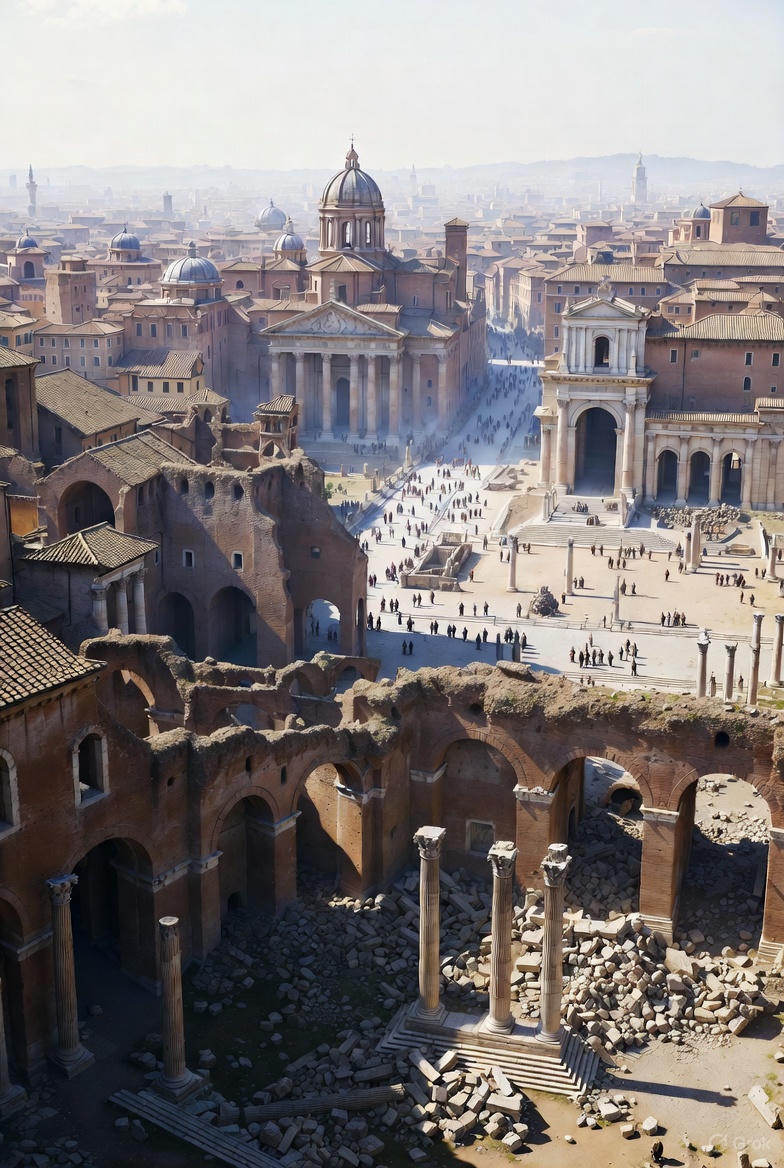
In the shadowed annals of history, where empires rise like morning mists only to dissolve under the weight of ambition and betrayal, December 17 stands as a date etched with the drama of human folly and fortitude. On this day in 546 AD, the ancient walls of Rome—once the unbreachable bulwark of the world’s mightiest civilization—crumbled not to barbarian hordes in the classic sense, but to the calculated cunning of an Ostrogothic king named Totila. This wasn’t the infamous sack of 410 by Alaric’s Visigoths, which shocked the world and inspired Saint Augustine’s *City of God*. Nor was it the later vandalism of 455 by the Vandals, which gave us the word “vandalism” itself. No, Totila’s conquest was a chapter in a grueling, decades-long conflict known as the Gothic War, a brutal tug-of-war between the resurgent Byzantine Empire and the resilient Ostrogoths for control of Italy. It’s a story rife with sieges, starvation, strategic brilliance, and the poignant irony of a city that had survived centuries only to be betrayed from within. As we delve into this epic, we’ll uncover layers of intrigue that make it feel less like dry history and more like a gripping saga of warriors, emperors, and the unyielding spirit of survival. And yet, from the ruins of that fateful day, we can extract vibrant lessons that pulse with relevance, showing how the echoes of ancient resilience can fortify our modern lives against the sieges we all face—be they personal crises, career setbacks, or the relentless grind of daily existence.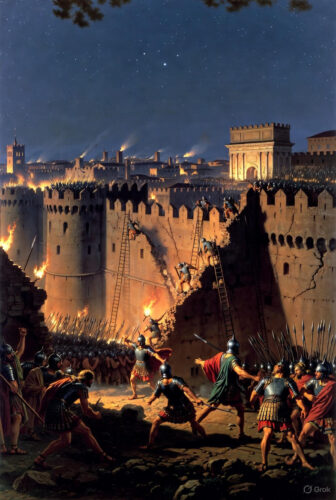
To truly appreciate the magnitude of Totila’s sack, we must rewind the clock to the twilight of the Roman Empire. By the 5th century, the Western Roman Empire had collapsed under waves of invasions, internal decay, and economic strife. In 476 AD, the last Western emperor, Romulus Augustulus, was deposed by the Germanic chieftain Odoacer, marking what many historians call the “fall of Rome.” But the Eastern Roman Empire, centered in Constantinople and later known as the Byzantine Empire, endured. Under Emperor Justinian I, who ascended the throne in 527 AD, a grand vision took shape: the *Renovatio Imperii*, or restoration of the empire. Justinian dreamed of reconquering lost territories, reuniting the Mediterranean world under Roman law and Christian orthodoxy. His legal reforms produced the *Corpus Juris Civilis*, a cornerstone of Western jurisprudence, but his military ambitions would ignite one of the most destructive wars in late antiquity—the Gothic War, spanning from 535 to 554.
The war began with promise for the Byzantines. Justinian dispatched his brilliant general, Belisarius, a tactical genius whose campaigns in Africa had already crushed the Vandal Kingdom. In 535, Belisarius landed in Sicily with a force of about 7,500 men, including elite cataphracts (heavily armored cavalry) and federate allies. By 536, he had swept through southern Italy, capturing Naples after a fierce siege where his engineers tunneled under the walls—a precursor to medieval mining tactics. Rome itself fell to Belisarius on December 9, 536, almost without a fight, as the Ostrogothic garrison fled. The Ostrogoths, descendants of the Eastern Goths who had settled in Italy under Theodoric the Great (r. 493–526), were initially led by King Witiges. Theodoric had ruled wisely, blending Gothic vigor with Roman administration, preserving aqueducts, baths, and senatorial traditions. But after his death, internal strife weakened the kingdom.
Witiges responded by besieging Rome in 537, mustering an army of perhaps 30,000 Goths. This first siege lasted over a year, from March 537 to March 538, and it’s here that the war’s savagery emerged. Belisarius, defending with just 5,000 men, employed innovative defenses: he repaired walls, used ballistae to hurl massive arrows, and even released oxen fitted with flaming bundles to disrupt Gothic assaults. The Goths cut the aqueducts, depriving Rome of water and turning the once-fertile Campagna into malarial swamps—a move that would haunt the city for centuries. Famine gripped the defenders; Procopius, Belisarius’s secretary and our primary source in *History of the Wars*, describes Romans eating nettles and resorting to cannibalism rumors. Yet Belisarius held firm, launching sorties and awaiting reinforcements. When Byzantine aid arrived under John and Narses, Witiges lifted the siege, losing thousands to disease and desertion.
The war dragged on. Belisarius captured Ravenna, the Ostrogothic capital, in 540, taking Witiges prisoner. But Justinian, paranoid about his general’s popularity, recalled Belisarius to Constantinople, leaving Italy undergarrisoned. This blunder allowed the Ostrogoths to rally under a new king: Baduila, better known as Totila, elected in 541. Totila was no mere warlord; he was a charismatic leader, perhaps in his 30s, with a flair for propaganda and reform. He abolished oppressive taxes on Italians, redistributed land to peasants, and enlisted Roman defectors, swelling his ranks. Procopius portrays him as handsome, eloquent, and ruthless—a Gothic Alexander. By 542, Totila had reconquered much of southern Italy, defeating Byzantine forces at Verona and Faenza.
Rome, now a shadow of its imperial glory with a population dwindled from a million to perhaps 30,000, became the focal point again. In 544, Justinian sent Belisarius back with meager resources—only 4,000 men. Belisarius retook Rome in 547 but couldn’t hold it long. Totila besieged it anew in 545, this time with meticulous preparation. He blockaded the Tiber River with chains and booms, cutting off grain shipments from Portus, Rome’s harbor. His forces, numbering around 15,000, encircled the city, building fortified camps to prevent relief. Inside, the Byzantine garrison under Bessas hoarded food, selling it at exorbitant prices while civilians starved. Procopius recounts harrowing scenes: emaciated Romans begging for death, bodies piled in streets, and desperate attempts to eat leather from shoes or grass from ruins.
The siege lasted over a year, testing human endurance. Belisarius, based in Portus, tried to break through with a daring river assault—fitting ships with towers and catapults—but a subordinate’s delay allowed Totila to counter. Famine worsened; a loaf of bread cost a fortune, and rats became delicacies. Betrayal sealed Rome’s fate. On the night of December 17, 546, four Isaurian guards—mercenaries from Asia Minor, disgruntled over unpaid wages—opened the Asinarian Gate (near today’s San Giovanni in Laterano) to Totila’s men. The Goths poured in under cover of darkness, their entry facilitated by the city’s vast, crumbling walls, which spanned 12 miles and included 383 towers.
What followed was a sack, but one tempered by Totila’s pragmatism. Unlike Alaric’s pillage, which lasted three days with widespread arson, Totila restrained his troops. He allowed plunder of treasures—gold from churches, jewels from patrician homes—but forbade mass rape or slaughter of civilians. Procopius notes that Totila assembled the Roman senators in St. Peter’s Basilica, lecturing them on their treachery to the Goths under Theodoric. He executed some, like the prefect Rusticiana (daughter of the philosopher Boethius), for allegedly destroying statues of Theodoric, but spared most. The city’s population, already decimated by famine, fled or hid; estimates suggest only 500 men were killed in the fighting. Totila’s mercy stemmed from strategy: he sought to win Italian hearts, portraying himself as a liberator from Byzantine tyranny.
Yet, destruction ensued. Totila initially planned to raze Rome entirely, turning it into a pasture for sheep—a symbolic erasure of the empire’s heart. He demolished parts of the walls, pulling down about a third of the fortifications to prevent future defenses. Churches like St. Peter’s and St. Paul’s Outside the Walls were looted but not burned. The Forum, Colosseum, and Pantheon, already in disrepair, suffered further neglect. Archaeological evidence from the period shows layers of debris and abandoned structures, with the city’s infrastructure—aqueducts severed, sewers clogged—pushing Rome toward medieval decay.
Belisarius, ever the thorn in Totila’s side, intervened indirectly. From his camp, he sent a letter via a captured Gothic noble, imploring Totila not to destroy the cradle of civilization. “While Italy has many cities,” Belisarius wrote (as paraphrased by Procopius), “Rome is the queen of them all; to demolish her would be a crime against posterity.” Totila, perhaps swayed by prestige or superstition, relented. He evacuated the remaining inhabitants—senators to Campania as hostages, women and children scattered—and left Rome a ghost town for 40 days, garrisoned lightly.
The war continued unabated. Belisarius reoccupied Rome in 547, hastily rebuilding walls with rubble and defending against Totila’s counter-siege in 549-550. This third siege saw even more desperation: Romans ate mice, and Byzantine reinforcements under Narses finally turned the tide. Totila was defeated and killed at the Battle of Taginae in 552, his body pierced by a javelin. The Goths’ last stand at Mons Lactarius in 553 ended the war, but at catastrophic cost. Italy’s population plummeted, cities lay in ruins, and the Lombard invasion in 568 undid much of Justinian’s gains. The Gothic War, meant to restore glory, instead accelerated Europe’s descent into the Dark Ages, with plague (the Justinianic Plague of 541-542) claiming millions amid the chaos.
Procopius’s accounts, vivid and biased toward Belisarius, paint a tapestry of heroism amid horror. He describes Totila’s chivalrous duels, like challenging Byzantine champions to single combat, and the king’s piety, attending mass before battles. Other sources, like the *Liber Pontificalis*, note Pope Vigilius’s exile during the siege, highlighting the church’s growing role. Archaeological digs at the Crypta Balbi museum in Rome reveal 6th-century layers: abandoned villas, buried treasures, and signs of hasty flights. Coins minted by Totila, bearing his image with a mustache and crown, symbolize his brief renaissance of Gothic rule.
This event’s significance ripples through history. It marked the effective end of ancient Rome as a living metropolis; by 546, the Senate met for the last time in meaningful capacity, and urban life shifted to fortified hills. The war’s drain on Byzantine resources weakened the empire against Persian and Arab threats, contributing to Islam’s rise. Culturally, it preserved Gothic-Roman fusion: Totila’s reforms echoed Theodoric’s, influencing medieval feudalism. In literature, the siege inspired later chroniclers like Jordanes in his *Getica*, romanticizing the Goths as noble warriors.
Yet, beyond the battles and betrayals, Totila’s sack teaches us about the fragility of power and the power of adaptability. Rome didn’t fall in a day; it eroded through poor leadership, divided loyalties, and unrelenting pressure. Totila, rising from defeat, exemplified turnaround: he turned a routed kingdom into a formidable force by innovating tactics, like using mobile cavalry over static sieges, and appealing to the populace.
Now, imagine channeling that ancient grit into your own life. The outcome of December 17, 546— a city’s fall followed by its stubborn rebirth—offers a blueprint for personal triumph. Rome rose again, not as an empire, but as a symbol of endurance. You, too, can apply these historical threads to weave a stronger self, turning setbacks into setups for comebacks.
– **Cultivate Strategic Patience in Adversity**: Just as Totila methodically blockaded Rome rather than assaulting impulsively, approach your challenges with calculated persistence. If facing a career stall, don’t quit rashly; instead, build skills incrementally, like Totila amassing allies, to outlast the “siege” of competition.
– **Foster Alliances and Avoid Isolation**: Betrayal doomed Rome—Isaurians sold out for gold. In your life, nurture genuine relationships; join professional networks or support groups to prevent “internal sieges” like burnout. Share burdens, as Belisarius did with his lieutenants, to multiply your strength.
– **Adapt to Resource Scarcity Creatively**: Famine forced Romans to improvise; you can too. If finances tighten, repurpose skills—turn a hobby into a side hustle, mirroring how Totila redistributed land to gain loyalty and boost morale.
– **Learn from Leaders’ Flaws and Strengths**: Justinian’s micromanaging recalled Belisarius at critical moments; avoid overcontrol in your goals. Emulate Totila’s charisma: practice public speaking to inspire your “troops”—family, team, or self—in pursuing ambitions.
– **Embrace Mercy in Victory**: Totila spared lives to win hearts; after overcoming a personal hurdle, like a failed project, forgive yourself and others, using the experience to mentor, fostering long-term growth over short-term vengeance.
– **Rebuild with Vision Post-Crisis**: Totila nearly razed Rome but preserved it; after a loss, like a breakup or job layoff, don’t destroy your foundations—rebuild smarter, perhaps by journaling lessons to fortify emotional walls.
To make this actionable, here’s a practical 7-step plan inspired by the Gothic War’s twists, designed to help you conquer your personal “Rome”:
- **Assess Your Battlefield (Week 1)**: Map your current challenges, like Belisarius surveying Rome’s defenses. Journal daily: What “sieges” are you under—debt, health issues, unfulfilling work? Identify weak points, such as procrastination, and strengths, like creativity.
- **Gather Resources and Allies (Weeks 2-3)**: Totila built his army from scratch; stockpile yours. Read books on resilience (e.g., stoic philosophy echoing Procopius’s stoicism), connect with mentors via LinkedIn, and budget for skill-building courses. Aim for three new connections weekly.
- **Implement Defensive Strategies (Weeks 4-6)**: Cut “aqueducts” to negativity—limit social media if it drains you. Build habits like daily exercise or meditation to withstand stress, just as walls protected Rome until betrayal.
- **Launch Counter-Offensives (Weeks 7-9)**: Totila struck when ready; take bold steps, like applying for promotions or starting a fitness regime. Track progress with a app, celebrating small wins to maintain momentum.
- **Handle Betrayals Gracefully (Ongoing)**: If setbacks hit, like a friend’s disloyalty, respond with Totila’s mercy—reflect, forgive, and reinforce boundaries. Use affirmations: “I adapt, I endure.”
- **Reconstruct with Innovation (Weeks 10-12)**: Post-“sack,” redesign your life. If career-shifting, pivot to aligned fields; incorporate fun, like hobby nights, to keep it motivational.
- **Sustain the Empire (Long-Term)**: Review quarterly, adjusting as Justinian should have. Celebrate milestones with rewards, ensuring your “renovatio” endures.
This historical dive isn’t just a recounting—it’s a rally cry. Totila’s sack reminds us that even eternal cities falter, but from their dust, new eras bloom. Let December 17, 546, ignite your inner warrior: face your sieges with cunning, emerge victorious, and build a legacy that defies time. The past isn’t dead; it’s your secret weapon for a brighter tomorrow.