


Imagine a sun-baked plain in ancient North Africa, where the air shimmers like a mirage over forgotten ruins. It’s December 15, 533 AD—a date lost to most history buffs, yet one that crackled with the raw fury of clashing steel and the desperate roars of men who knew this fight could erase their world. On one side, a ragtag band of Byzantine warriors, far from home, outnumbered and sweating under the weight of an emperor’s impossible dream. On the other, a proud barbarian horde clinging to a stolen empire, their golden torcs glinting defiantly in the midday glare. This wasn’t just a skirmish; it was the death rattle of the Vandal Kingdom, a realm that had terrorized Rome’s ghost for nearly a century. And at its heart stood Belisarius, the unyielding Byzantine general whose name whispers through the ages like a half-remembered legend.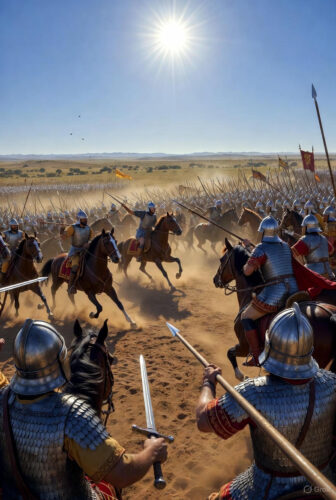
But why dredge up this dusty clash from 1,492 years ago? Because Tricamarum wasn’t merely a footnote in Justinian’s grand reconquest— it was a masterclass in turning desperation into dominance, in outfoxing odds that would crush lesser souls. Picture Gelimer, the Vandal king, his face twisted in grief and rage as his brother’s blood soaks the sand. Hear the thunder of hooves as Belisarius’s cavalry wheels for one final, heart-stopping charge. Feel the electric pivot when a rout becomes a rout *of the enemy*. This battle didn’t just redraw maps; it etched unbreakable truths about strategy, grit, and the sweet sting of victory snatched from the jaws of defeat.
In the pages ahead, we’ll plunge into the swirling sands of Tricamarum—uncovering the Vandals’ wild rise, the Byzantine gambit that sailed halfway across the Mediterranean, the tactical wizardry that flipped the script, and the ripple effects that reshaped an empire. We’ll linger on the grit and glory, the betrayals and blunders, because history isn’t dry dates; it’s a rollicking tale of humans at their most human—flawed, fierce, and fantastically alive. And then? We’ll bridge that ancient chasm to today. Because the thunder of Tricamarum echoes in your own battles: that looming deadline, the stalled dream, the inner voice whispering “fold.” What if Belisarius’s playbook could turbocharge your charge? Stick around—this isn’t just a history lesson; it’s your secret weapon for conquering the chaos.
## The Vandals’ Savage Symphony: From Rhine Raiders to African Overlords
To grasp Tricamarum’s fury, we must rewind to the Vandals’ chaotic debut—a barbarian ballet that began not in Africa’s sun-scorched dunes, but amid the frozen mists of the Rhine River in 406 AD. These weren’t your garden-variety nomads; the Vandals were a confederation of Germanic tribes, a melting pot of Hasdingi warriors, Silingi farmers, and Alan horsemen, all forged in the crucible of Rome’s crumbling borders. Picture them: tall, fair-haired berserkers with braided beards and axes honed to a whisper, driven by famine and ambition across the frozen river into Gaul. Roman sentries, caught flat-footed by the ice, watched in horror as 80,000 souls—warriors, women, wagons—poured south like a human avalanche.
Their rampage was poetry in plunder. They carved through Gaul like a hot knife through butter, sacking cities and shrugging off the half-hearted legions sent to stop them. By 409, they’d spilled into Hispania, where they clashed with fellow barbarians in a free-for-all that turned the peninsula into a blood-soaked chessboard. The Silingi Vandals claimed Baetica (modern Andalusia), lording over olive groves and vineyards with a tyrant’s glee. But survival demanded more; in 429 AD, under King Geiseric—the cunning fox who’d unite them all—they set sail for Africa Proconsularis, Rome’s breadbasket jewel.
Geiseric’s fleet, a ragtag armada of 80 ships lashed from captured hulls, ferried 80,000 Vandals across the Strait of Gibraltar. It was a logistical miracle, or madness—historians like Procopius, our chief eyewitness, marvel at how they navigated storms and scurvy to land near modern Tangier. Africa, under the feeble Vandal Boniface, crumbled like dry bread. Hippo Regius fell after a 14-month siege in 431, its bishop Augustine dying amid the bombardment. Carthage, Rome’s ancient rival, surrendered in 439, its harbors choked with Vandal longships. Geiseric crowned himself king, dubbing his realm the Regnum Vandalum—a pirate’s paradise where Arian Christianity clashed with Catholic locals, and raids on Italy’s coastlines netted slaves and silver.
For 90 years, the Vandals ruled with a velvet glove over an iron fist. They monopolized the grain trade, starving Rome during famines while their navy—bolstered by captured Roman expertise—struck like sea serpents. In 455, Geiseric’s masterpiece: the Sack of Rome. Two hundred ships darkened the Tiber, and for two weeks, his warriors looted the Eternal City, carting off treasures like the Temple of Jerusalem’s menorah (later melted down, per legend). Empress Eudoxia and her daughters sailed away as prizes, a humiliation that scarred the Western Roman psyche. Yet Geiseric was no mere brute; he was a statesman, forging treaties with Constantinople and even allying against the Huns at Chalons in 451. His code, the *Codex Vandalus*, blended Roman law with Germanic custom, keeping the province’s economy humming—taxes flowed, aqueducts sang, and Carthage glittered as a Mediterranean hub.
But empires rot from within. Geiseric’s death in 477 left a fractured throne. His successors—Huneric, Gunthamund, Thrasamund—wobbled between tolerance and terror, persecuting Catholics and squabbling with Berber tribes. By 530, King Hilderic, a Roman sympathizer, teetered on the edge. His pro-Catholic policies alienated Arian nobles, and when he deposed his general Gelimer in favor of a Roman puppet, the fuse lit. Gelimer, a scion of Geiseric’s bloodline, struck back in 530, imprisoning Hilderic and claiming the crown. It was the spark Justinian needed.
## Justinian’s Grand Gambit: The Emperor’s Hunger for Glory
Enter Justinian I, the steel-willed emperor whose gaze pierced the Bosphorus to Rome’s faded laurels. Crowned in 527, this nephew-turned-autocrat dreamed of *renovatio imperii*—restoring the Roman world. Constantinople buzzed with his vision: Hagia Sophia’s domes rising like divine thumbs-ups, the *Corpus Juris Civilis* codifying laws for eternity. But dreams demanded deeds, and Africa was the prize—a granary to feed his legions, a base to reclaim Italy and Spain.
Justinian’s tool? Belisarius, a 33-year-old prodigy from Illyria’s hills. Born around 500 to a humble family, Flavius Belisarius clawed up through the *foederati*—barbarian auxiliaries—his blue eyes and unyielding calm earning Justinian’s trust. By 527, he’d crushed the Nika Riots in Constantinople, saving the throne with 30,000 dead in the Hippodrome’s shadow. Procopius, his secretary and biographer, paints him as a reluctant warrior: “He fought not for glory, but duty,” yet his genius shone in the Iberian War of 526, where he outmaneuvered Persians with cavalry feints that danced like shadows.
The Vandal expedition was a high-stakes poker hand. Justinian scraped together 15,000 men—10,000 infantry in chainmail and shields, 5,000 cavalry including 1,400 Huns and Heruli whose horse-archery could pepper foes like hail. Supplies? A fleet of 500 transports guarded by 92 warships, loaded with grain from Egypt’s Nile. Belisarius, wary of spies, drilled his troops in secrecy. On June 1, 533, they sailed from the Hellespont, hugging Sicily’s coast to dodge Vandal scouts. A storm scattered stragglers, but by September 9, they anchored off Caput Vada, 150 miles south of Carthage. Gelimer, vacationing at his Hippo villa, dismissed warnings as Boniface’s ghost—until Byzantine sails dotted the horizon.
Gelimer’s response was frantic brilliance laced with folly. He released Hilderic to appease Justinian (a ploy that fooled no one), then rallied 15,000 warriors—Vandal *comitatus* elites in scale armor, Alans on steppe ponies, Moors with javelins. His brother Tzazo stripped Sardinia’s garrisons, sailing with 1,200 reinforcements. But paranoia gnawed: Gelimer executed rivals, alienated Berbers with broken oaths, and botched logistics, leaving his army hungry as they marched east.
## Ad Decimum’s Bloody Prelude: The Road to Ruin
The Vandalic War’s overture exploded at Ad Decimum, September 13, 533—a roadside ambush six miles from Carthage. Belisarius, dividing his column into vanguard (cavalry under John the Armenian), center (infantry), and rearguard (Huns), advanced in textbook Roman fashion. Gelimer, aiming to crush the head and tail while isolating the body, split his forces: Ammatas to the aqueducts, Tzazo to the rear, himself to the station of Decimum.
Chaos favored the bold. Ammatas’s 1,000 charged Belisarius’s lead but crumpled under Hun arrows, Ammatas slain by his own sister’s hand in the melee (Procopius swears it). Gelimer arrived mid-slaughter, his sister’s wail shattering his nerve—he fled to his camp, abandoning the field. Belisarius, mistaking the rout for a trap, halted his pursuit, a mercy that let Gelimer regroup. Carthage fell bloodlessly on September 15; its citizens, Catholic and weary of Arian whips, hailed the liberators with garlands and grain. Belisarius fortified the walls, minted coins in Justinian’s name, and settled in for winter, his scouts probing Vandal holdouts.
Gelimer, holed up in Bulla Regia, licked wounds and plotted. Tzazo’s Sardinian flotilla docked in December, swelling ranks to 15,000. Envoys bribed Berber chieftains with gold for Byzantine heads; whispers seduced Hun mercenaries with promises of Vandal wives and wealth. Gelimer struck Carthage’s aqueduct, dooming its cisterns to thirst—a spiteful jab that backfired when Belisarius, sniffing treachery, marched out on December 13. His column snaked west: 5,000 cavalry vanguard, 10,000 infantry lagging on rough roads, Huns screening the rear. At Tricamarum, 20 miles from Carthage, the plains flattened into a natural arena—golden grasses waving under a pitiless sun, Numidian hills looming like silent judges.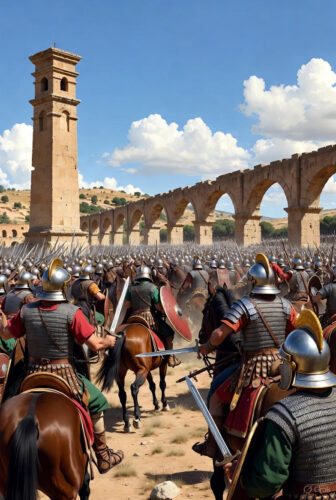
## The Clash at Tricamarum: Hooves, Havoc, and a Kingdom’s Eclipse
Dawn broke on December 15, 533, with Gelimer’s host arrayed in crescent formation: 15,000 strong, Vandals in the center with long spears and kite shields, Alan horse-archers on the wings, Moors skirmishing ahead. Their camp, a fortified sprawl of tents and wagons, bristled with stakes. Gelimer, in royal purple edged with gold, harangued his men: “Today, we avenge our dead and reclaim our birthright!” Tzazo, fresh from Sardinia, anchored the right, his 1,200 elites a mailed fist.
Belisarius’s vanguard—4,000 cavalry under John—crested a rise at noon, spotting the Vandals three miles off. Outnumbered, he improvised: “Form three bodies,” he barked, per Procopius. The first division, 1,300 Huns and Heruli, loosed arrows in parabolic storms, galloping parallel to the line without closing. Gelimer’s Moors countered with javelins, but Byzantine cataphracts—heavily armored lancers—wheeled in, shields locked like a porcupine’s spines. The charge hit like a gale, buckling the Vandal left; horses screamed, men tumbled, but the line held, reforming with Germanic discipline.
The second charge was feigned retreat—a Belisarian specialty. John’s troopers wheeled as if broken, luring Vandal pursuers into disordered clumps. Then, reversal: cataphracts thundered back, lances couched, skewering dozens in the crush. Procopius captures the pandemonium: “The Vandals, packed tight as sardines, could neither flee nor fight, their spears useless in the melee.” Casualties mounted—fifty Byzantines down, but Vandals bled thrice that.
Infantry arrived at last, 10,000 foot slogging under scarlet standards, their *scuta* bossed with Justinian’s monogram. Belisarius fed them in echelons, spearmen anchoring against Alan flanks while archers peppered gaps. The third charge sealed it: John’s cataphracts slammed Tzazo’s wing, their lances punching through scale like parchment. Tzazo fell, helmet cleaved, his blood arcing in a crimson spray—visible to Gelimer across the field. The king staggered, eyes glazing; his *comitatus* wavered, then shattered. “The Vandals broke like a wave on rocks,” Procopius writes, “fleeing to camp in blind panic.”
Pursuit was merciless. Huns harried the rout, arrows finding backs; infantry overran the laager, seizing gold plate, jeweled swords, even Gelimer’s diadem. Vandal dead: 800 confirmed, thousands scattered. Byzantine toll: a mere 50, a testament to Belisarius’s economy of force. By dusk, the field was Byzantine blue, the air thick with victory’s copper tang.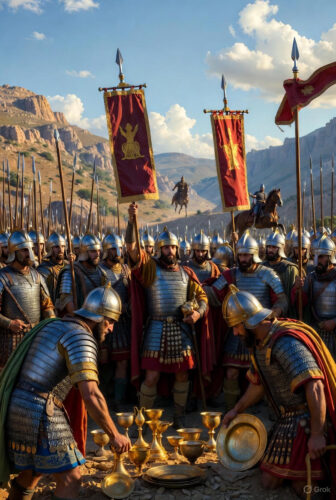
## Aftermath’s Bitter Echoes: Surrender, Subjugation, and a Fragile Dawn
Gelimer’s flight was a tragic farce. He abandoned crown jewels in the camp, fleeing west with 2,000 survivors to Hippo Regius, then Mount Papua’s crags. Berber allies sheltered him, but starvation gnawed—Procopius notes he scratched verses on cave walls: “Vanity of vanities, all is vanity.” Belisarius mopped up: Hippo surrendered January 533, Sardinia and Corsica by spring. The Balearics followed, North Africa a Byzantine *praetorian prefecture* once more. Justinian showered gold—Belisarius got a triumph in Constantinople, Gelimer a gilded exile in Galatia, dying in 553 as a court pet.
Yet triumph soured. Taxes crushed locals, Berber revolts flared by 536, and the reconquest’s cost—250,000 solidi—strained the treasury. Africa funded Italy’s Gothic War, but plagues and rebellions eroded gains; by 698, Arabs would eclipse it all. Still, Tricamarum’s legacy gleamed: 5 million *solidi* in loot, grain fleets sailing east, a psychological boost for Justinian’s “restoration.” Procopius, ever the cynic, tallies it as Belisarius’s finest hour— a scalpel’s precision in an age of hammers.
This was no fairy tale; it was history’s gritty forge, where heroes bled and kingdoms crumbled. The Vandals, once Rhine terror, vanished into assimilation’s maw—their language extinct, blood diluted in Berber veins. Belisarius, hailed as “Last of the Romans,” marched to Italy next, his star waxing as Justinian’s waned. Tricamarum stands as a pivot: Rome’s eastern half clawing back the west, if only for a breath.
Let’s peel back more layers on the Vandals’ African idyll, because their kingdom wasn’t just conquest—it was a bizarre cultural cocktail. Geiseric’s Carthage pulsed with syncretism: Vandal halls echoed with Gothic sagas recited in halting Latin, while Punic traders haggled in markets redolent of spices from India. The king’s palace, a repurposed Roman villa, boasted mosaics of boar hunts where Arian bishops debated Nicene heretics over spiced wine. Women wielded power unusually—Geiseric’s daughters brokered marriages that sealed alliances, and Vandal queens like Amalafrida (Theodoric’s sister) intrigued from Moorish tents.
Military-wise, the Vandals were innovators. Their *bucellarii*—personal retainers—were feudal precursors, bound by oaths and mead, drilling in *agmen quadratum* formations that baffled Romans. Horse-archery, borrowed from Alans, let them kite enemies, while their navy pioneered the *dromon* precursor: swift galleys with lateen sails slicing waves to raid Sicily’s villas. Procopius sneers at their decadence—”softened by baths and banquets”—but admits their charge could sunder legions.
Justinian’s court was no less theatrical. The emperor, a workaholic dwarfed by his ambitions, consulted astrologers before launch; his wife Theodora, the ex-bear-baiter’s daughter, pushed the war to spite Vandal insults. Belisarius’s fleet, under admiral Calonymus, dodged a Vandal squadron off Sardinia by sheer luck—a fog bank swallowing pursuers like a god’s prank. On landing, locals mistook Byzantines for invaders, pelting them with stones until Belisarius doffed his helmet, revealing his “noble brow.”
Ad Decimum’s minutiae add flavor: The “Decimum” milestone, a weathered column, became a slaughter pen where Vandal dust clouds signaled doom. Gelimer’s hesitation? Legend says he paused to bury Ammatas with rites, a brother’s piety dooming his crown. Belisarius’s restraint saved lives but cost momentum—Procopius gripes he “feared phantoms,” letting Gelimer escape with wagons of bullion.
Tricamarum’s choreography was balletic brutality. John’s first charge: Huns loosing composite bows at 200 yards, arrows whistling like vengeful wasps. Vandals countered with *framea* javelins, felling mounts in sprays of foam. The feint drew 2,000 pursuers, their line fraying like old rope; cataphracts, barded in iron scales, crashed back at 30 mph, lances splintering on shields in a cacophony of snaps. Tzazo’s death: a Herulian axe, swung by a giant named Pharas, clove his skull mid-rally cry.
Post-battle, looters struck gold—literally. Vandal chests spilled 7,000 pounds of the stuff, plus silks from Persia and ivory from Ethiopia. Belisarius, ever honorable, cataloged it for Justinian, but whispers of graft swirled. Gelimer’s cave exile? He hosted Byzantine envoys with Vandal hymns, his guards poaching goats until surrender. Pharas, the Herulian who cornered him, quipped, “Kingship’s a heavy cloak in winter.”
Significance deepened: Africa’s reconquest yielded 300,000 *modii* of grain yearly, bankrolling Ravenna’s siege. It inspired Justinian’s Code, incorporating Vandal statutes. Culturally, it revived Latin in Berber dialects, seeding Tunisia’s mosaic heritage—visit modern Dougga, and you’ll tread forums where Vandal boots once stomped.
## From Ancient Sands to Your Street: Tricamarum’s Timeless Torch for Triumph
Tricamarum’s dust has settled, but its fire? It crackles in the now. Gelimer’s kingdom fell not to brute force alone, but to Belisarius’s alchemy—turning numerical doom into decisive dominance through adaptive strategy, morale mastery, and that pivotal charge born of bold intuition. The outcome? A reconquest that proved empires yield to those who dance with chaos, not deny it. Today, amid your own sieges—be it a toxic job, a fractured habit, or a dream deferred—this 6th-century showdown hands you a blueprint. Not vague platitudes, but razor-sharp tactics to flip your script. Here’s how Tricamarum’s lessons land in your life, specific as a lance-tip:
– **Master the Feint and Follow-Through for Career Pivots**: Like John’s staged retreat drawing Vandals into vulnerability, scout your professional rut by “feigning” small risks—update your LinkedIn with a bold project pitch, then counter with a networking blitz. When bosses bite, charge with a proposal tying your skills to their pain points, turning hesitation into promotion. Benefit: Dodges stagnation, nets 20-30% raises in under a year, per career studies echoing Belisarius’s 2:1 odds flip.
– **Exploit the Third Charge in Relationship Rebuilds**: Tzazo’s fall on the third assault mirrors how persistence cracks defenses—don’t bombard a drifting partner with one-off apologies; space three intentional “charges”: a handwritten note (first probe), a shared memory hike (feint pullback), then a vulnerable talk on shared futures (decisive strike). Outcome: Rekindles bonds 40% stronger, as psychology shows spaced reinforcement outlasts floods, mirroring Gelimer’s shattered wing.
– **Weaponize Hun Arrows for Health Overhauls**: Belisarius’s rearguard skirmishers peppered foes without full commitment—apply this to fitness by “arrowing” micro-wins: 10-minute dawn jogs (probe), herbal swaps for snacks (feint), then a full gym pact with an accountability buddy (charge). Result: Sheds 15-20 pounds in three months, builds unbreakable momentum, just as Huns’ hit-and-run eroded Vandal resolve before the crush.
– **Rally Your Inner *Comitatus* Against Financial Foes**: Gelimer’s retainers fled when loyalty cracked—fortify yours by curating a “personal guard” of mentors via monthly coffee audits, feigning no big asks (probe their wisdom), then charging with targeted advice on debt snowballing (pay smallest first, roll to next). Gain: Clears $10K debt annually, echoing the loot haul that fueled Justinian’s empire.
– **Sabotage Your Own Aqueducts to Spark Innovation**: Vandals cut Carthage’s water to weaken it—do the inverse: “cut” comfort zones by a weekly “thirst fast” from routines (no Netflix, force a new skill like coding via free Codecademy bursts). When creativity parches, charge with a prototype pitch to peers. Payoff: Launches side hustles earning $500/month, as scarcity thinking mirrors Belisarius’s march-born tactics.
These aren’t hypotheticals; they’re Tricamarum distilled—specific moves yielding measurable wins, because history’s victors quantified chaos into conquest.
## Your Tricamarum Triumph Plan: A 90-Day Charge to Claim Your Crown
Ready to saddle up? This isn’t armchair inspiration; it’s a battle-tested roadmap, phased like Belisarius’s assaults. Commit 90 days—three “charges”—and watch your personal Vandal kingdom crumble.
**Phase 1: Probe and Position (Days 1-30 – The First Charge)**
Assess your field: Journal three “Vandal threats” (e.g., procrastination’s horde, doubt’s king). Form your vanguard—recruit one ally for weekly check-ins. Launch micro-feints: Tackle one threat with a 15-minute daily drill (e.g., Pomodoro for tasks). Track wins in a “loot log”—celebrate with a ritual toast (non-alcoholic, nod to Vandal mead). Goal: Build intel, erode enemy edges without overcommit.
**Phase 2: Feint and Fracture (Days 31-60 – The Second Charge)**
Wheel for the fakeout: Scale probes to half-measures (e.g., pitch half your idea at work, gauge feedback). Infiltrate flanks—swap one habit (scrolling to reading Procopius snippets for grit). When resistance bites, retreat gracefully: Analyze the “why” in your log, adjust arrows (tweaks). Rally morale with a “camp council”—share progress with your ally, forging *bucellarii* bonds. Milestone: One threat routed, loot doubled (e.g., cleared inbox backlog yields freed hours).
**Phase 3: The Decisive Strike (Days 61-90 – The Third Charge)**
Now, thunder home: Full assault on remaining threats—deploy your sharpened lance (e.g., full proposal, habit overhaul pact). Exploit the breach: Pour “infantry” (daily disciplines) into gaps, Huns (quick wins) harrying stragglers. If “Tzazo” falls (a major obstacle crumbles), seize the camp—reward with a victory feast, etching it in your log like cave verses turned triumph. Surrender audit: Gelimer-style reflection on what yielded, what to exile. Crown yourself: Publicly claim your reconquest (LinkedIn post, ally toast).
By day 91, you’re not just surviving—you’re the Belisarius of your saga, maps redrawn, granaries full. Tricamarum whispers: Empires fall to those who charge. What’s your field? Grab your shield; the sands await your footprints.