

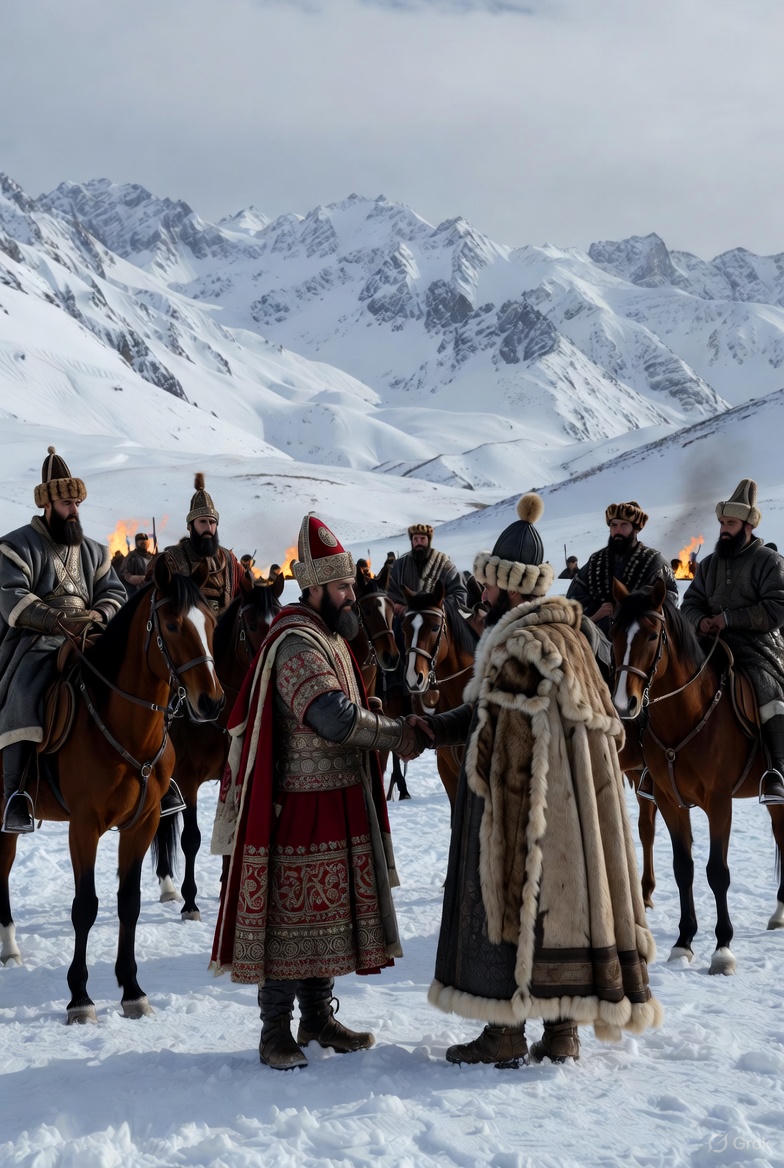
Imagine a foggy dawn in the ancient plains near the crumbling walls of a once-mighty city, where two exhausted empires clash in a battle that would reshape the world. On December 12, 627 AD, Byzantine Emperor Heraclius led his weary troops against the formidable Sasanian Persians in what would become known as the Battle of Nineveh. This wasn’t just another skirmish in a long-forgotten war; it was a pivotal moment that ended a quarter-century of brutal conflict, toppled a dynasty, and inadvertently set the stage for the rise of new powers in the Middle East. But beyond the dust of history, this epic showdown offers timeless insights into human tenacity, clever strategy, and the power of bold action. In this blog, we’ll dive deep into the riveting details of that fateful day and the war that led to it—far more history than pep talk, as promised—before exploring how you can harness its lessons to conquer your own modern battles. Get ready for a journey that’s equal parts enlightening and exhilarating, proving that even from the shadows of antiquity, sparks of inspiration can light your path today.
### The Seeds of Conflict: The Byzantine-Sasanian War’s Turbulent Beginnings
To truly appreciate the drama of the Battle of Nineveh, we must rewind to the late 6th century, when the Byzantine Empire (the eastern remnant of the Roman Empire) and the Sasanian Empire (the last great Persian dynasty) were locked in a rivalry that had simmered for centuries. These two superpowers of the ancient world controlled vast territories: the Byzantines held sway over the eastern Mediterranean, Anatolia, and parts of Europe, while the Sasanians dominated Mesopotamia, Iran, and Central Asia. Their borders rubbed against each other like tectonic plates, sparking frequent earthquakes of war.
The spark for this particular conflagration ignited in 602 AD. Byzantine Emperor Maurice, a capable but austere ruler, had maintained a fragile peace with the Sasanians through diplomacy and shared interests against common foes like the Avars and Slavs in the Balkans. But Maurice’s thriftiness alienated his army, leading to a mutiny. A centurion named Phocas seized power, executing Maurice and his family in a gruesome coup. This act of regicide horrified Sasanian Shah Khosrow II, who had been sheltered by Maurice during his own youthful exile and considered him a father figure. Khosrow II used Maurice’s murder as a casus belli—a pretext for war—vowing to avenge his benefactor and install a Byzantine pretender on the throne.
What followed was a Sasanian blitzkrieg. In 603, Persian armies under generals like Shahrbaraz and Shahin poured across the frontier, capturing key fortresses in Mesopotamia and Armenia. By 604, they had taken Dara, a vital Byzantine stronghold, and pushed into Syria. The Byzantines, reeling under Phocas’ incompetent rule, offered little resistance. Phocas’ regime descended into paranoia, with executions and purges weakening the empire further. In 608, a rebellion erupted in Africa (modern Tunisia), led by Heraclius the Elder, exarch of Carthage, who sent his son—also named Heraclius—to Constantinople with a fleet. Young Heraclius arrived in 610, overthrew Phocas (who was beheaded and mutilated), and claimed the throne. But the damage was done: the Sasanians had momentum.
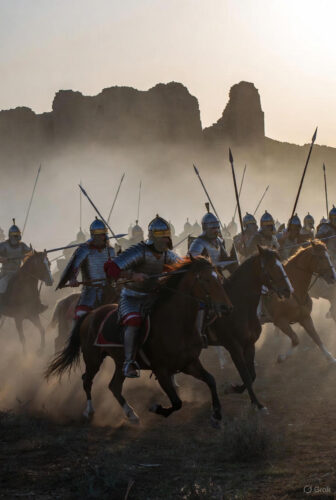
Under Heraclius, the Byzantines initially struggled. From 611 to 619, the Persians conquered Syria, Palestine, and Egypt—the breadbasket of the empire. In 614, they sacked Jerusalem, massacring thousands and carting off the True Cross, a relic sacred to Christians, as a trophy to Ctesiphon, the Sasanian capital. Anatolia was ravaged, with Persian raids reaching the Bosporus by 615. Heraclius, facing financial ruin, even melted down church treasures to fund his armies, earning papal rebuke but buying time. The empire’s economy teetered, with inflation soaring and trade disrupted. Meanwhile, the Avars and Slavs exploited Byzantine weakness, besieging Constantinople in 617 and ravaging the Balkans.
Yet, Heraclius was no ordinary emperor. A brilliant strategist with a flair for the dramatic, he reorganized the military, introducing themes (military districts) to decentralize defense and boost recruitment. He also played the religious card, framing the war as a holy crusade against the Zoroastrian Persians, rallying Christian subjects. By 622, after securing a truce with the Avars, Heraclius launched a daring counteroffensive from Constantinople, sailing to Anatolia and training his troops in the mountains. His campaigns from 622 to 625 were masterclasses in guerrilla warfare: he avoided pitched battles, used hit-and-run tactics, and exploited Persian overextension. In 623, he recaptured parts of Armenia and defeated a Persian army at Ganzak, destroying a major fire temple in retaliation for Jerusalem.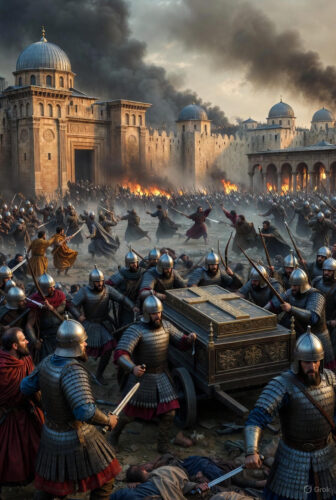
The Persians, undeterred, allied with the Avars for a knockout blow. In 626, while Heraclius campaigned in the east, Shahrbaraz’s army crossed the Bosporus, and the Avars besieged Constantinople from the European side. The city walls held, thanks to Patriarch Sergius’ leadership and a miraculous storm that wrecked the Avar fleet. Heraclius’ brother Theodore defeated a Persian relief force, breaking the siege. This “Miracle of Constantinople” boosted Byzantine morale and exposed Persian vulnerabilities.
### Alliances and Audacity: Setting the Stage for Nineveh
With the capital safe, Heraclius escalated his strategy. He forged an alliance with the Western Turkic Khaganate (often misidentified as Khazars in sources), led by Tong Yabghu Khan (called Ziebel in Byzantine chronicles). In 627, 40,000 Turkic horsemen joined Heraclius in the Caucasus, besieging Tiflis (modern Tbilisi) and ravaging Persian territories. This Perso-Turkic conflict diverted Sasanian resources, allowing Heraclius to plan his boldest move: a winter invasion of Mesopotamia, the Persian heartland.
Winter campaigns were rare in antiquity due to harsh weather, supply issues, and disease risks. But Heraclius saw opportunity in surprise. In mid-September 627, he marched south from the Caucasus with 25,000 to 50,000 troops, bypassing fortified frontiers. The Turks, unaccustomed to winter, soon deserted, leaving Heraclius exposed. Khosrow II, furious, recalled Shahrbaraz from Anatolia and appointed Rhahzadh, a skilled spahbed (general), to command a pursuit force of about 12,000 elite troops.
Rhahzadh shadowed the Byzantines, harassing their flanks but avoiding full engagement, hoping to starve them out. Heraclius, however, foraged aggressively, stripping the countryside and leaving the Persians with barren lands. By December 1, he crossed the Great Zab River and camped near the ruins of Nineveh—the ancient Assyrian capital sacked in 612 BC, now a symbolic backdrop of fallen empires. Intelligence revealed 3,000 Persian reinforcements approaching, prompting Heraclius to feign retreat toward the Tigris, luring Rhahzadh into open terrain.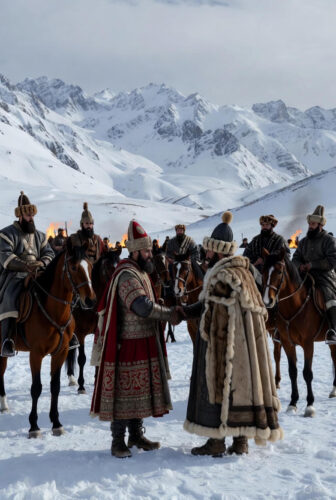
The stage was set on a foggy plain west of the Great Zab, possibly near Karamlays Creek. Fog neutralized the Persians’ archery advantage, favoring Byzantine close-quarters combat with lances and swords. Heraclius, at 52, led personally—a rarity for emperors—boosting his men’s spirits with speeches invoking divine favor. Rhahzadh, confident in his heavy cavalry (cataphracts), arrayed his forces in three dense divisions, aiming to overwhelm the Byzantines.
### The Clash at Dawn: A Day of Fog, Fury, and Heroism
December 12, 627 AD, dawned cold and misty. As the sun struggled through the haze, Rhahzadh launched his attack, charging the Byzantine lines. Heraclius responded with a calculated feint: he ordered a simulated retreat, drawing the Persians onto the open plain where mobility favored his lighter infantry and cavalry. Then, in a stunning reversal, the Byzantines wheeled around and countercharged, shattering the Persian formations.
The battle raged for eight grueling hours, from morning to dusk. Hand-to-hand combat dominated, with clashing swords, thrusting spears, and thundering hooves. The fog added chaos, disorienting archers and turning the field into a melee of shadows. Byzantine sources, like Nikephoros’ *Brief History*, paint vivid scenes: Heraclius, armored and mounted, charging into the fray. According to legend, Rhahzadh challenged him to single combat—a chivalric throwback to Homeric duels. Heraclius accepted, slaying Rhahzadh with a single lance thrust to the chest. Two more Persian champions stepped up; Heraclius dispatched them too, one by severing his shoulder, the other by a blow to the head. While historians debate the veracity (Theophanes the Confessor corroborates it, but it smacks of propaganda), Rhahzadh’s death is undisputed—he fell on the field, demoralizing his troops.
By afternoon, the Persians broke, retreating to nearby foothills. Byzantine casualties were light—perhaps 50 dead, per Theophanes—while the Sasanians lost around 6,000, half their force. The reinforcements arrived too late, finding their comrades routed. Heraclius didn’t capture the Persian camp, but the victory was decisive: it shattered Sasanian resistance in Mesopotamia.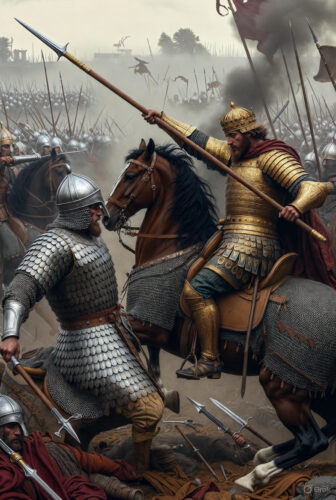
Picture the scene: exhausted soldiers cheering amid the mist, the ruins of Nineveh silent witnesses to another empire’s humbling. Heraclius, bloodied but triumphant, likely offered prayers of thanks, attributing success to God—a theme in his dispatches home. This wasn’t just military genius; it was psychological warfare, proving a cornered empire could strike back.
### Aftermath and Echoes: From Victory to the Fall of Giants
The Battle of Nineveh’s immediate aftermath was a Byzantine rampage. Heraclius’ army advanced unopposed, plundering Dastagird—Khosrow II’s opulent palace complex—seizing gold, silks, spices, and 300 recaptured Roman standards. The emperor wintered there, his troops feasting on Persian luxuries while Khosrow fled to the mountains of Susiana, desperately trying to rally defenses for Ctesiphon.
But Nineveh broke the Sasanian spirit. Khosrow’s paranoia alienated his nobles; he executed dissenters and taxed the populace to exhaustion. In February 628, a coup erupted: Persian generals and aristocrats overthrew him, imprisoning the shah in a dungeon. His son, Kavad II (also called Siroes), ascended, ordering Khosrow’s slow death—five days without food, then execution by arrows. Kavad II sued for peace, offering Heraclius all lost territories, war indemnities, released prisoners, and the True Cross. Heraclius, knowing his own empire was depleted, accepted. The treaty of 628 ended the war, restoring Byzantine borders to their pre-602 status.
The significance rippled far beyond. The war’s toll—famines, plagues (including the 541-542 Justinianic Plague’s aftershocks), and depopulation—weakened both empires. The Sasanian civil war of 628-632 fragmented Persia, making it ripe for the Arab Muslim conquests starting in 633. By 651, the Sasanian Empire collapsed under Caliph Uthman’s forces. The Byzantines, though victorious, lost Syria, Palestine, and Egypt to the Arabs by 642, reducing them to a rump state. Nineveh thus marked the end of the ancient Roman-Persian wars, a 700-year saga, and heralded the Islamic era’s dawn.
Historians marvel at Heraclius’ arc: from near-collapse to hero. Chroniclers like George of Pisidia poeticized his exploits, comparing him to Alexander. Yet, irony abounds—his triumph sowed seeds of decline. The battle’s site, near modern Mosul, Iraq, remains archaeologically rich, with Nineveh’s ruins a UNESCO site, though damaged by conflicts echoing ancient strife.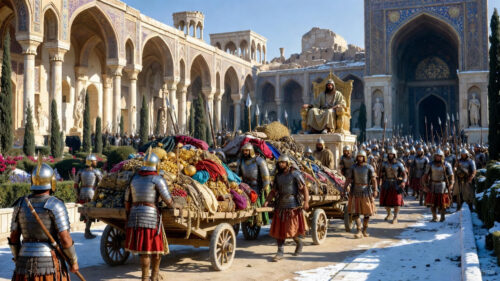
This tale isn’t dry dates and dusty tomes; it’s a thriller of empires on the brink, leaders gambling everything, and fate twisting in the fog. Heraclius’ story reminds us history is made by humans—flawed, fearless, and forever fascinating.
### Harnessing Nineveh’s Fire: Timeless Lessons for Your Everyday Epic
Now, let’s bridge the chasm of centuries. The Battle of Nineveh wasn’t just a clash of swords; it was a masterclass in overcoming insurmountable odds. Heraclius turned a crumbling empire into a victor through resilience, innovation, and sheer audacity. Today, in our world of deadlines, setbacks, and personal hurdles, these elements can transform your life. While the historical dive above forms the bulk of our exploration, here’s how to apply Nineveh’s outcome practically—motivational fuel to ignite your potential.
The core benefit? Learning that no defeat is final if you’re willing to adapt and persist. Heraclius faced invasion, betrayal, and despair, yet pivoted to victory. You can do the same, whether battling career slumps, health issues, or relationship strains. This historical fact empowers you by showing that strategic boldness and endurance yield breakthroughs, fostering a mindset of unstoppable growth.
#### Specific Ways Nineveh’s Lessons Benefit Your Individual Life
– **Cultivate Resilience in Adversity**: Just as Heraclius endured years of losses before striking back, view your setbacks as training grounds. This builds emotional toughness, reducing stress from failures and increasing your capacity to bounce back—leading to better mental health and sustained productivity.
– **Embrace Strategic Surprise**: The winter invasion caught the Persians off-guard; in your life, this means innovating routines, like switching careers unexpectedly or learning a new skill during downtime. It sharpens creativity, opening doors to opportunities others miss, such as landing a dream job through unconventional networking.
– **Lead with Personal Involvement**: Heraclius fought alongside his troops, inspiring loyalty. Apply this by taking hands-on roles in your projects or family decisions, fostering stronger relationships and team dynamics, which can result in promotions or harmonious home life.
– **Forge Alliances Wisely**: The Turkic pact, though temporary, divided enemies. Seek mentors or collaborators in your endeavors—join a professional group or accountability partner—to amplify efforts, accelerating goals like fitness milestones or business growth.
– **Turn Symbolism into Motivation**: Nineveh’s ruins reminded fighters of impermanence; use personal “ruins” (past failures) as fuel. This shifts perspective from victimhood to empowerment, boosting self-confidence and drive for achievements like completing a marathon or writing a book.
– **Adapt to Unfavorable Conditions**: Fog favored the Byzantines; learn to thrive in chaos, like pivoting during economic downturns by upskilling online. This enhances adaptability, turning crises into catalysts for innovation and financial stability.
– **Celebrate Incremental Wins**: Post-battle plundering sustained morale; acknowledge small victories in your pursuits, such as weekly progress checks, to maintain momentum and prevent burnout.
#### A Step-by-Step Plan to Apply Nineveh’s Wisdom Today
- **Assess Your Battlefield (Week 1)**: Identify your “Persian Empire”—the major challenge holding you back. Journal about it: What resources do you have? What’s the fog (uncertainty) obscuring your path? This mirrors Heraclius’ reconnaissance, grounding your strategy.
- **Build Your Alliance and Arsenal (Weeks 2-3)**: Seek support—connect with a mentor via LinkedIn or join a community app. Stockpile tools: read a book on resilience (like “Grit” by Angela Duckworth) or enroll in an online course. Train like Heraclius in the mountains: dedicate daily time to skill-building.
- **Launch a Bold Move (Week 4)**: Emulate the winter surprise—take a calculated risk, such as applying for a stretch role at work or starting a side hustle. Prepare contingencies, but act decisively to break stagnation.
- **Engage and Adapt in the Fray (Ongoing, Months 1-3)**: As battles unfold, pivot like the feigned retreat: if a plan falters, reassess and counterattack. Track progress weekly, celebrating wins to sustain energy.
- **Secure the Victory and Reflect (Month 4+)**: Once breakthroughs occur, consolidate gains—perhaps by mentoring others or documenting your journey. Reflect on growth, using Nineveh as a touchstone to inspire future endeavors.
By weaving these threads from 627 AD into your fabric, you’ll not only honor history but craft a legacy of your own. Nineveh teaches that from the brink, glory awaits those who dare. So, channel your inner Heraclius—fog or no fog, your triumph is on the horizon!